Department of Neurology, Yale University, New Haven, CT, United States.
Department of Neurology, Yale University, New Haven, CT, United States.
Mult Scler Relat Disord. 2022 Apr;60:103719. doi: 10.1016/j.msard.2022.103719. Epub 2022 Mar 3.
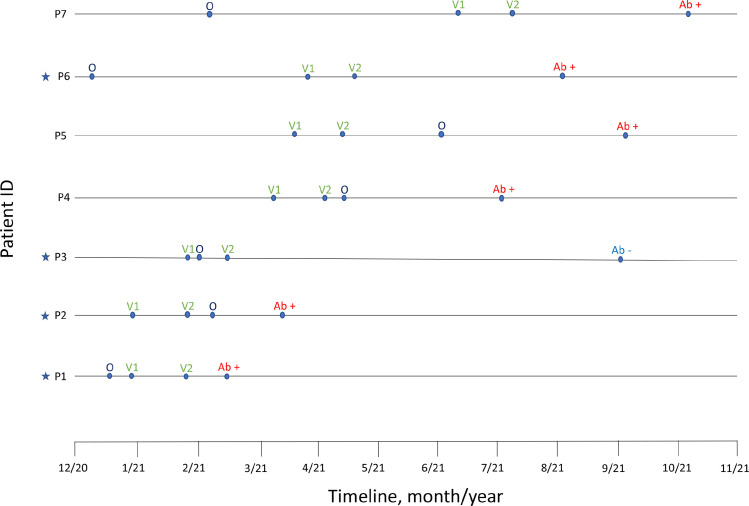
The impaired ability to mount an effective immune response to vaccination leaves immunosuppressed patients at higher risk of severe COVID-19 infection. This retrospective study aimed to evaluate COVID-19 seroconversion and antibody titers for patients on immune modulating therapies compared to those not on disease modifying therapy (DMT). As expected, individuals on B-cell depletion therapies (BCDT) and those on sphingosine 1-phosphate (S1P) modulators had an impaired humoral response to mRNA vaccination. We observed variable seroconversion depending on the type of B-cell depleting medication, with a smaller percentage of seroconversion in patients on infused BCDT (iBCDT, ocrelizumab and rituximab) compared to ofatumumab. The humoral response to vaccination was not impaired for individuals on natalizumab or for untreated MS patients. These observations may influence DMT selection during the COVID-19 era.
免疫抑制患者对疫苗接种产生有效免疫反应的能力受损,使他们面临更严重 COVID-19 感染的风险更高。这项回顾性研究旨在评估接受免疫调节治疗的患者与未接受疾病修正治疗(DMT)的患者相比,COVID-19 的血清转化率和抗体滴度。正如预期的那样,接受 B 细胞耗竭治疗(BCDT)和接受鞘氨醇 1-磷酸(S1P)调节剂治疗的个体对 mRNA 疫苗接种的体液反应受损。我们观察到,根据 B 细胞耗竭药物的类型,血清转化率存在差异,与奥瑞珠单抗和利妥昔单抗相比,接受静脉输注 BCDT(iBCDT)的患者的血清转化率较低。接受那他珠单抗或未经治疗的 MS 患者的疫苗接种后体液反应未受损。这些观察结果可能会影响 COVID-19 时代的 DMT 选择。