Amsterdam Institute of Molecular and Life Sciences (AIMMS), Vrije Universiteit Amsterdam, De Boelelaan 1108, 1081 HZ, Amsterdam, The Netherlands.
Department of Chemistry, University of York, YO10 5DD, York, UK.
ChemMedChem. 2022 May 4;17(9):e202200113. doi: 10.1002/cmdc.202200113. Epub 2022 Mar 30.
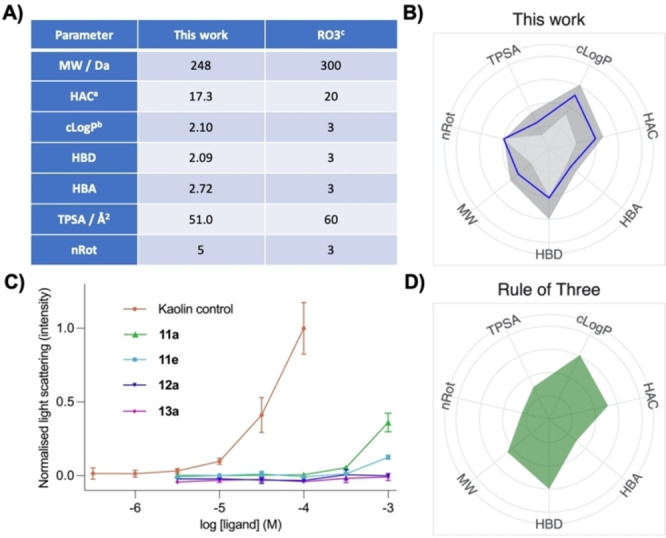
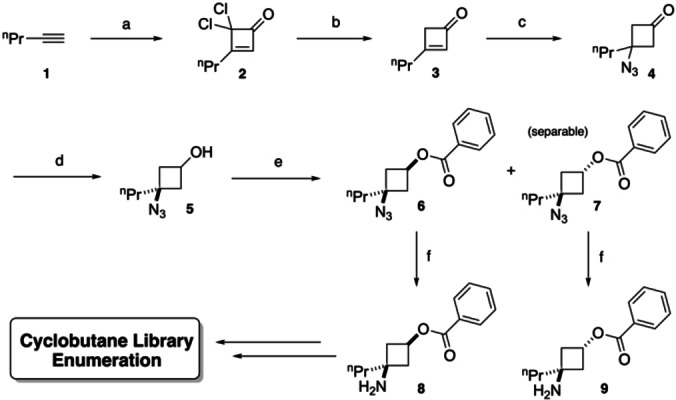
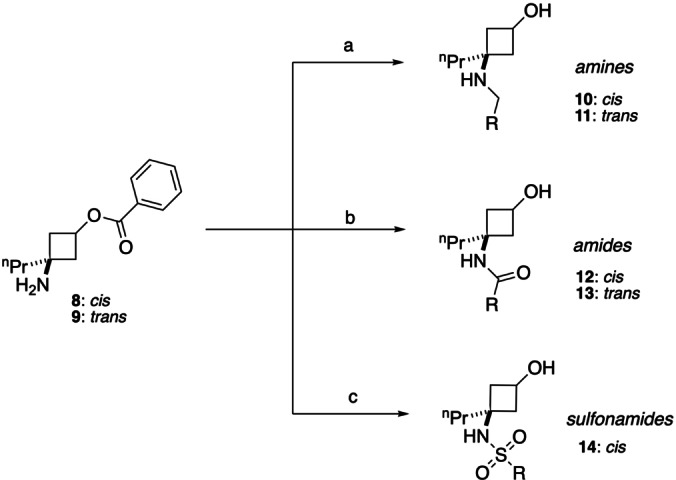
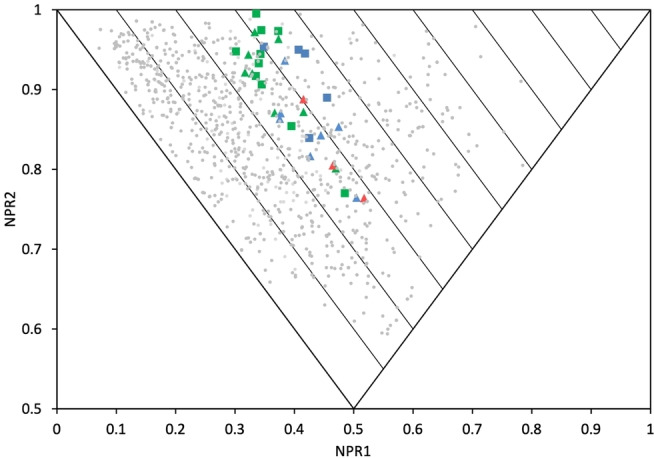
Fragment-based drug discovery (FBDD) has a growing need for unique screening libraries. The cyclobutane moiety was identified as an underrepresented yet attractive three-dimensional (3D) scaffold. Synthetic strategies were developed via a key 3-azido-cyclobutanone intermediate, giving potential access to a range of functional groups with accessible growth vectors. A focused set of 33 novel 3D cyclobutane fragments was synthesised, comprising three functionalities: secondary amines, amides, and sulfonamides. This library was designed using Principal Component Analysis (PCA) and an expanded version of the rule of three (RO3), followed by Principal Moment of Inertia (PMI) analysis to achieve both chemical diversity and high 3D character. Cis and trans ring isomers of library members were generated to maximise the shape diversity obtained, while limiting molecular complexity through avoiding enantiomers. Property analyses of the cyclobutane library indicated that it fares favourably against existing synthetic 3D fragment libraries in terms of shape and physicochemical properties.
基于片段的药物发现(FBDD)对独特的筛选库有越来越大的需求。环丁烷部分被确定为一个代表性不足但有吸引力的三维(3D)支架。通过关键的 3-叠氮环丁酮中间体开发了合成策略,为一系列具有可接近生长矢量的官能团提供了潜在的途径。合成了一组 33 种新型的 3D 环丁烷片段,包括三种官能团:仲胺、酰胺和磺酰胺。该库使用主成分分析(PCA)和扩展的三规则(RO3)设计,然后进行主惯性矩(PMI)分析,以实现化学多样性和高 3D 特征。库成员的顺式和反式环异构体被生成以最大化获得的形状多样性,同时通过避免对映体来限制分子复杂性。对环丁烷文库的性质分析表明,它在形状和物理化学性质方面优于现有的合成 3D 片段文库。