Liu Jun, Gu Liming, Zhang Dangui, Li Wenli
Reproductive Medicine Center, Yue Bei People's Hospital, Shantou University Medical College, Shaoguan, China.
Guangdong Provincial Key Laboratory of Infectious Diseases and Molecular Immunopathology, Shantou University Medical College, Shantou, China.
Front Mol Biosci. 2022 Feb 24;9:759792. doi: 10.3389/fmolb.2022.759792. eCollection 2022.
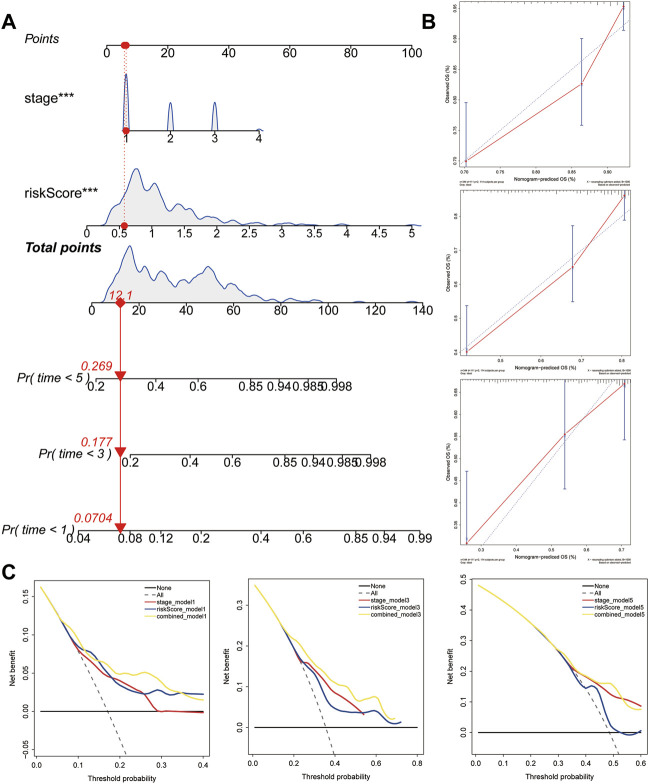
The spliceosome plays an important role in mRNA alternative splicing and is aberrantly expressed in several tumors. However, the potential roles of spliceosome-related genes in the progression of hepatocellular carcinoma (HCC) remain poorly understood. Patient data were acquired from public databases. Expression differences and survival analyses were used to assess the importance of spliceosome-related genes in HCC prognosis. To explore the potential regulatory mechanisms of these genes, a protein-protein interaction network was constructed and screened using univariate and multivariate Cox regression and random forest analyses. This was used to create a five-gene prognostic model. The prognostic value and predictive power of the five-gene signature were assessed using the Kaplan-Meier and time-dependent receiver operating characteristic analyses in the training set. These results were further validated in an independent external set. To facilitate clinical application, a nomogram was prepared to predict the overall survival of HCC patients. The relative expression of five genes was detected using real-time quantitative polymerase chain reaction. The analysis revealed that and could be used as prognostic biomarkers in HCC patients. Moreover, the five-gene risk model could clearly distinguish between the high-and low-risk groups. Furthermore, the risk model was associated with the tumor mutation burden, immune cell infiltration of CD8 T cells, natural killer T cells, M2 macrophages, and immune checkpoint inhibitors, which also demonstrated the predictive efficacy of this risk model in HCC immunotherapy. Spliceosome-related genes and the five-gene signature could serve as novel prognostic biomarkers for HCC patients, aiding clinical patient monitoring and follow-up.
剪接体在mRNA可变剪接中起重要作用,且在多种肿瘤中异常表达。然而,剪接体相关基因在肝细胞癌(HCC)进展中的潜在作用仍知之甚少。从公共数据库获取患者数据。采用表达差异分析和生存分析来评估剪接体相关基因在HCC预后中的重要性。为探究这些基因的潜在调控机制,构建了蛋白质-蛋白质相互作用网络,并使用单变量和多变量Cox回归以及随机森林分析进行筛选。以此创建了一个五基因预后模型。在训练集中使用Kaplan-Meier分析和时间依赖性受试者工作特征分析评估五基因特征的预后价值和预测能力。这些结果在独立的外部数据集中进一步验证。为便于临床应用,绘制了列线图以预测HCC患者的总生存期。使用实时定量聚合酶链反应检测五个基因的相对表达。分析表明,[此处原文缺失具体基因信息]可作为HCC患者的预后生物标志物。此外,五基因风险模型能够清晰地区分高风险组和低风险组。此外,该风险模型与肿瘤突变负荷、CD8 T细胞、自然杀伤T细胞、M2巨噬细胞的免疫细胞浸润以及免疫检查点抑制剂相关,这也证明了该风险模型在HCC免疫治疗中的预测效力。剪接体相关基因和五基因特征可作为HCC患者新的预后生物标志物,有助于临床患者监测和随访。