Yongfu Xiong, He Zhou, Xujian Huang, Jiemei Huang, Gang Yang, Lei Zhixiong, Jingdong Li
Department of Hepatobiliary Surgery, Affiliated Hospital of North Sichuan Medical College, Nanchong 637007, China.
Department of Thoracic and Hepatobiliary Surgery, Wusheng County People's Hospital, Guangan 638400, China.
J Cancer. 2022 Feb 7;13(4):1313-1323. doi: 10.7150/jca.65444. eCollection 2022.
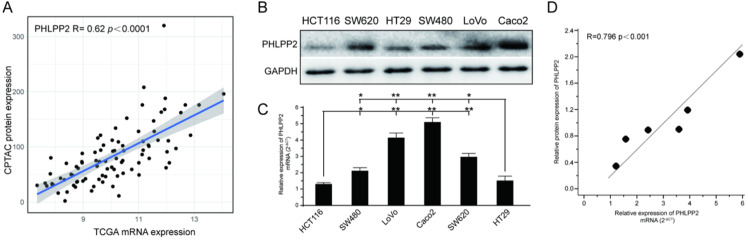
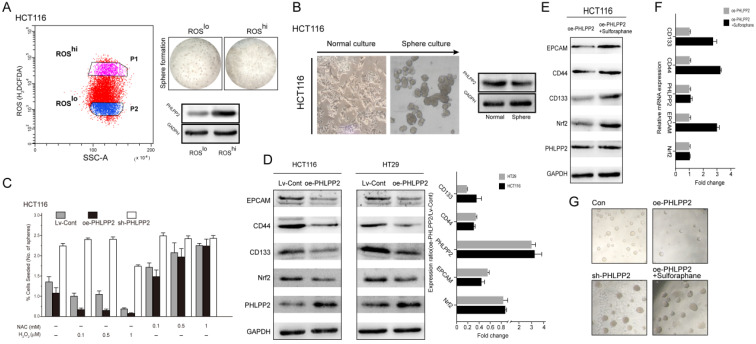
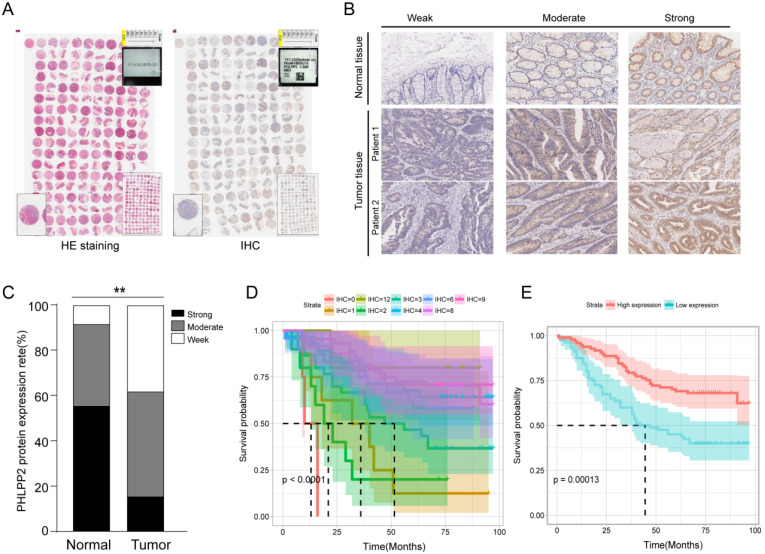
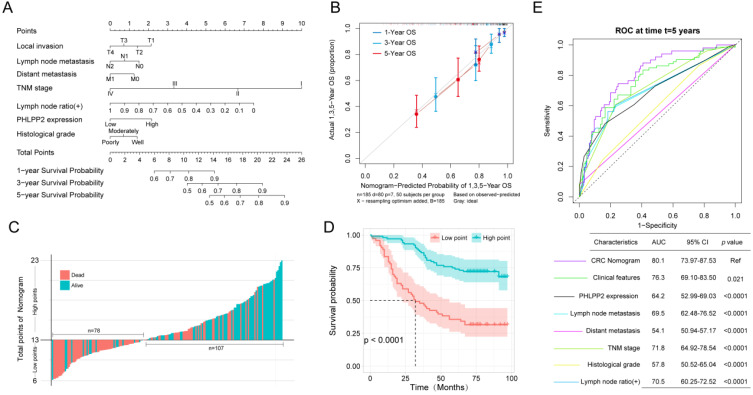
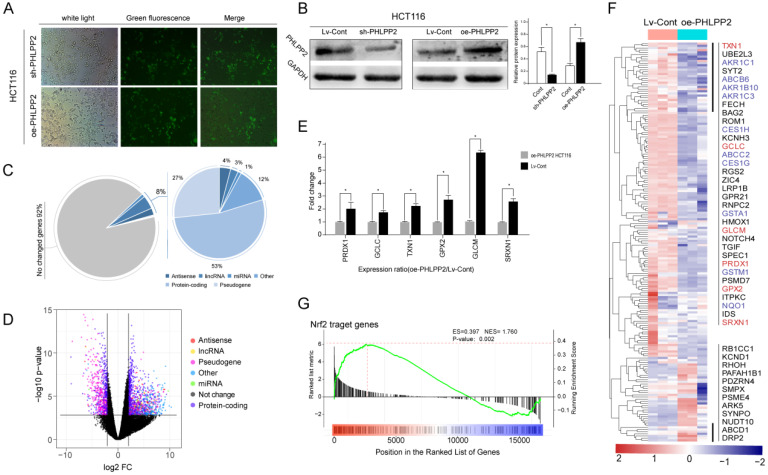
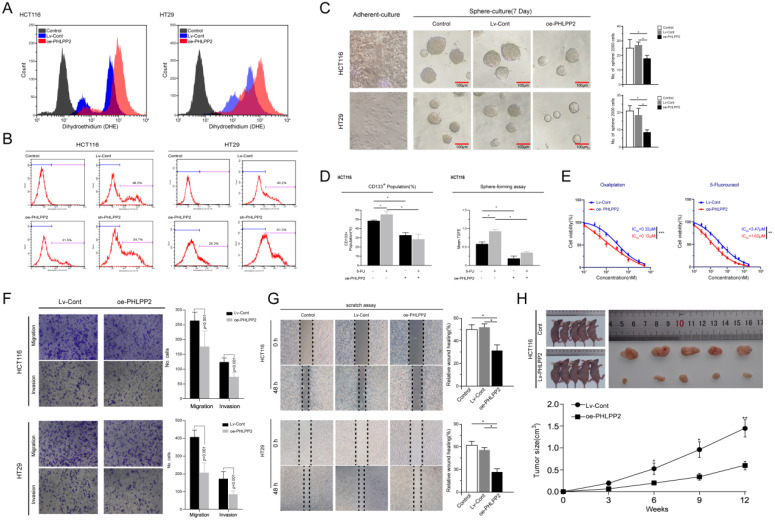
Pleckstrin homology (PH) domain leucine-rich repeat protein phosphatase 2 (PHLPP2) is a critical regulator of cellular homeostasis and acts as a tumor suppressor in multiple human cancers. However, its exact biological function in colorectal cancer (CRC) and the underlying molecular mechanism remain poorly understood. The correlation between the transcription and protein abundance of PHLPP2 was analyzed using proteomic and corresponding transcriptional data. Immunohistochemistry was used to validate the protein expression and the role of PHLPP2 in patient prognosis. In addition, a series of experiments and were performed to investigate the underlying molecular mechanism. Immunohistochemical staining of a CRC tissue microarray revealed that PHLPP2 protein expression was significantly downregulated compared to that in adjacent normal tissues. Low expression of PHLPP2 was an independent prognostic risk factor for poor survival. A nomogram established by integrating PHLPP2 expression and traditional clinicopathological factors achieved more reliable prognostic assessment in CRC patients. Additionally, PHLPP2 overexpression suppressed CRC cell migration, invasion and stemness as well as tumorigenesis . Further experiments revealed that upregulation of PHLPP2 increased ROS levels by suppressing the Nrf2-ARE signaling pathway, which inhibited the stemness of CRC cells. Moreover, incubation with sulforaphane, a selective chemical agonist of Nrf2, reversed this inhibitory effect in CRC. PHLPP2 acts as a tumor suppressor gene in CRC by restraining the Nrf2-ARE signaling pathway and increasing ROS levels, affecting the stemness of CRC cells. These anticancer molecular mechanisms indicate PHLLPP2's significant clinical value in prognosis prediction and targeted therapy.
普列克底物蛋白同源性(PH)结构域富含亮氨酸重复蛋白磷酸酶2(PHLPP2)是细胞稳态的关键调节因子,在多种人类癌症中发挥肿瘤抑制作用。然而,其在结直肠癌(CRC)中的确切生物学功能及潜在分子机制仍知之甚少。利用蛋白质组学和相应的转录数据,分析了PHLPP2转录与蛋白质丰度之间的相关性。采用免疫组织化学法验证PHLPP2的蛋白表达及其在患者预后中的作用。此外,还进行了一系列实验来研究潜在的分子机制。对CRC组织芯片进行免疫组织化学染色显示,与相邻正常组织相比,PHLPP2蛋白表达明显下调。PHLPP2低表达是生存不良的独立预后危险因素。通过整合PHLPP2表达和传统临床病理因素建立的列线图,在CRC患者中实现了更可靠的预后评估。此外,PHLPP2过表达抑制了CRC细胞的迁移、侵袭和干性以及肿瘤发生。进一步实验表明,PHLPP2上调通过抑制Nrf2-ARE信号通路增加ROS水平,从而抑制CRC细胞的干性。此外,用萝卜硫素(一种Nrf2的选择性化学激动剂)孵育可逆转CRC中的这种抑制作用。PHLPP2通过抑制Nrf2-ARE信号通路和增加ROS水平,影响CRC细胞的干性,在CRC中作为肿瘤抑制基因发挥作用。这些抗癌分子机制表明PHLLPP2在预后预测和靶向治疗中具有重要的临床价值。