Dehghani Leila, Khojasteh Arash, Soleimani Masoud, Oraee-Yazdani Saeed, Keshel Saeed Heidari, Saadatnia Mohammad, Saboori Masih, Zali Alireza, Hashemi Seyed Mahmoud, Soleimani Reyhane
Department of Tissue Engineering and Applied Cell Sciences, School of Advanced Technologies in Medicine, Shahid Beheshti University of Medical Sciences, Tehran, Iran.
Department of Hematology, Faculty of Medical Sciences Tarbiat Modares University, Tehran, Iran.
Int J Prev Med. 2022 Jan 19;13:7. doi: 10.4103/ijpvm.ijpvm_441_21. eCollection 2022.
Malignant middle cerebral artery infarct (mMCAI) largely contributes to high mortality and physical disability among adults. Surviving individuals may not have proper outcomes and suffer from severe lasting disabilities. Utilization of stem cells and paracrine factor for regenerative purposes is considered as a potential strategy for patients with neurological deficits. While preclinical stroke studies have shown that mesenchymal stem cells (MSCs) reduce post-treatment neurological deficits and prevent disability and also promote recovery, few randomized clinical trials (RCT) have assessed exosome therapy in humans.
In this RCT, we assessed the safety of intraparenchymal injection placenta MSC-derived Exosome in mMCAI patients with average age of 62 years between January, 2019, till September, 2020. The study was done in a single-center as an open-label RCT, with a 3-months follow-up. Primary outcomes assessed the safety and also disability indexes were followed.
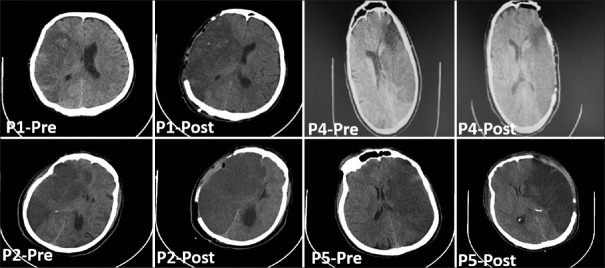
Five mMCAI patients were included with mean NIHSS: 17.6 ± 5.02. The mean MRS was 3.25 ± 0.95 in three patients. No serious adverse events were observed. Hematoma or local reaction as excessive edema were not seen at the site of injection.
Intraparenchymal implantation of MSC-EXO showed no post-interventional adverse effects in five ischemic stroke patients. It is proposed Local injection Exosome treatment following mMCAI can be safe and in future, it would be applied as a supportive, restorative and preventive treatment in patients who suffer from acute ischemic stroke and post ischemic disability.
大脑中动脉恶性梗死(mMCAI)在很大程度上导致成人的高死亡率和身体残疾。存活的个体可能没有良好的预后,并遭受严重的长期残疾。利用干细胞和旁分泌因子进行再生被认为是治疗神经功能缺损患者的一种潜在策略。虽然临床前中风研究表明间充质干细胞(MSCs)可减少治疗后的神经功能缺损、预防残疾并促进恢复,但很少有随机临床试验(RCT)评估外泌体疗法对人类的疗效。
在这项RCT中,我们评估了2019年1月至2020年9月期间平均年龄为62岁的mMCAI患者脑实质内注射胎盘间充质干细胞来源的外泌体的安全性。该研究在单中心进行,为开放标签RCT,随访3个月。主要结局评估安全性,并跟踪残疾指数。
纳入5例mMCAI患者,平均美国国立卫生研究院卒中量表(NIHSS)评分:17.6±5.02。3例患者的平均改良Rankin量表(MRS)评分为3.25±0.95。未观察到严重不良事件。注射部位未出现血肿或局部反应如过度水肿。
在5例缺血性中风患者中,脑实质内植入间充质干细胞外泌体未显示介入后不良反应。建议在mMCAI后局部注射外泌体治疗可能是安全的,未来,它将作为急性缺血性中风和缺血后残疾患者的支持性、恢复性和预防性治疗方法应用。