Herrero-Aguayo Vicente, Sáez-Martínez Prudencio, Jiménez-Vacas Juan M, Moreno-Montilla M Trinidad, Montero-Hidalgo Antonio J, Pérez-Gómez Jesús M, López-Canovas Juan L, Porcel-Pastrana Francisco, Carrasco-Valiente Julia, Anglada Francisco J, Gómez-Gómez Enrique, Yubero-Serrano Elena M, Ibañez-Costa Alejandro, Herrera-Martínez Aura D, Sarmento-Cabral André, Gahete Manuel D, Luque Raúl M
Maimonides Institute for Biomedical Research of Córdoba (IMIBIC), Edificio IMIBIC, Av. Menéndez Pidal s/n, 14004 Córdoba, Spain.
Department of Cell Biology, Physiology, and Immunology, University of Córdoba, 14014 Córdoba, Spain.
Mol Ther Nucleic Acids. 2022 Feb 12;27:1164-1178. doi: 10.1016/j.omtn.2022.02.010. eCollection 2022 Mar 8.
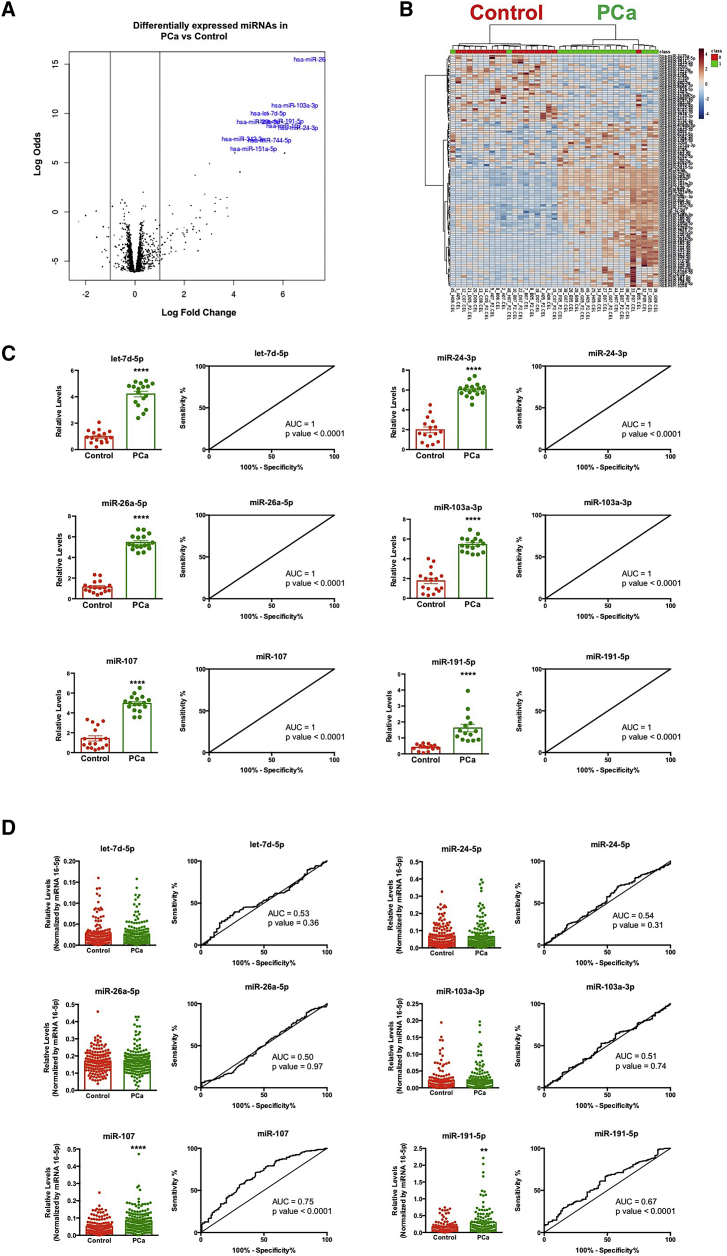
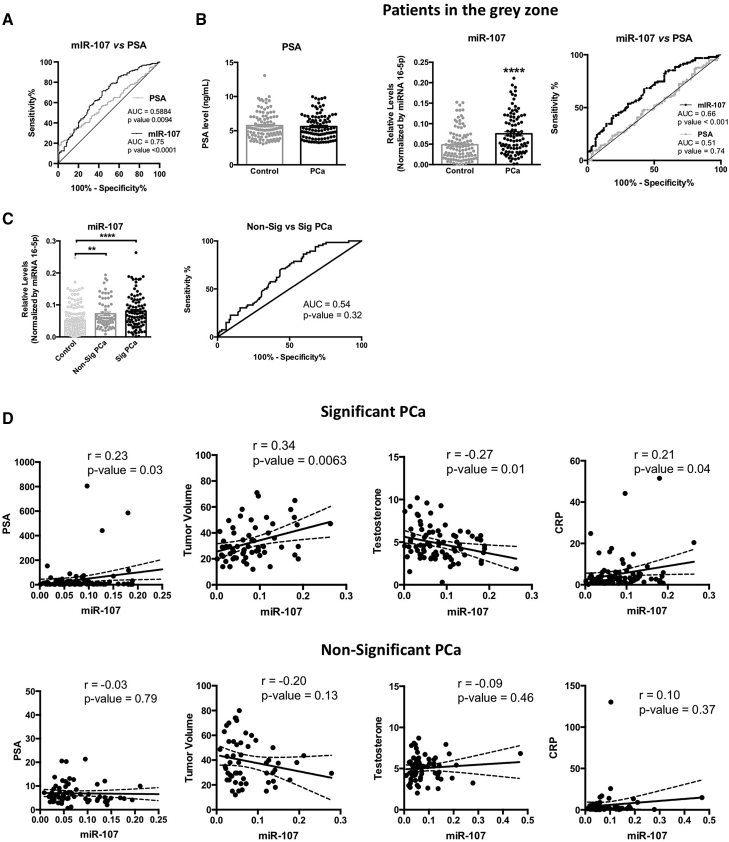
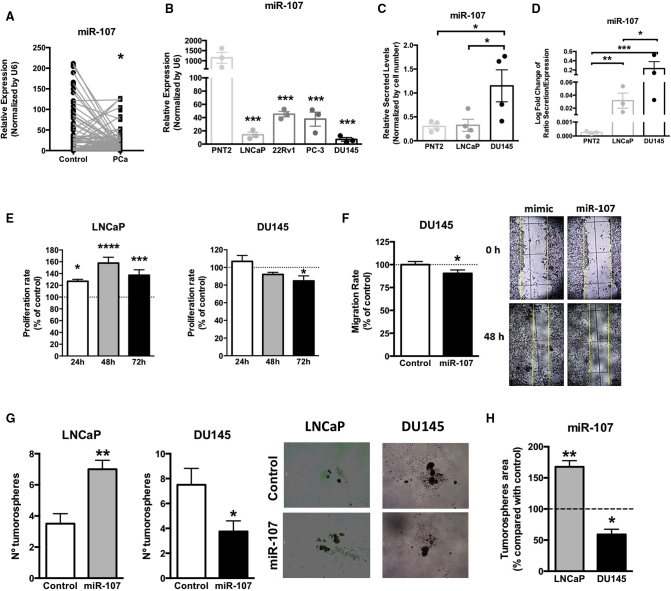
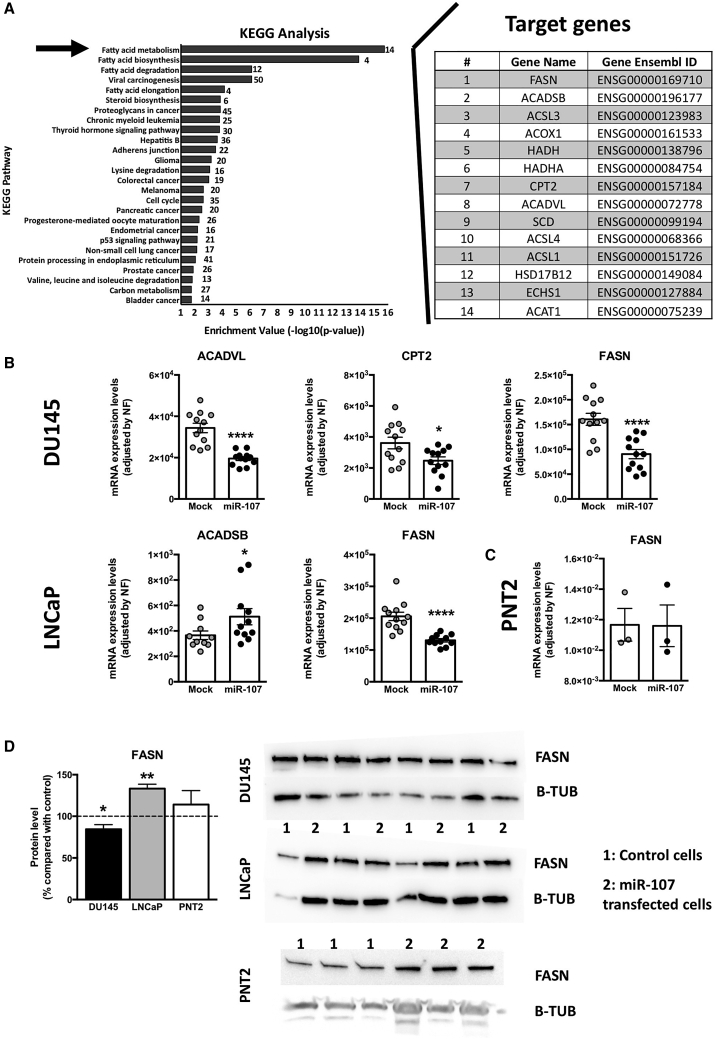
Prostate-specific antigen (PSA) is the gold-standard marker to screen prostate cancer (PCa) nowadays. Unfortunately, its lack of specificity and sensitivity makes the identification of novel tools to diagnose PCa an urgent medical need. In this context, microRNAs (miRNAs) have emerged as potential sources of non-invasive diagnostic biomarkers in several pathologies. Therefore, this study was aimed at assessing for the first time the dysregulation of the whole plasma miRNome in PCa patients and its putative implication in PCa from a personalized perspective (i.e., obesity condition). Plasma miRNome from a discovery cohort (18 controls and 19 PCa patients) was determined using an Affymetrix-miRNA array, showing that the expression of 104 miRNAs was significantly altered, wherein six exhibited a significant receiver operating characteristic (ROC) curve to distinguish between control and PCa patients (area under the curve [AUC] = 1). Then, a systematic validation using an independent cohort (135 controls and 160 PCa patients) demonstrated that miR-107 was the most profoundly altered miRNA in PCa (AUC = 0.75). Moreover, miR-107 levels significantly outperformed the ability of PSA to distinguish between control and PCa patients and correlated with relevant clinical parameters (i.e., PSA). These differences were more pronounced when considering only obese patients (BMI > 30). Interestingly, miR-107 levels were reduced in PCa tissues versus non-tumor tissues (n = 84) and in PCa cell lines versus non-tumor cells. miR-107 overexpression altered key aggressiveness features in PCa cells (i.e., proliferation, migration, and tumorospheres formation) and modulated the expression of important genes involved in PCa pathophysiology (i.e., lipid metabolism [i.e., FASN] and splicing process). Altogether, miR-107 might represent a novel and useful personalized diagnostic and prognostic biomarker and a potential therapeutic tool in PCa, especially in obese patients.
前列腺特异性抗原(PSA)是目前筛查前列腺癌(PCa)的金标准标志物。不幸的是,其缺乏特异性和敏感性使得寻找诊断PCa的新工具成为一项迫切的医学需求。在这种背景下,微小RNA(miRNA)已成为多种疾病中非侵入性诊断生物标志物的潜在来源。因此,本研究旨在首次从个性化角度(即肥胖状况)评估PCa患者血浆中整个miRNome的失调及其在PCa中的潜在意义。使用Affymetrix-miRNA阵列测定了一个发现队列(18名对照和19名PCa患者)的血浆miRNome,结果显示104种miRNA的表达有显著改变,其中6种在区分对照和PCa患者时表现出显著的受试者工作特征(ROC)曲线(曲线下面积[AUC]=1)。然后,使用一个独立队列(135名对照和160名PCa患者)进行的系统验证表明,miR-107是PCa中变化最显著的miRNA(AUC=0.75)。此外,miR-107水平在区分对照和PCa患者方面显著优于PSA的能力,并且与相关临床参数(即PSA)相关。当仅考虑肥胖患者(BMI>30)时,这些差异更为明显。有趣的是,与非肿瘤组织(n=84)相比,PCa组织中的miR-107水平降低,与非肿瘤细胞相比,PCa细胞系中的miR-107水平也降低。miR-107的过表达改变了PCa细胞的关键侵袭性特征(即增殖、迁移和肿瘤球形成),并调节了参与PCa病理生理学的重要基因的表达(即脂质代谢[即FASN]和剪接过程)。总之,miR-107可能代表一种新的、有用的个性化诊断和预后生物标志物,以及PCa尤其是肥胖患者的潜在治疗工具。