Messerschmidt Victoria L, Chintapula Uday, Bonetesta Fabrizio, Laboy-Segarra Samantha, Naderi Amir, Nguyen Kytai T, Cao Hung, Mager Edward, Lee Juhyun
Department of Bioengineering, University of Texas at Arlington, Arlington, TX, United States.
University of Texas Southwestern Medical Center, Dallas, TX, United States.
Front Physiol. 2022 Feb 23;13:819767. doi: 10.3389/fphys.2022.819767. eCollection 2022.
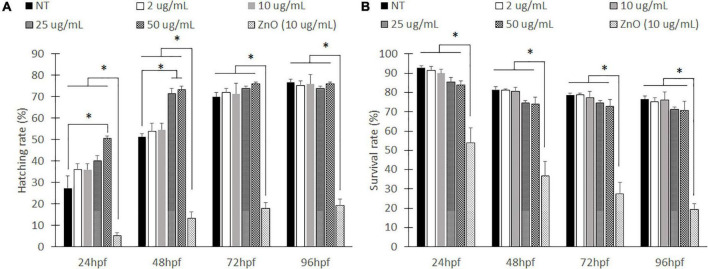
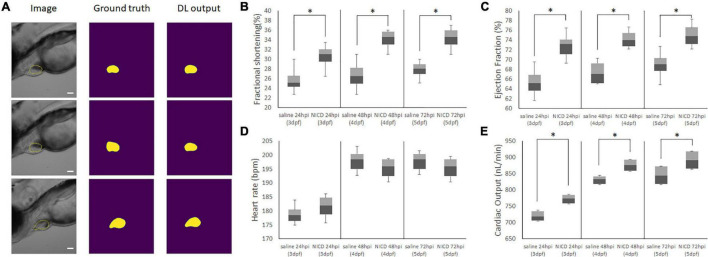
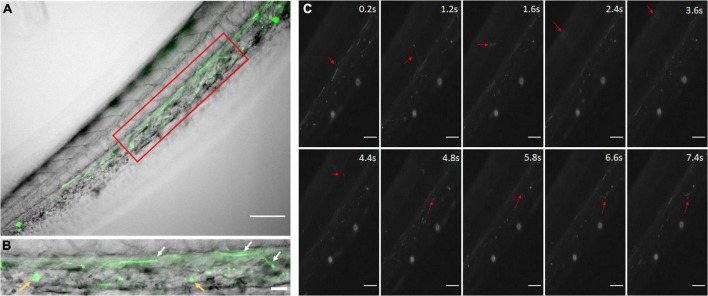
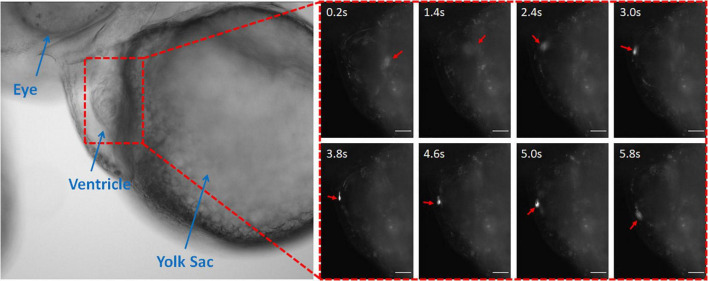
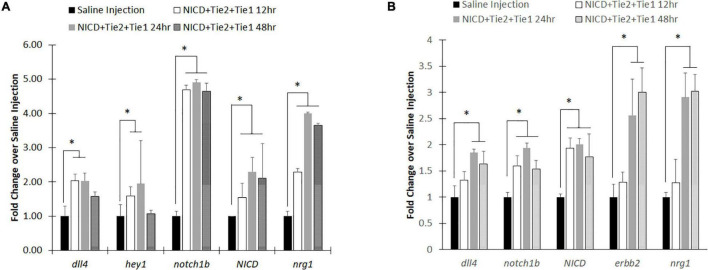
In the era of the advanced nanomaterials, use of nanoparticles has been highlighted in biomedical research. However, the demonstration of DNA plasmid delivery with nanoparticles for gene delivery experiments must be carefully tested due to many possible issues, including toxicity. The purpose of the current study was to deliver a Notch Intracellular Domain (NICD)-encoded plasmid poly(lactic--glycolic acid) (PLGA) nanoparticles and to investigate the toxic environmental side effects for an experiment. In addition, we demonstrated the target delivery to the endothelium, including the endocardial layer, which is challenging to manipulate gene expression for cardiac functions due to the beating heart and rapid blood pumping. For this study, we used a zebrafish animal model and exposed it to nanoparticles at varying concentrations to observe for specific malformations over time for toxic effects of PLGA nanoparticles as a delivery vehicle. Our nanoparticles caused significantly less malformations than the positive control, ZnO nanoparticles. Additionally, the NICD plasmid was successfully delivered by PLGA nanoparticles and significantly increased Notch signaling related genes. Furthermore, our image based deep-learning analysis approach evaluated that the antibody conjugated nanoparticles were successfully bound to the endocardium to overexpress Notch related genes and improve cardiac function such as ejection fraction, fractional shortening, and cardiac output. This research demonstrates that PLGA nanoparticle-mediated target delivery to upregulate Notch related genes which can be a potential therapeutic approach with minimum toxic effects.
在先进纳米材料时代,纳米颗粒在生物医学研究中的应用备受关注。然而,由于包括毒性在内的诸多可能问题,在基因递送实验中使用纳米颗粒进行DNA质粒递送必须经过仔细测试。本研究的目的是将编码Notch细胞内结构域(NICD)的质粒与聚乳酸-乙醇酸共聚物(PLGA)纳米颗粒结合,并研究该实验对环境的毒性副作用。此外,我们证明了纳米颗粒可靶向递送至内皮,包括心内膜层,由于心脏跳动和快速的血液循环,调控心脏功能的基因表达具有挑战性。在本研究中,我们使用斑马鱼动物模型,将其暴露于不同浓度的纳米颗粒中,观察一段时间内特定的畸形情况,以研究PLGA纳米颗粒作为递送载体的毒性作用。我们的纳米颗粒导致的畸形明显少于阳性对照氧化锌纳米颗粒。此外,PLGA纳米颗粒成功递送了NICD质粒,并显著增加了Notch信号相关基因的表达。此外,我们基于图像的深度学习分析方法评估,抗体偶联纳米颗粒成功结合到心内膜,从而过表达Notch相关基因并改善心脏功能,如射血分数、缩短分数和心输出量。这项研究表明,PLGA纳米颗粒介导的靶向递送可上调Notch相关基因,这可能是一种潜在的治疗方法,且毒性最小。