Department of Psychology, Hunter College, City University of New York, New York, NY.
Basic and Applied Social Psychology (BASP) PhD Program, Graduate Center of the City University of New York, New York, NY.
J Acquir Immune Defic Syndr. 2022 Jul 1;90(3):316-324. doi: 10.1097/QAI.0000000000002952.
Pre-exposure prophylaxis (PrEP) for HIV prevention requires engagement throughout the PrEP care continuum. Using data from a PrEP navigation program, we examine reasons for PrEP discontinuation.
Participants were recruited from New York City Health Department Sexual Health Clinics with PrEP navigation programs.
Participants completed a survey and up to 3 interviews about PrEP navigation and use. This analysis includes 94 PrEP initiators that were PrEP-naive before their clinic visit, started PrEP during the study, and completed at least 2 interviews. Interview transcripts were reviewed to assess reasons for PrEP discontinuation.
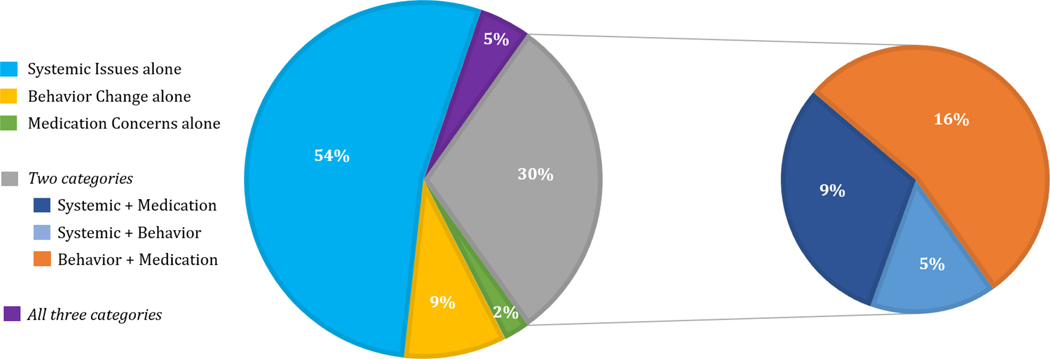
Approximately half of PrEP initiators discontinued PrEP during the study period (n = 44; 47%). Most participants (71%) noted systemic issues (insurance or financial problems, clinic or pharmacy logistics, and scheduling barriers) as reasons for discontinuation. One-third cited medication concerns (side effects, potential long-term side effects, and medication beliefs; 32%) and behavioral factors (low relevance of PrEP because of sexual behavior change; 34%) as contributing reasons. Over half (53.5%) highlighted systemic issues alone, while an additional 19% attributed discontinuation to systemic issues in combination with other factors. Of those who discontinued, approximately one-third (30%) restarted PrEP during the follow-up period, citing resolution of systemic issues or behavior change that increased PrEP relevance.
PrEP continuation is dependent on interacting factors and often presents complex hurdles for patients to navigate. To promote sustained engagement in PrEP care, financial, clinic, and pharmacy barriers must be addressed and counseling and navigation should acknowledge factors beyond sexual risk that influence PrEP use.
HIV 预防的暴露前预防(PrEP)需要在 PrEP 护理连续体中进行全程参与。利用来自 PrEP 导航计划的数据,我们研究了 PrEP 停药的原因。
参与者是从纽约市卫生部门的性健康诊所招募的,这些诊所都有 PrEP 导航项目。
参与者完成了一项调查和最多 3 次关于 PrEP 导航和使用的访谈。本分析包括 94 名 PrEP 启动者,他们在就诊前 PrEP 经验为零,在研究期间开始 PrEP,并完成了至少 2 次访谈。访谈记录被审查,以评估 PrEP 停药的原因。
大约一半的 PrEP 启动者在研究期间停止了 PrEP(n=44;47%)。大多数参与者(71%)指出系统问题(保险或财务问题、诊所或药房的后勤问题以及日程安排障碍)是停药的原因。三分之一的人提到药物问题(副作用、潜在的长期副作用和药物信念;32%)和行为因素(性行为改变导致 PrEP 的相关性降低;34%)是促成因素。超过一半(53.5%)的人仅强调系统问题,而另外 19%的人将停药归因于系统问题与其他因素的结合。在停药的人中,约有三分之一(30%)在随访期间重新开始使用 PrEP,原因是系统问题得到解决或性行为改变增加了 PrEP 的相关性。
PrEP 的持续使用取决于相互作用的因素,而且常常给患者带来难以克服的障碍。为了促进 PrEP 护理的持续参与,必须解决财务、诊所和药房方面的障碍,咨询和导航应该承认影响 PrEP 使用的除性风险以外的因素。