Equine Hospital, Vetsuisse-Faculty, University of Zurich, Zurich, Switzerland.
Diagnostic Imaging Clinic, University of Zurich, Zurich, Switzerland.
Vet Surg. 2022 May;51(4):648-657. doi: 10.1111/vsu.13798. Epub 2022 Mar 15.
To determine the diagnostic performance of computed tomographic arthrography (CTA) and 3 Tesla magnetic resonance imaging (MRI) for detecting artificial meniscal, meniscotibial ligament (MTL) lesions and cruciate ligament (CL) lesions in horses.
Ex vivo controlled laboratory study.
Nineteen stifles from adult horses.
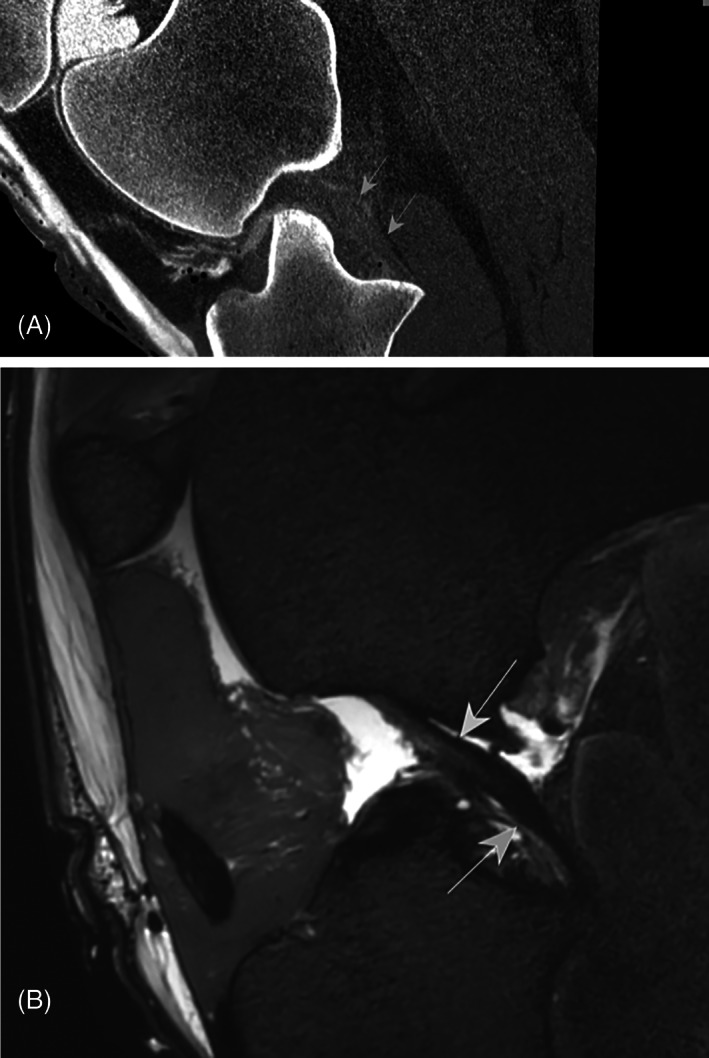
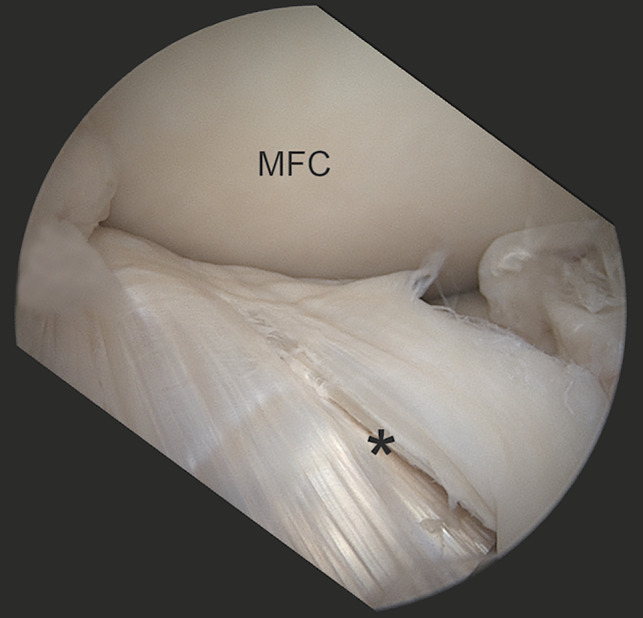
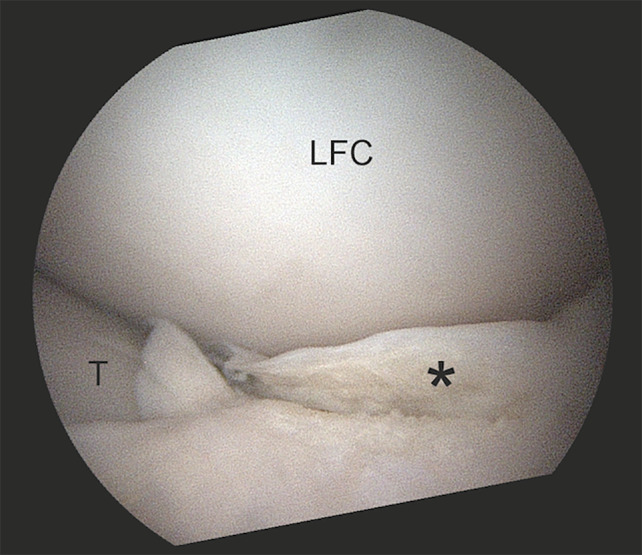
Stablike defects (n = 84) (16 mm long, 10 mm deep) were created in the menisci (n = 35), CLs (n = 24), and MTLs (n = 25) via arthroscopy prior to MRI and CTA (80 mL contrast at 85 mg/mL per joint). Two radiologists, unaware of the lesions, reached a consensus regarding the presence of lesions, based on 2 reviews of each study. Sensitivity and specificity of MRI and CTA were determined using arthroscopy as a reference and compared with McNemar's tests.
The sensitivity and specificity of MRI (41% and 86% respectively) and CTA (32% and 90% respectively) did not differ (P = .65). The sensitivity (MRI: 24%-50%; CTA:19%-40%) and specificity (MRI: 75%-92%; CTA 75%-100%) of imaging modalities did not differ when detecting lesions of the menisci, MTLs, and CLs (P = .1-1.0). The highest sensitivities were achieved when MTLs were evaluated with MRI (50%) and CLs with both modalities (40%).
The diagnostic performance of CTA was comparable with that of MRI, with a low to moderate sensitivity and high specificity.
Computed tomographic arthrography should be considered as an adjunct to diagnose CL injuries. This is important for equine clinicians, as the CL cannot be visualized adequately using basic imaging techniques preoperatively.
确定计算机断层扫描关节造影术(CTA)和 3 特斯拉磁共振成像(MRI)在检测马的人工半月板、半月板胫骨韧带(MTL)和交叉韧带(CL)病变方面的诊断性能。
离体对照实验室研究。
19 个来自成年马的膝关节。
通过关节镜在半月板(n=35)、CL(n=24)和 MTL(n=25)中创建了 84 个刺状缺陷(长 16mm,深 10mm),然后进行 MRI 和 CTA(每个关节 80mL 对比剂,浓度为 85mg/mL)。两名放射科医生在不知道病变的情况下,根据对每项研究的两次审查,就病变的存在达成共识。使用关节镜作为参考,确定 MRI 和 CTA 的敏感性和特异性,并使用 McNemar 检验进行比较。
MRI(分别为 41%和 86%)和 CTA(分别为 32%和 90%)的敏感性和特异性无差异(P=0.65)。当检测半月板、MTL 和 CL 的病变时,MRI 和 CTA 的敏感性(MRI:24%-50%;CTA:19%-40%)和特异性(MRI:75%-92%;CTA 75%-100%)无差异(P=0.1-1.0)。当使用 MRI 评估 MTL 时,以及当两种方式都用于评估 CL 时,敏感性最高(50%和 40%)。
CTA 的诊断性能与 MRI 相当,具有低到中等的敏感性和高特异性。
CTA 应被视为诊断 CL 损伤的辅助手段。这对马科临床医生很重要,因为在术前使用基本影像学技术无法充分显示 CL。