Arabzadeh AmirAhmad, Seyedsadeghi Mirsalim, Sadeghi Nahideh, Nejati Kazem, Mohammadian Erdi Ali
Department of Surgery, School of Medicine, Ardabil University of Medical Sciences, Ardabil, Iran.
Pharmaceutical Sciences Research Center, Ardabil University of Medical Sciences, Ardabil, Iran.
Anesth Pain Med. 2021 Dec 27;11(6):e114623. doi: 10.5812/aapm.114623. eCollection 2021 Dec.
Postoperative pain following laparoscopic cholecystectomy (LC) arises from incision sites and residual intraperitoneal CO gas. Opioids as a class of pain-relieving drugs are broadly used to control pain after LC; however, these drugs can cause various side effects.
The purpose of this study was to compare the efficacy of intraperitoneal injection of bupivacaine with that of intravenous ketorolac in managing postoperative pain in patients who had undergone LC.
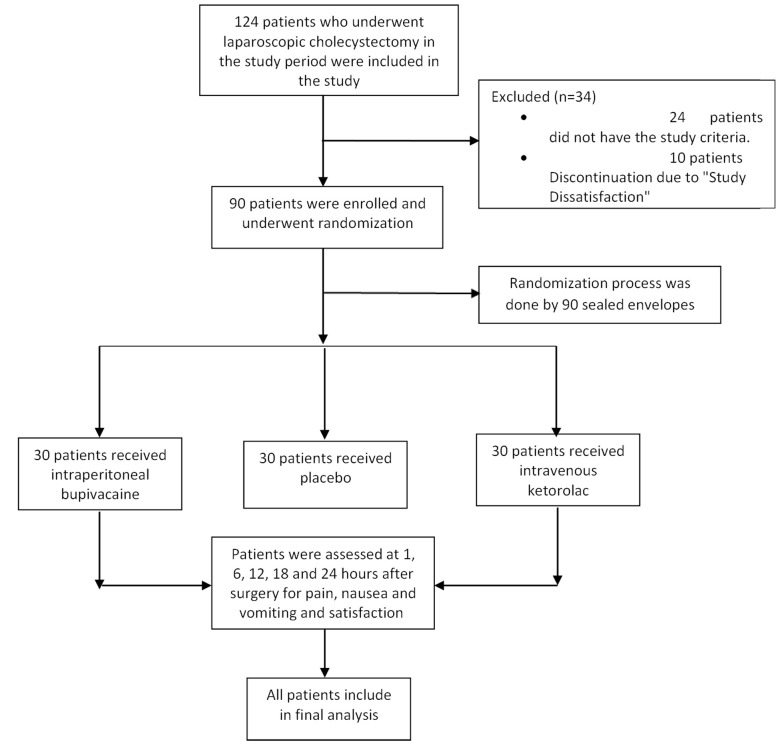
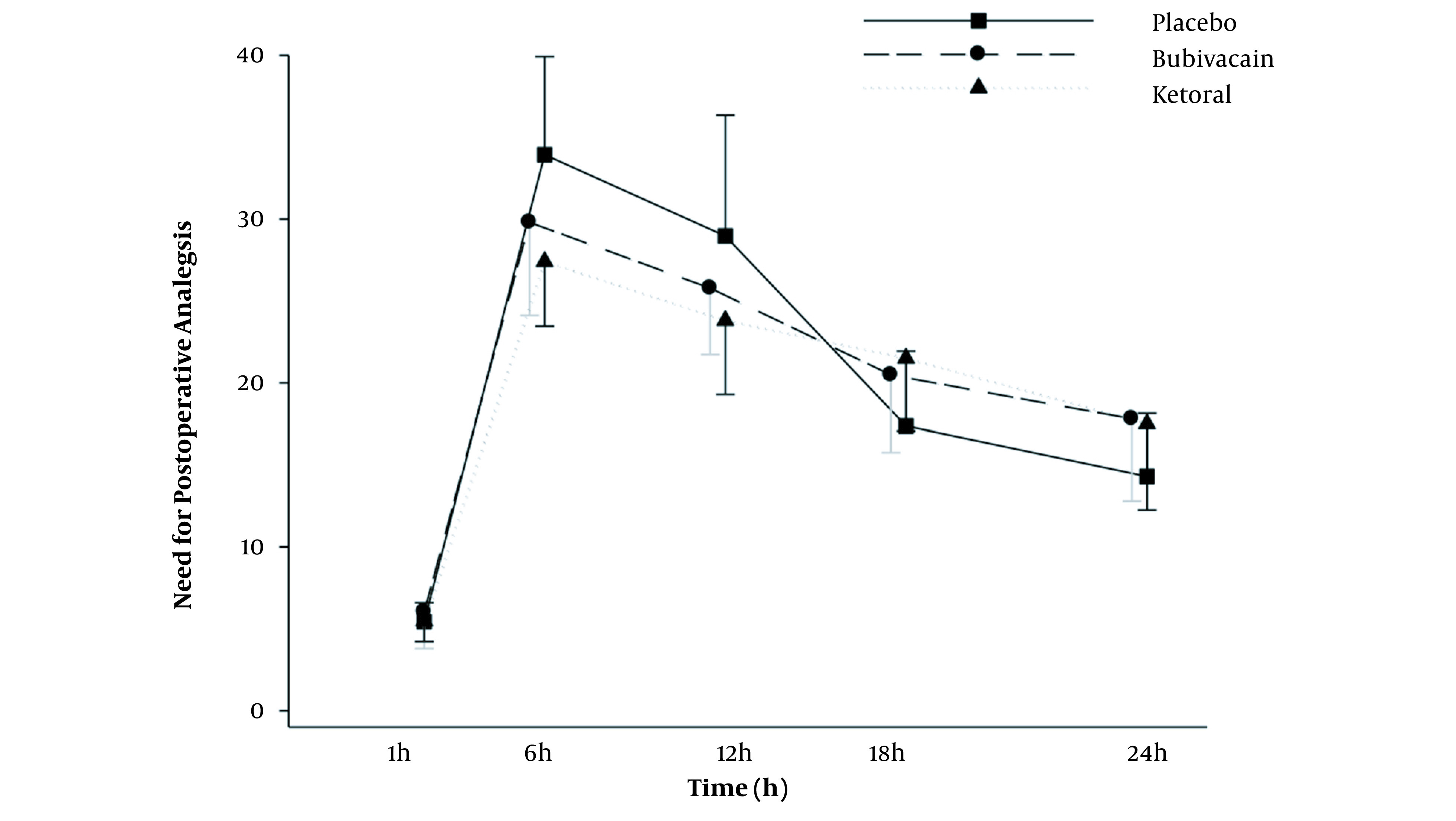
This randomized, double-blind clinical trial was carried out on patients who had undergone LC. Ninety patients who had undergone elective LC were randomly divided into 3 groups (n = 30 for each group). Group A received 40 mL of 0.25% bupivacaine solution intraperitoneally at the end of the operation; group B received 30 mg of ketorolac intravenously 30 minutes before surgery and every 8 hours after surgery, and patients in group C received normal saline intraperitoneally and intravenous injection. The patients were postoperatively assessed for Visual Analog Scale (VAS) scores, postoperative opioid consumption, shoulder pain, side effects (sedation, nausea, and vomiting), and satisfaction. The data were analyzed using SPSS. P values < 0.05 were considered significant.
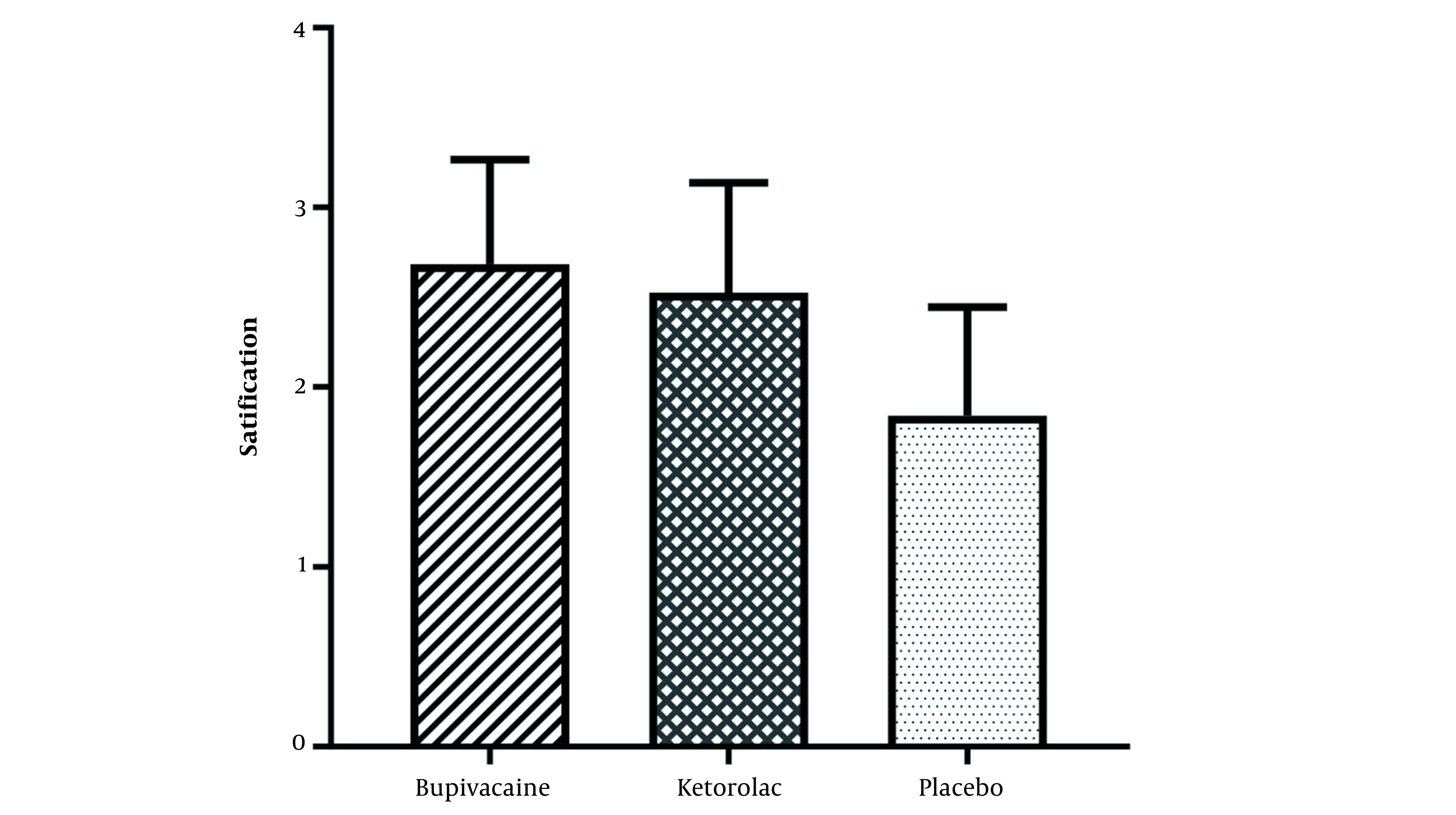
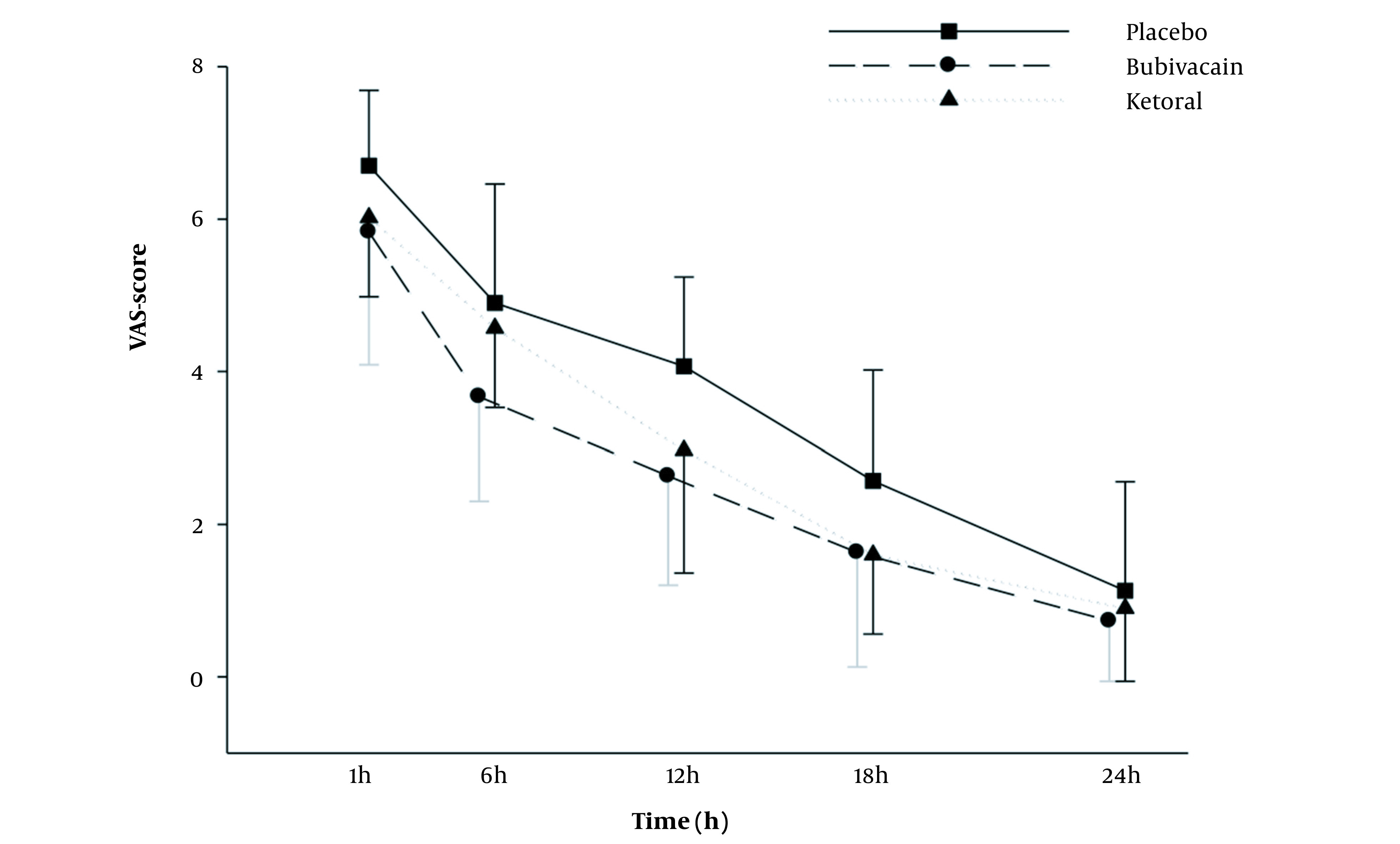
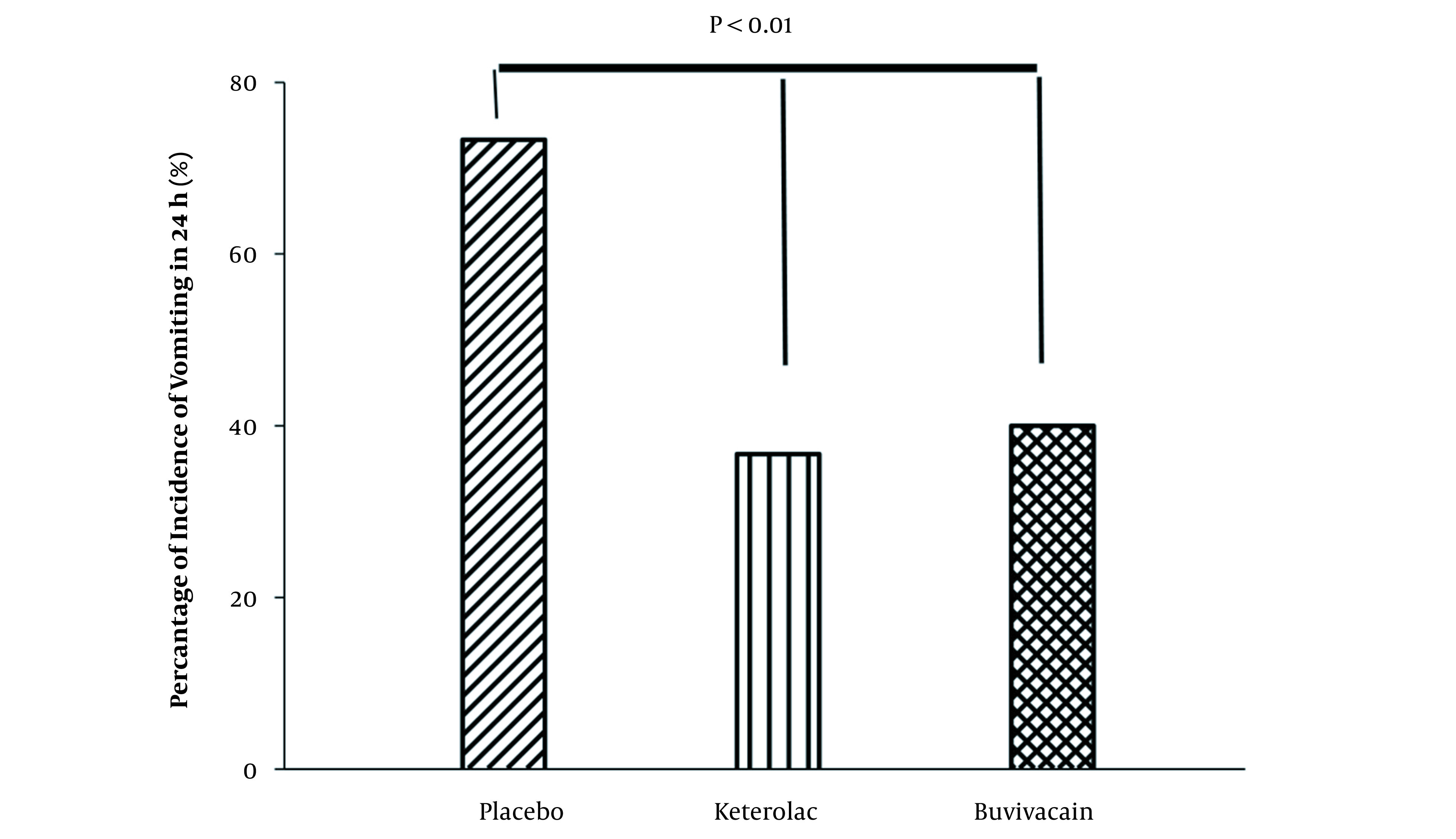
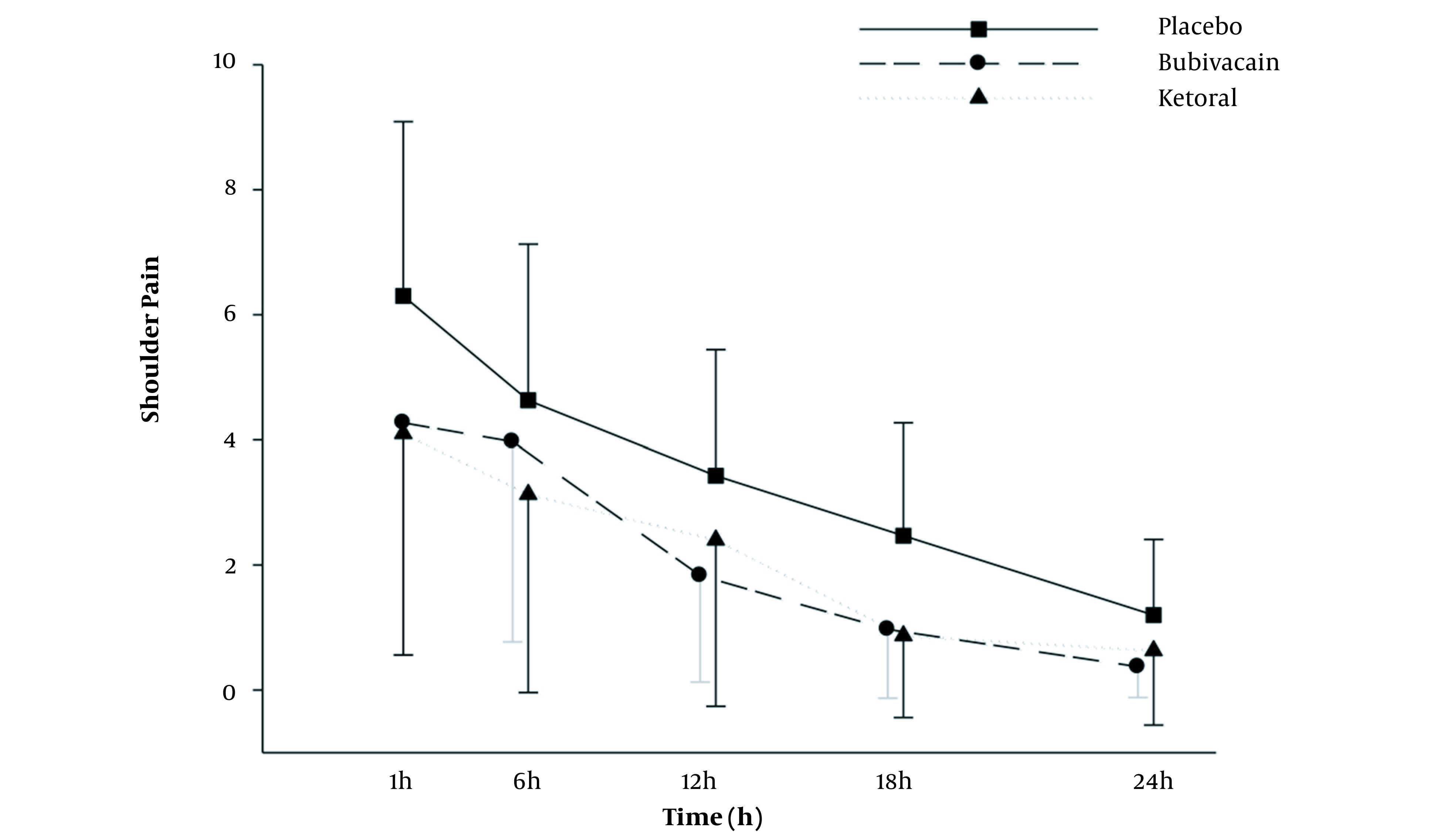
The intraperitoneal injection of bupivacaine and intravenous injection of ketorolac were significantly effective in reducing postoperative abdominal pain, shoulder pain, and incidence of nausea and vomiting compared to the placebo group (P < 0.001). Although intraperitoneal bupivacaine and intravenous ketorolac had no significant difference in pain relief compared with each other, patients in both bupivacaine and ketorolac groups were significantly more satisfied with their analgesia compared to the control group (P < 0.001).
Intraperitoneal injection of bupivacaine and intravenous injection of ketorolac both are safe and effective methods to control pain, nausea, and vomiting after LC.
腹腔镜胆囊切除术(LC)后的术后疼痛源于切口部位和腹腔内残留的二氧化碳气体。阿片类药物作为一类止痛药物被广泛用于控制LC术后的疼痛;然而,这些药物会引起各种副作用。
本研究的目的是比较腹腔注射布比卡因与静脉注射酮咯酸在管理接受LC手术患者术后疼痛方面的疗效。
本随机、双盲临床试验针对接受LC手术的患者进行。90例接受择期LC手术的患者被随机分为3组(每组n = 30)。A组在手术结束时腹腔内注射40 mL 0.25%布比卡因溶液;B组在手术前30分钟静脉注射30 mg酮咯酸,术后每8小时注射一次,C组患者腹腔内注射生理盐水并静脉注射。术后对患者进行视觉模拟评分(VAS)、术后阿片类药物消耗量、肩部疼痛、副作用(镇静、恶心和呕吐)及满意度评估。使用SPSS对数据进行分析。P值< 0.05被认为具有统计学意义。
与安慰剂组相比,腹腔注射布比卡因和静脉注射酮咯酸在减轻术后腹痛、肩部疼痛以及恶心和呕吐发生率方面具有显著效果(P < 0.001)。虽然腹腔注射布比卡因和静脉注射酮咯酸在疼痛缓解方面无显著差异,但布比卡因组和酮咯酸组患者对镇痛的满意度均显著高于对照组(P < 0.001)。
腹腔注射布比卡因和静脉注射酮咯酸都是控制LC术后疼痛、恶心和呕吐的安全有效方法。