Hennigs Jan K, Oqueka Tim, Harbaum Lars, Klose Hans
Abteilung für Pneumologie, Universitätsklinikum Hamburg-Eppendorf, Martinistr. 52, 20246, Hamburg, Deutschland.
II. Medizinische Klinik und Poliklinik, Universitätsklinikum Hamburg-Eppendorf, Hamburg, Deutschland.
Bundesgesundheitsblatt Gesundheitsforschung Gesundheitsschutz. 2022 Apr;65(4):462-470. doi: 10.1007/s00103-022-03513-2. Epub 2022 Mar 16.
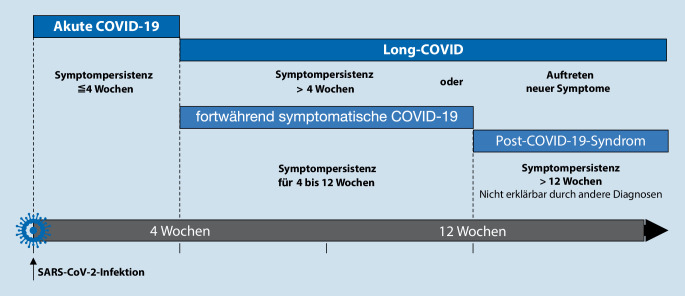
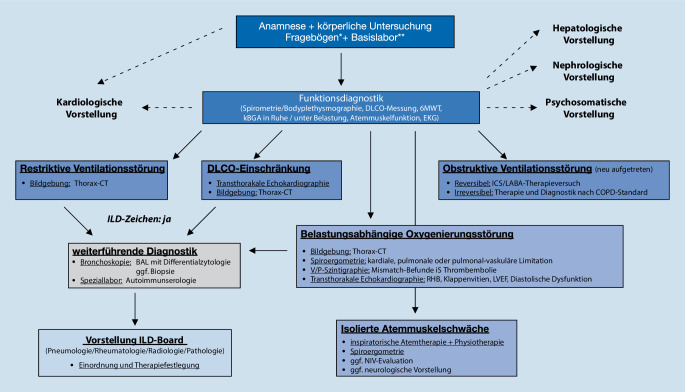
Organ-specific sequelae after COVID-19 occur frequently and are highly diverse in their features. Sequelae and symptoms persisting for more than four weeks after COVID-19 define the condition "long COVID."Organ-specific sequelae of COVID-19 generally occur more often after severe disease. Yet, duration and intensity of organ-specific sequelae are highly variable. While pulmonary sequelae typically persist after more severe acute disease, COVID-19 sequelae may also develop weeks after infection and can affect any organ. The degree of SARS-CoV‑2 specificity of COVID-19 sequelae, however, remains unclear. Thus, diagnosis and treatment of COVID-19 sequelae represent an interdisciplinary challenge. Diagnostic and therapeutic approaches are guided by type, extent, and cause of the specific sequelae as targeted therapy options for long COVID are lacking.In the present work, we review current knowledge regarding the prevalence/incidence, duration, specificity, type, and extent of organ-specific COVID-19 sequelae and summarize current diagnostic and therapeutic strategies (as of November 2021).
新冠病毒感染(COVID-19)后的器官特异性后遗症很常见,其特征高度多样。COVID-19后持续超过四周的后遗症和症状定义为“长新冠”状态。COVID-19的器官特异性后遗症通常在重症后更常出现。然而,器官特异性后遗症的持续时间和严重程度差异很大。虽然肺部后遗症通常在更严重的急性疾病后持续存在,但COVID-19后遗症也可能在感染数周后出现,并且可以影响任何器官。然而,COVID-19后遗症的严重急性呼吸综合征冠状病毒2(SARS-CoV-2)特异性程度仍不清楚。因此,COVID-19后遗症的诊断和治疗是一项跨学科挑战。由于缺乏针对长新冠的靶向治疗选择,诊断和治疗方法以特定后遗症的类型、程度和病因作为指导。在本研究中,我们回顾了关于器官特异性COVID-19后遗症的患病率/发病率、持续时间、特异性、类型和程度的现有知识,并总结了当前的诊断和治疗策略(截至2021年11月)。