Asan Livia, Bingel Ulrike, Kunkel Angelika
Klinik für Neurologie und Center for Translational Neuro- and Behavioral Sciences (C-TNBS), Unversitätsmedizin Essen, Hufelandstraße 55, 45147, Essen, Deutschland.
Schmerz. 2022 Jun;36(3):205-212. doi: 10.1007/s00482-022-00630-4. Epub 2022 Mar 17.
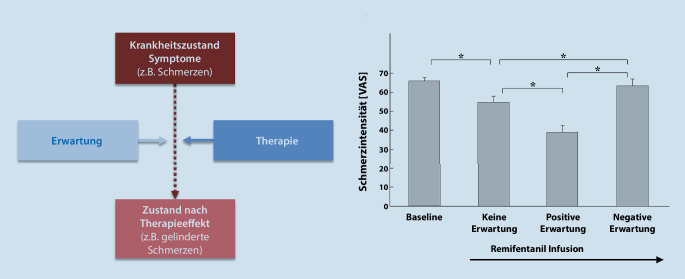
The efficacy of pain therapies can be substantially modulated by treatment expectations, which is reflected by the substantial placebo effects observed in pain (so called placebo analgesia).
What is currently known about the neurobiological and neurochemical mechanisms underlying placebo analgesia?
A focused presentation of key publications in the field embedded in a structured overview of the mechanistic concepts and current theories according to recent evidence.
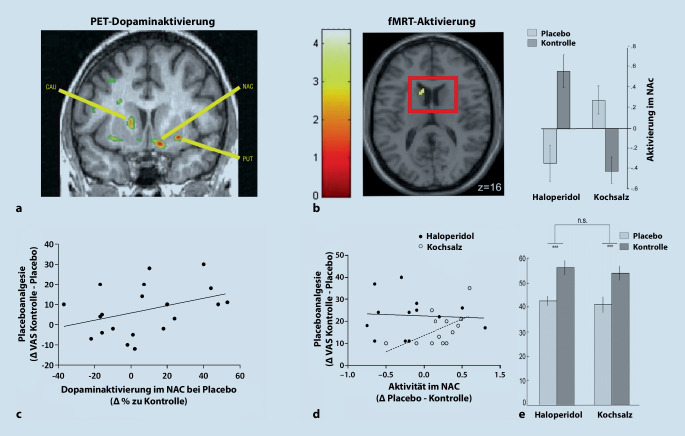
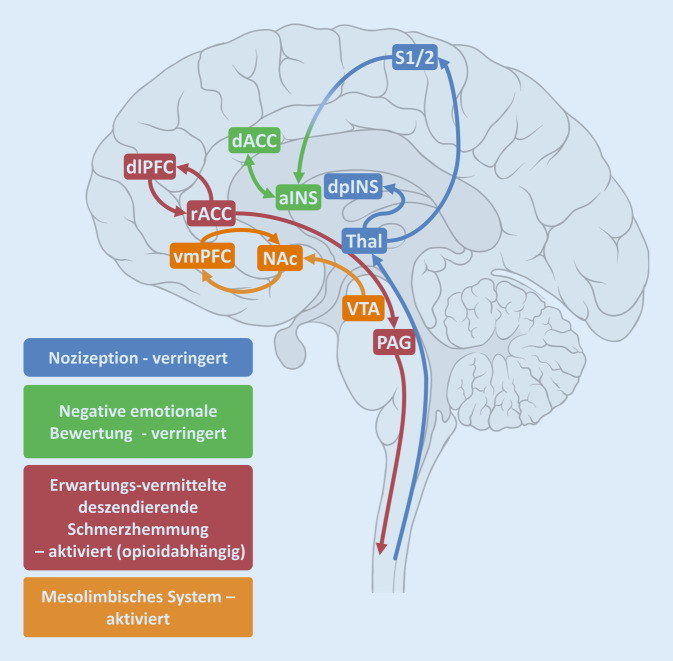
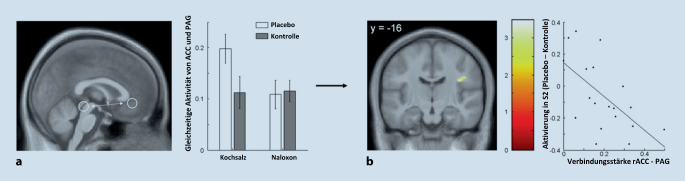
Experimental studies with functional neuroimaging showed that the effect of placebo analgesia is reflected by changes in brain activity related to pain processing and cognitive control. The important neurotransmitters involved include opioids and dopamine.
Placebo analgesia is associated with complex neurobiological and -physiological mechanisms. An advanced comprehension of these processes should be applied to optimize existing and future therapeutic approaches in pain therapy.
疼痛治疗的疗效会受到治疗预期的显著调节,这在疼痛中观察到的显著安慰剂效应(即所谓的安慰剂镇痛)中得到体现。
目前关于安慰剂镇痛背后的神经生物学和神经化学机制有哪些了解?
根据最新证据,对该领域的关键出版物进行重点介绍,并融入机制概念和当前理论的结构化概述。
功能性神经成像的实验研究表明,安慰剂镇痛的效果通过与疼痛处理和认知控制相关的大脑活动变化得以体现。涉及的重要神经递质包括阿片类物质和多巴胺。
安慰剂镇痛与复杂的神经生物学和生理机制相关。对这些过程的深入理解应用于优化现有和未来的疼痛治疗方法。