• 文献检索
  • 文档翻译
  • 深度研究
  • 学术资讯
  • Suppr Zotero 插件Zotero 插件
  • 邀请有礼
  • 套餐&价格
  • 历史记录
应用&插件
Suppr Zotero 插件Zotero 插件浏览器插件Mac 客户端Windows 客户端微信小程序
定价
高级版会员购买积分包购买API积分包
服务
文献检索文档翻译深度研究API 文档MCP 服务
关于我们
关于 Suppr公司介绍联系我们用户协议隐私条款
关注我们

Suppr 超能文献

核心技术专利:CN118964589B侵权必究
粤ICP备2023148730 号-1Suppr @ 2026

文献检索

告别复杂PubMed语法,用中文像聊天一样搜索,搜遍4000万医学文献。AI智能推荐,让科研检索更轻松。

立即免费搜索

文件翻译

保留排版,准确专业,支持PDF/Word/PPT等文件格式,支持 12+语言互译。

免费翻译文档

深度研究

AI帮你快速写综述,25分钟生成高质量综述,智能提取关键信息,辅助科研写作。

立即免费体验

尿激酶型纤溶酶原激活物受体(uPAR)作为癌症的治疗靶点。

Urokinase-type plasminogen activator receptor (uPAR) as a therapeutic target in cancer.

机构信息

State Key Laboratory of Research & Development of Characteristic Qin Medicine Resources (Cultivation), and Shaanxi Key Laboratory of Chinese Medicine Fundamentals and New Drugs Research, and Shaanxi Collaborative Innovation Center of Chinese Medicinal Resources Industrialization, Shaanxi University of Chinese Medicine, Xi'an, 712046, China.

Xi'an Hospital of Traditional Chinese Medicine, Xi'an, 710021, China.

出版信息

J Transl Med. 2022 Mar 18;20(1):135. doi: 10.1186/s12967-022-03329-3.

DOI:10.1186/s12967-022-03329-3
PMID:35303878
原文链接:https://pmc.ncbi.nlm.nih.gov/articles/PMC8932206/
Abstract

Urokinase-type plasminogen activator receptor (uPAR) is an attractive target for the treatment of cancer, because it is expressed at low levels in healthy tissues but at high levels in malignant tumours. uPAR is closely related to the invasion and metastasis of malignant tumours, plays important roles in the degradation of extracellular matrix (ECM), tumour angiogenesis, cell proliferation and apoptosis, and is associated with the multidrug resistance (MDR) of tumour cells, which has important guiding significance for the judgement of tumor malignancy and prognosis. Several uPAR-targeted antitumour therapeutic agents have been developed to suppress tumour growth, metastatic processes and drug resistance. Here, we review the recent advances in the development of uPAR-targeted antitumor therapeutic strategies, including nanoplatforms carrying therapeutic agents, photodynamic therapy (PDT)/photothermal therapy (PTT) platforms, oncolytic virotherapy, gene therapy technologies, monoclonal antibody therapy and tumour immunotherapy, to promote the translation of these therapeutic agents to clinical applications.

摘要

尿激酶型纤溶酶原激活物受体(uPAR)是癌症治疗的一个有吸引力的靶点,因为它在健康组织中低表达,但在恶性肿瘤中高表达。uPAR 与恶性肿瘤的侵袭和转移密切相关,在细胞外基质(ECM)的降解、肿瘤血管生成、细胞增殖和凋亡中发挥重要作用,与肿瘤细胞的多药耐药(MDR)有关,对肿瘤恶性程度和预后的判断具有重要的指导意义。已经开发了几种针对 uPAR 的抗肿瘤治疗药物来抑制肿瘤生长、转移过程和耐药性。在这里,我们综述了靶向 uPAR 的抗肿瘤治疗策略的最新进展,包括携带治疗药物的纳米平台、光动力疗法(PDT)/光热疗法(PTT)平台、溶瘤病毒治疗、基因治疗技术、单克隆抗体治疗和肿瘤免疫治疗,以促进这些治疗药物向临床应用的转化。
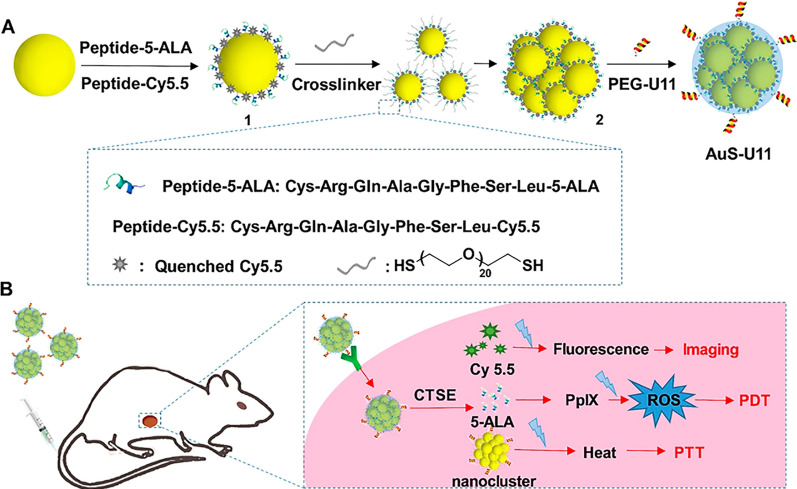
https://cdn.ncbi.nlm.nih.gov/pmc/blobs/df89/8932206/a80ddecf7488/12967_2022_3329_Fig4_HTML.jpg
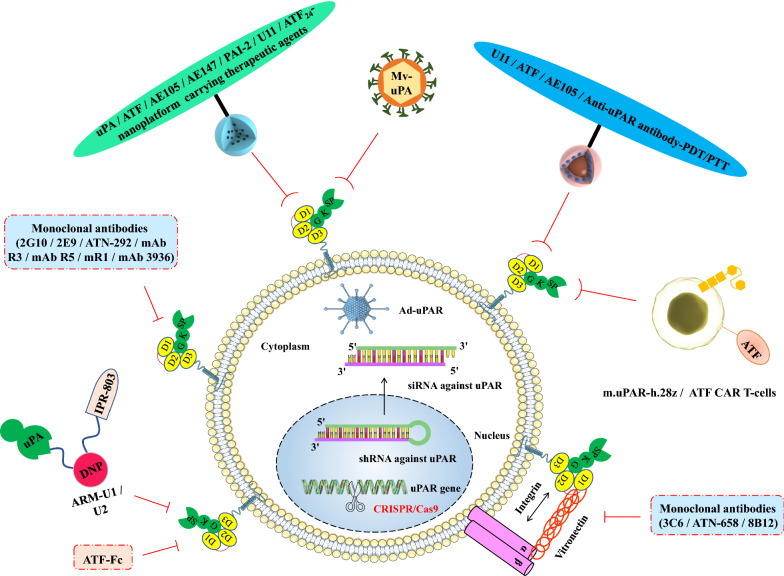
https://cdn.ncbi.nlm.nih.gov/pmc/blobs/df89/8932206/ed4fd0ece57b/12967_2022_3329_Fig1_HTML.jpg
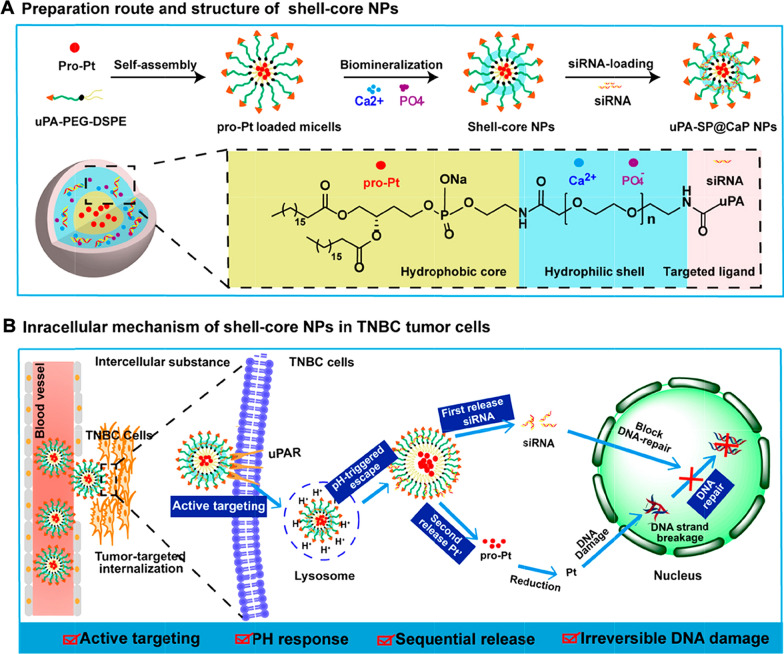
https://cdn.ncbi.nlm.nih.gov/pmc/blobs/df89/8932206/427e4435a335/12967_2022_3329_Fig2_HTML.jpg
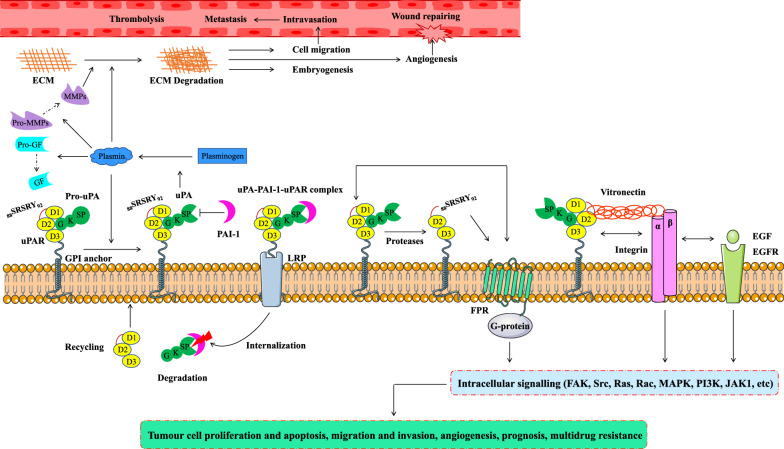
https://cdn.ncbi.nlm.nih.gov/pmc/blobs/df89/8932206/0c33d300256f/12967_2022_3329_Fig3_HTML.jpg
https://cdn.ncbi.nlm.nih.gov/pmc/blobs/df89/8932206/a80ddecf7488/12967_2022_3329_Fig4_HTML.jpg
https://cdn.ncbi.nlm.nih.gov/pmc/blobs/df89/8932206/ed4fd0ece57b/12967_2022_3329_Fig1_HTML.jpg
https://cdn.ncbi.nlm.nih.gov/pmc/blobs/df89/8932206/427e4435a335/12967_2022_3329_Fig2_HTML.jpg
https://cdn.ncbi.nlm.nih.gov/pmc/blobs/df89/8932206/0c33d300256f/12967_2022_3329_Fig3_HTML.jpg
https://cdn.ncbi.nlm.nih.gov/pmc/blobs/df89/8932206/a80ddecf7488/12967_2022_3329_Fig4_HTML.jpg

相似文献

1
Urokinase-type plasminogen activator receptor (uPAR) as a therapeutic target in cancer.尿激酶型纤溶酶原激活物受体(uPAR)作为癌症的治疗靶点。
J Transl Med. 2022 Mar 18;20(1):135. doi: 10.1186/s12967-022-03329-3.
2
uPAR, beyond regulating physiological functions, has orchestrated roles in cancer (Review).尿激酶型纤溶酶原激活物受体(uPAR)除了调节生理功能外,还在癌症中发挥着重要作用(综述)。
Int J Oncol. 2022 Dec;61(6). doi: 10.3892/ijo.2022.5441. Epub 2022 Oct 20.
3
Urokinase plasminogen activator receptor (uPAR) targeted nuclear imaging and radionuclide therapy.尿激酶型纤溶酶原激活物受体(uPAR)靶向核医学影像与放射性核素治疗。
Theranostics. 2013 Jun 29;3(7):507-15. doi: 10.7150/thno.5557. Print 2013.
4
Expression of urokinase-type plasminogen activator/urokinase-type plasminogen activator receptor and maspin in oral squamous cell carcinoma: Association with mode of invasion and clinicopathological factors.尿激酶型纤溶酶原激活物/尿激酶型纤溶酶原激活物受体和 maspin 在口腔鳞状细胞癌中的表达:与浸润方式和临床病理因素的关系。
Oncol Rep. 2011 Dec;26(6):1555-60. doi: 10.3892/or.2011.1419. Epub 2011 Aug 10.
5
RNA interference-directed knockdown of urokinase plasminogen activator and urokinase plasminogen activator receptor inhibits prostate cancer cell invasion, survival, and tumorigenicity in vivo.RNA干扰介导的尿激酶型纤溶酶原激活剂及尿激酶型纤溶酶原激活剂受体的敲低可抑制前列腺癌细胞的侵袭、存活及体内致瘤性。
J Biol Chem. 2005 Oct 28;280(43):36529-40. doi: 10.1074/jbc.M503111200. Epub 2005 Aug 26.
6
The urokinase-system in tumor tissue stroma of the breast and breast cancer cell invasion.乳腺肿瘤组织基质中的尿激酶系统与乳腺癌细胞侵袭
Int J Oncol. 2009 Jan;34(1):15-23.
7
Activation of urokinase plasminogen activator and its receptor axis is essential for macrophage infiltration in a prostate cancer mouse model.尿激酶型纤溶酶原激活物及其受体轴的激活对于前列腺癌小鼠模型中巨噬细胞浸润是必不可少的。
Neoplasia. 2011 Jan;13(1):23-30. doi: 10.1593/neo.10728.
8
uPA/uPAR and SERPINE1 in head and neck cancer: role in tumor resistance, metastasis, prognosis and therapy.头颈部癌症中的尿激酶型纤溶酶原激活物/尿激酶型纤溶酶原激活物受体(uPA/uPAR)和丝氨酸蛋白酶抑制剂E1(SERPINE1):在肿瘤耐药、转移、预后及治疗中的作用
Oncotarget. 2016 Aug 30;7(35):57351-57366. doi: 10.18632/oncotarget.10344.
9
Antagonistic anti-urokinase plasminogen activator receptor (uPAR) antibodies significantly inhibit uPAR-mediated cellular signaling and migration.拮抗型抗尿激酶型纤溶酶原激活物受体 (uPAR) 抗体可显著抑制 uPAR 介导的细胞信号转导和迁移。
J Biol Chem. 2010 Aug 27;285(35):26878-26888. doi: 10.1074/jbc.M109.077677. Epub 2010 May 25.
10
Role of urokinase receptor in tumor progression and development.尿激酶受体在肿瘤演进和发展中的作用。
Theranostics. 2013 Jun 25;3(7):487-95. doi: 10.7150/thno.4218. Print 2013.

引用本文的文献

1
The urokinase receptor/uPAR is a major effector of p53 gain-of-function mutations in gemcitabine-treated pancreatic ductal adenocarcinoma.尿激酶受体/uPAR是吉西他滨治疗的胰腺导管腺癌中p53功能获得性突变的主要效应分子。
J Biol Chem. 2025 Aug 7;301(9):110561. doi: 10.1016/j.jbc.2025.110561.
2
GPLD1 Attenuates Heart Failure via Dual-Membrane Localization to Inhibit uPAR.GPLD1通过双膜定位抑制uPAR减轻心力衰竭。
Circ Res. 2025 Aug 15;137(5):e124-e143. doi: 10.1161/CIRCRESAHA.124.325623. Epub 2025 Jul 9.
3
Design of a novel multiepitope vaccine against glioblastoma by in silico approaches.

本文引用的文献

1
Targeting uPA-uPAR interaction to improve intestinal epithelial barrier integrity in inflammatory bowel disease.靶向 uPA-uPAR 相互作用改善炎症性肠病的肠道上皮屏障完整性。
EBioMedicine. 2022 Jan;75:103758. doi: 10.1016/j.ebiom.2021.103758. Epub 2021 Dec 18.
2
The Urokinase Receptor (uPAR) as a "Trojan Horse" in Targeted Cancer Therapy: Challenges and Opportunities.尿激酶受体(uPAR)作为靶向癌症治疗中的“特洛伊木马”:挑战与机遇
Cancers (Basel). 2021 Oct 27;13(21):5376. doi: 10.3390/cancers13215376.
3
Development of AE147 Peptide-Conjugated Nanocarriers for Targeting uPAR-Overexpressing Cancer Cells.
通过计算机辅助方法设计一种针对胶质母细胞瘤的新型多表位疫苗。
Sci Rep. 2025 Jul 5;15(1):24046. doi: 10.1038/s41598-025-03672-7.
4
NF-κB in inflammation and cancer.炎症与癌症中的核因子-κB
Cell Mol Immunol. 2025 Jun 25. doi: 10.1038/s41423-025-01310-w.
5
The role of IGF-2 and its variants in enhancing endothelial migration and angiogenesis.胰岛素样生长因子-2(IGF-2)及其变体在促进内皮细胞迁移和血管生成中的作用。
Front Cell Dev Biol. 2025 May 16;13:1598705. doi: 10.3389/fcell.2025.1598705. eCollection 2025.
6
Silver Nanoparticles at Low Concentrations Embedded in ECM Promote Endothelial Monolayer Formation and Cell Migration.嵌入细胞外基质中的低浓度银纳米颗粒促进内皮单层形成和细胞迁移。
Int J Mol Sci. 2025 May 16;26(10):4761. doi: 10.3390/ijms26104761.
7
Hydrophobin-Coated Echogenic Microbubbles for Molecular Targeting of Tumor Cells.用于肿瘤细胞分子靶向的疏水蛋白包被的超声微泡
Adv Sci (Weinh). 2025 Jun;12(22):e2401526. doi: 10.1002/advs.202401526. Epub 2025 May 19.
8
Proteomics-Based Soluble Urokinase Plasminogen Activator Receptor Levels and Long-Term Cardiovascular Outcomes in Survivors of Breast Cancer: A UK Biobank Study.基于蛋白质组学的可溶性尿激酶型纤溶酶原激活物受体水平与乳腺癌幸存者的长期心血管结局:一项英国生物银行研究
J Am Heart Assoc. 2025 May 6;14(9):e039728. doi: 10.1161/JAHA.124.039728. Epub 2025 May 2.
9
Revisiting the role of cancer-associated fibroblasts in tumor microenvironment.重新审视癌症相关成纤维细胞在肿瘤微环境中的作用。
Front Immunol. 2025 Apr 17;16:1582532. doi: 10.3389/fimmu.2025.1582532. eCollection 2025.
10
Innovative nanoparticle strategies for treating oral cancers.治疗口腔癌的创新纳米颗粒策略。
Med Oncol. 2025 Apr 26;42(6):182. doi: 10.1007/s12032-025-02728-y.
AE147 肽偶联纳米载体的研制及其用于靶向 uPAR 过表达癌细胞。
Int J Nanomedicine. 2021 Aug 12;16:5437-5449. doi: 10.2147/IJN.S315619. eCollection 2021.
4
CRISPR/Cas9 uPAR Gene Knockout Results in Tumor Growth Inhibition, EGFR Downregulation and Induction of Stemness Markers in Melanoma and Colon Carcinoma Cell Lines.CRISPR/Cas9介导的uPAR基因敲除导致黑色素瘤和结肠癌细胞系中的肿瘤生长抑制、表皮生长因子受体(EGFR)下调以及干性标志物的诱导。
Front Oncol. 2021 May 14;11:663225. doi: 10.3389/fonc.2021.663225. eCollection 2021.
5
Development of inhibitors for uPAR: blocking the interaction of uPAR with its partners.uPAR 抑制剂的开发:阻断 uPAR 与其配体的相互作用。
Drug Discov Today. 2021 Apr;26(4):1076-1085. doi: 10.1016/j.drudis.2021.01.016. Epub 2021 Jan 21.
6
Suppression of Urokinase-Type Plasminogen Activator Receptor by Docosahexaenoic Acid Mediated by Heme Oxygenase-1 in 12--Tetradecanoylphorbol-13-Acetate-Induced Human Endothelial Cells.在12-十四酰佛波醇-13-乙酸酯诱导的人内皮细胞中,血红素加氧酶-1介导的二十二碳六烯酸对尿激酶型纤溶酶原激活物受体的抑制作用
Front Pharmacol. 2020 Nov 26;11:577302. doi: 10.3389/fphar.2020.577302. eCollection 2020.
7
Small-Molecule Inhibition of the uPAR ⋅ uPA Interaction by Conformational Selection.小分子通过构象选择抑制 uPAR ⋅ uPA 相互作用。
ChemMedChem. 2021 Jan 19;16(2):377-387. doi: 10.1002/cmdc.202000558. Epub 2020 Dec 3.
8
An ATF peptide-functionalized β-elemene-nanostructured lipid carrier combined with cisplatin for bladder cancer treatment.载阿霉素反义寡核苷酸的β-榄香烯纳米结构脂质载体联合顺铂治疗膀胱癌。
Cancer Biol Med. 2020 Aug 15;17(3):676-692. doi: 10.20892/j.issn.2095-3941.2020.0454.
9
Photonic hyperthermal and sonodynamic nanotherapy targeting oral squamous cell carcinoma.靶向口腔鳞状细胞癌的光子热疗和超声动力纳米疗法
J Mater Chem B. 2020 Sep 14. doi: 10.1039/d0tb01089h.
10
Engineering CAR-T Cells for Next-Generation Cancer Therapy.工程化 CAR-T 细胞用于下一代癌症治疗。
Cancer Cell. 2020 Oct 12;38(4):473-488. doi: 10.1016/j.ccell.2020.07.005. Epub 2020 Jul 30.