Internal Medicine-Oncology, The First Affiliated Hospital of Xi'an Jiaotong University, Xi'an, Shaanxi, China.
Department of Hematology and Oncology, Beijing Tsinghua Changgung Hospital, School of Clinical Medicine, Tsinghua University, Chaoyang District, Beijing, China.
ESMO Open. 2022 Apr;7(2):100405. doi: 10.1016/j.esmoop.2022.100405. Epub 2022 Mar 16.
Kinase gene fusions are strong driver mutations in neoplasia; however, kinase intergenic-breakpoint rearrangements (IGRs) confound the detection of such fusions and of targeted treatments. We aim to provide an overview of kinase IGRs in a large lung cancer cohort and examine real-world survival outcomes of patients with such fusions.
Mutational profiles analyzed using targeted next-generation sequencing of 425 cancer-related genes between June 2016 and July 2019 were retrospectively reviewed. Patients' demographic data, clinical characteristics, and survivals were analyzed. RNA sequencing or immunohistochemical assays were carried out to verify chimeric fusion products.
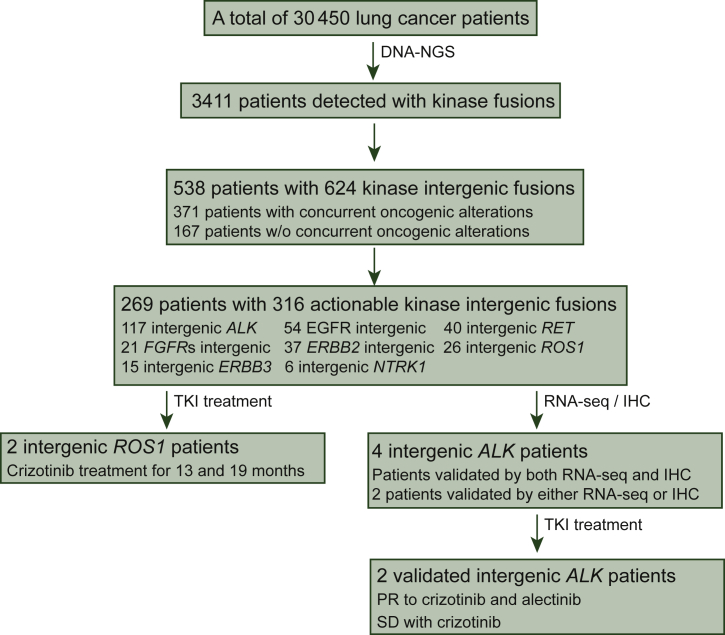
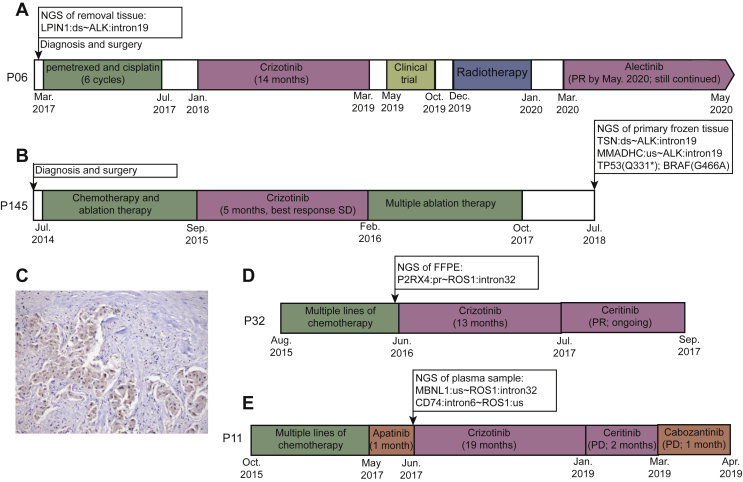
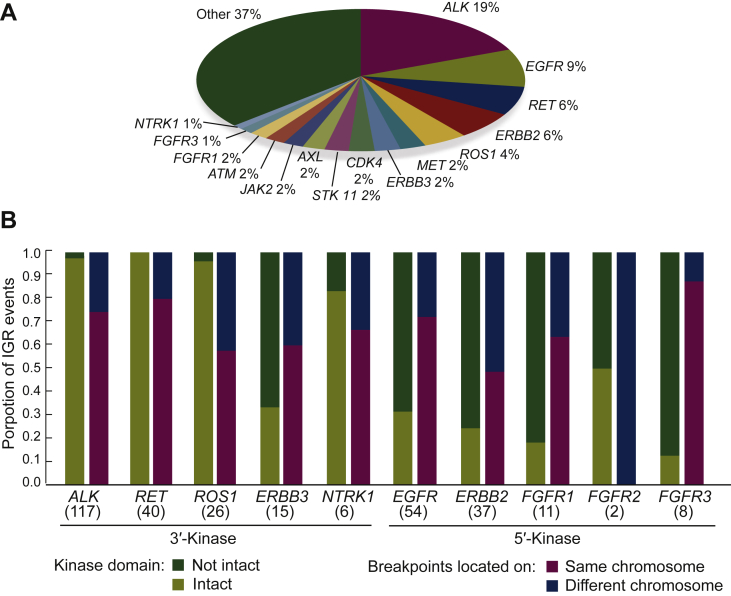
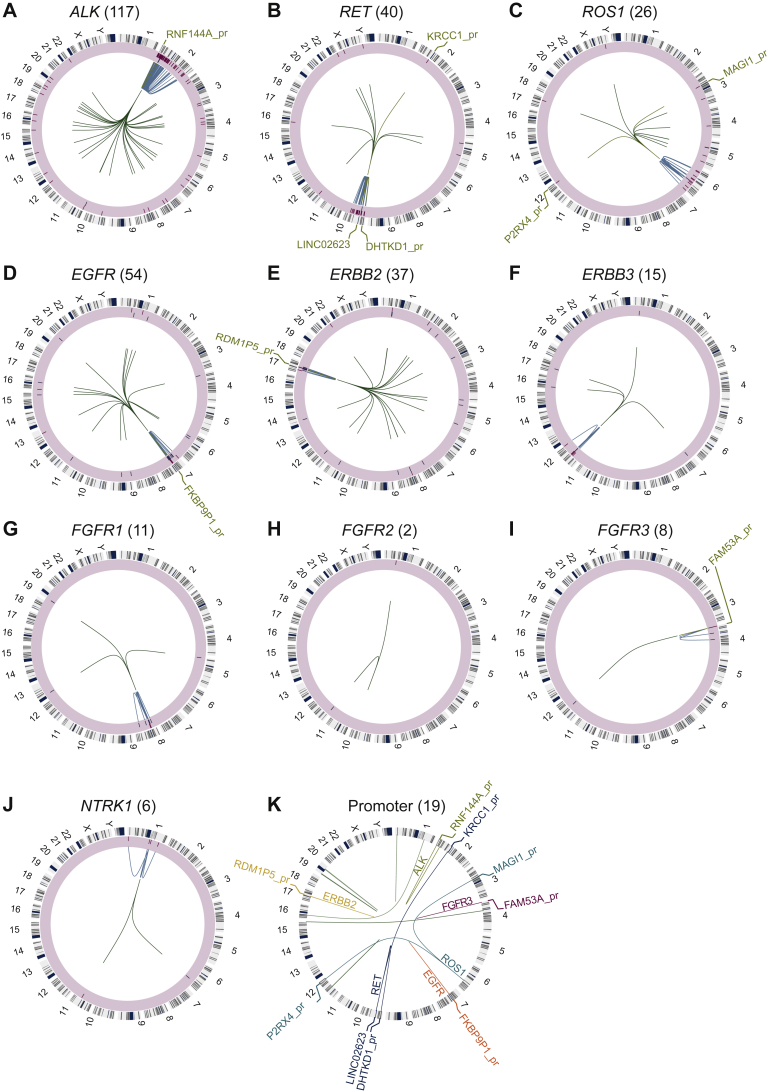
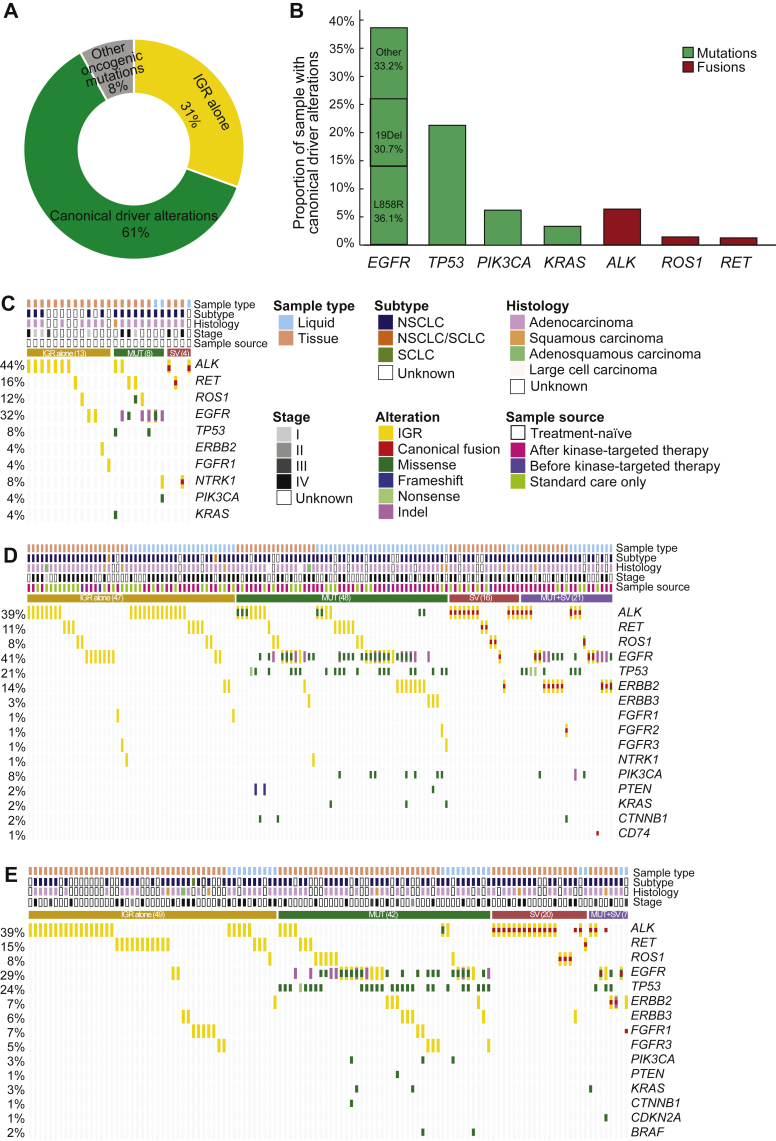
We identified 3411 patients with kinase fusions from a cohort of 30 450 patients with lung cancer, and 624 kinase IGR events were identified in 538 of the 3411 patients. The most frequently identified kinase genes included anaplastic lymphoma kinase (ALK), RET proto-oncogene (RET), ROS proto-oncogene 1 (ROS1), Erb-B2 receptor tyrosine kinase 2/3 (ERBB2/3), and epidermal growth factor receptor (EGFR). Our data showed that most (67%) kinase IGRs occurred on the same chromosome and kinase domains remained intact at the 3'-end. Approximately 3% (19/624) of the kinase IGRs had one genomic breakpoint located in gene promoter regions, including nine fusion events involving ALK, RET, ROS1, EGFR, ERBB2, or fibroblast growth factor receptor 3 (FGFR3). Among the 538 patients with kinase IGRs, 167 (31%) lacked oncogenic driver mutations, among which 28 received targeted therapies in real-world practice. Notably, three ALK IGR patients who harbored no canonical oncogenic aberrations were confirmed with an EML4-ALK chimeric fusion product by RNA sequencing and/or ALK immunohistochemical assays. One patient demonstrated a favorable clinical outcome after 14 months on crizotinib. An additional two patients who had ROS1 IGRs demonstrated a clinical benefit after 13 and 19 months on crizotinib, respectively.
A large real-world lung cancer cohort with kinase IGRs was comprehensively analyzed for their molecular characteristics. The data indicated the potential oncogenic function of kinase IGRs and their outcomes following the administration of targeted therapies.
激酶基因融合是肿瘤中的强驱动突变;然而,激酶基因间断裂点重排(IGRs)会干扰这些融合的检测和靶向治疗。我们旨在提供一个大型肺癌队列中激酶 IGR 的概述,并检查具有此类融合的患者的实际生存结果。
回顾性分析了 2016 年 6 月至 2019 年 7 月期间使用靶向下一代测序对 425 个癌症相关基因进行的突变分析。分析了患者的人口统计学数据、临床特征和生存情况。进行 RNA 测序或免疫组织化学检测以验证嵌合融合产物。
我们从 30450 名肺癌患者的队列中确定了 3411 名具有激酶融合的患者,在 3411 名患者中的 538 名患者中发现了 624 个激酶 IGR 事件。最常鉴定的激酶基因包括间变性淋巴瘤激酶(ALK)、RET 原癌基因(RET)、ROS 原癌基因 1(ROS1)、表皮生长因子受体酪氨酸激酶 2/3(ERBB2/3)和表皮生长因子受体(EGFR)。我们的数据显示,大多数(67%)激酶 IGR 发生在同一染色体上,并且激酶结构域在 3'-末端保持完整。大约 3%(19/624)的激酶 IGR 有一个基因组断点位于基因启动子区域,包括九个涉及 ALK、RET、ROS1、EGFR、ERBB2 或成纤维细胞生长因子受体 3(FGFR3)的融合事件。在 538 名具有激酶 IGR 的患者中,167 名(31%)缺乏致癌驱动突变,其中 28 名在实际实践中接受了靶向治疗。值得注意的是,三名携带无典型致癌异常的 ALK IGR 患者通过 RNA 测序和/或 ALK 免疫组织化学检测证实存在 EML4-ALK 嵌合融合产物。一名患者在接受克唑替尼治疗 14 个月后获得了良好的临床结局。另外两名 ROS1 IGR 患者分别在接受克唑替尼治疗 13 个月和 19 个月后获得了临床获益。
对具有激酶 IGR 的大型真实世界肺癌队列进行了全面分析,以研究其分子特征。数据表明激酶 IGRs 的潜在致癌功能及其在接受靶向治疗后的结果。