European Centre for Social Welfare Policy and Research, Vienna, Austria.
Int J Equity Health. 2022 Mar 19;21(1):39. doi: 10.1186/s12939-022-01639-y.
Most countries in Europe require out-of-pocket payments (OPPs) for nursing homes based on users' income and often assets. This was also the case in Austria until 2018 when asset-based contributions to residential care -denoted the 'Pflegeregress' - were abolished, leaving a shortfall in revenue. We aim to determine how the Pflegeregress was distributed across different groups in Austria prior to 2018, what the distributional consequences of its abolishment were, and what the distributional impact of different financing alternatives would be.
Circumventing data availability issues, we construct a micro-simulation model using a matched administrative dataset on residential care users receiving the Austrian care allowance (Pflegegeldinformation, PFIF, HVB, and Pflegedienstleistungsstatistik, Statistik Austria) and survey data (SHARE, wave 6). Using this model, we estimate the expected duration of residential care and OPPs under the Pflegeregress of a representative sample of older people aged 65 + in Austria, as well as OPPs under budgetary neutral financing alternatives to the abolished asset-based contribution, namely an inheritance tax and a social insurance scheme. The distributional impact of abolishing the Pflegeregress and these alternative scenarios is assessed through a number of measures, such as ability to pay, Concentration Indices (CI) and a needs-standardized measure.
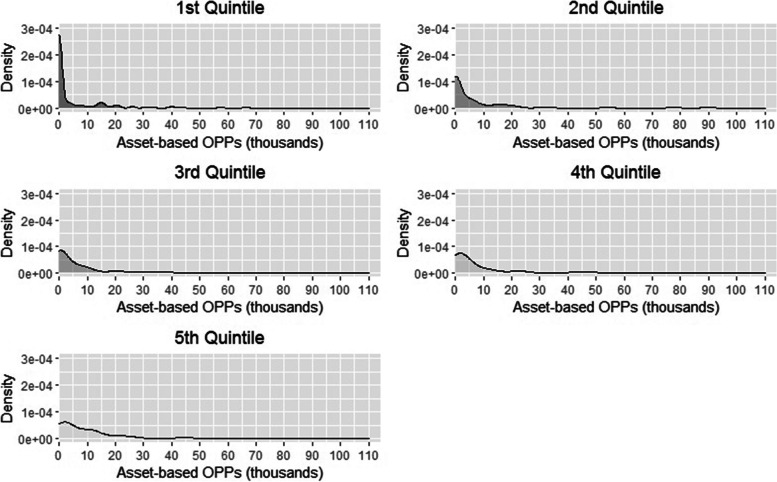
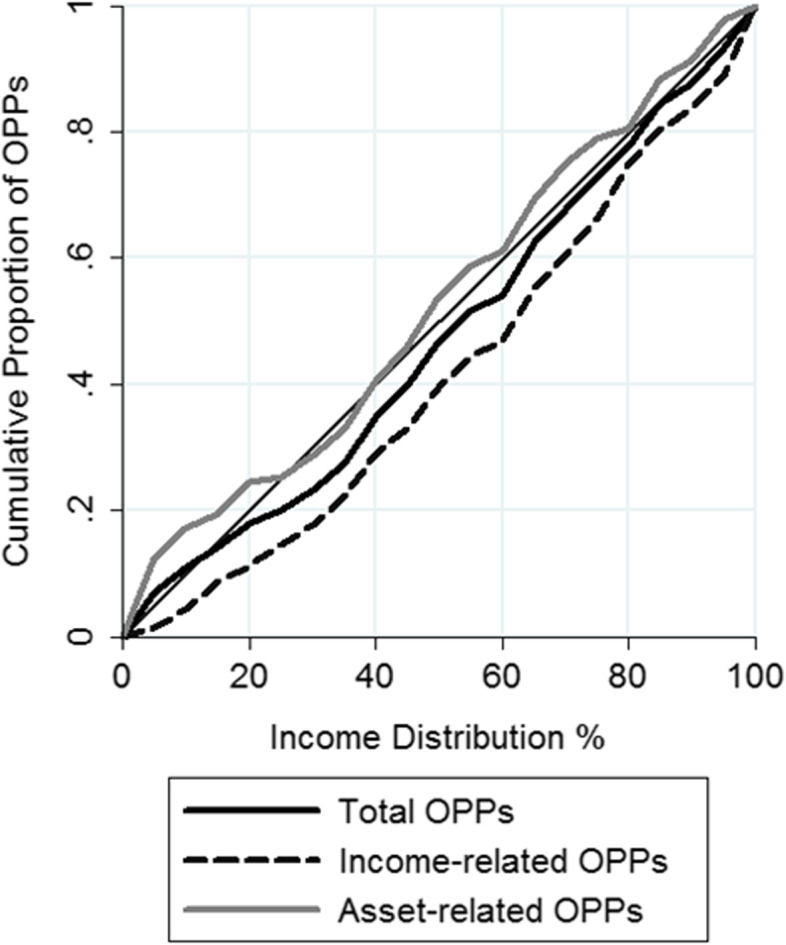
We find that lower income individuals and homeowners disproportionately contributed to asset-based OPPs for residential care prior to 2018, due in large part to their higher use of residential care and the low asset-exemption thresholds. These groups were therefore the largest beneficiaries of its abolishment. The alternative financing scenarios tested would result in a more progressive distribution of payments (i.e. concentrated on more affluent individuals).
Our findings indicate the limited ability of asset-based OPPs to target those with higher assets, thus questioning the fairness of these instruments for financing residential care facilities for older people in Austria. Findings also suggest that the parameterization of such OPPs (such as asset exemption thresholds) and patterns of residential care use are key variables for assessing the distribution of asset-based OPPs for residential care use. Policy alternatives that decouple payments from use would entail greater transfers from healthy to less healthier individuals.
大多数欧洲国家都要求养老院根据用户的收入(通常还有资产)收取自费费用。直到 2018 年,奥地利也是如此,当时取消了针对居住护理的基于资产的缴款(称为“Pflegeregress”),导致收入出现缺口。我们旨在确定在 2018 年之前,Pflegeregress 在奥地利的不同群体中是如何分配的,取消该制度的分配后果是什么,以及不同融资替代方案的分配影响是什么。
为了规避数据可用性问题,我们使用关于接受奥地利护理津贴(Pflegegeldinformation、PFIF、HVB 和 Pflegedienstleistungsstatistik、Statistik Austria)的居住护理用户的匹配行政数据集和调查数据(SHARE,第 6 波)构建了一个微观模拟模型。使用该模型,我们估计了在奥地利代表性的 65 岁以上老年人样本中,Pflegeregress 下的预期居住护理和自费费用,以及取消基于资产的缴款后预算中性的替代融资方案(遗产税和社会保险计划)下的自费费用。通过一系列措施(如支付能力、集中指数(CI)和需求标准化措施)评估取消 Pflegeregress 和这些替代方案的分配影响。
我们发现,在 2018 年之前,低收入个人和房主因更多地使用居住护理服务和较低的资产豁免门槛而不成比例地缴纳了基于资产的居住护理自费费用,因此是取消该制度的最大受益者。测试的替代融资方案将导致支付的分配更加累进(即集中在更富裕的个人身上)。
我们的研究结果表明,基于资产的自费费用难以针对那些拥有更高资产的人,因此对这些为奥地利老年人居住护理设施融资的工具的公平性提出了质疑。研究结果还表明,此类自费费用的参数化(如资产豁免门槛)和居住护理使用模式是评估基于资产的自费费用用于居住护理使用的分配的关键变量。将付款与使用脱钩的政策替代方案将导致从健康人群向不太健康人群转移更多资金。