Shao Xiao Dong, Shao Hao Tian, Wang Le, Zhang Yong Guo, Tian Ye
Department of Gastroenterology, General Hospital of Northern Theater Command, Shenyang, China.
School of Basic Medical Sciences, Guangxi Medical University, Nanning, China.
Front Med (Lausanne). 2022 Mar 4;9:772954. doi: 10.3389/fmed.2022.772954. eCollection 2022.
For patients with obscure gastrointestinal bleeding (OGIB), finding the bleeding site is challenging. Balloon-assisted enteroscopy (BAE) has become the preferred diagnostic modality for OGIB. The long-term outcome of patients with negative BAE remains undefined. The present study aimed to evaluate the long-term outcomes of patients with negative BAE results for OGIB and to clarify the effect of further investigations at the time of rebleeding with a systematic review and meta-analysis of the available cohort studies.
Studies were searched through the PubMed, EMBASE, and Cochrane library databases. The following indexes were analyzed: rebleeding rate after negative BAE, rebleeding rate after different follow-up periods, the proportion of patients who underwent further evaluation after rebleeding, the percentage of patients with identified rebleeding sources, and the percentage of patients with rebleeding sources in the small intestine. Heterogeneity was assessed using the I test.
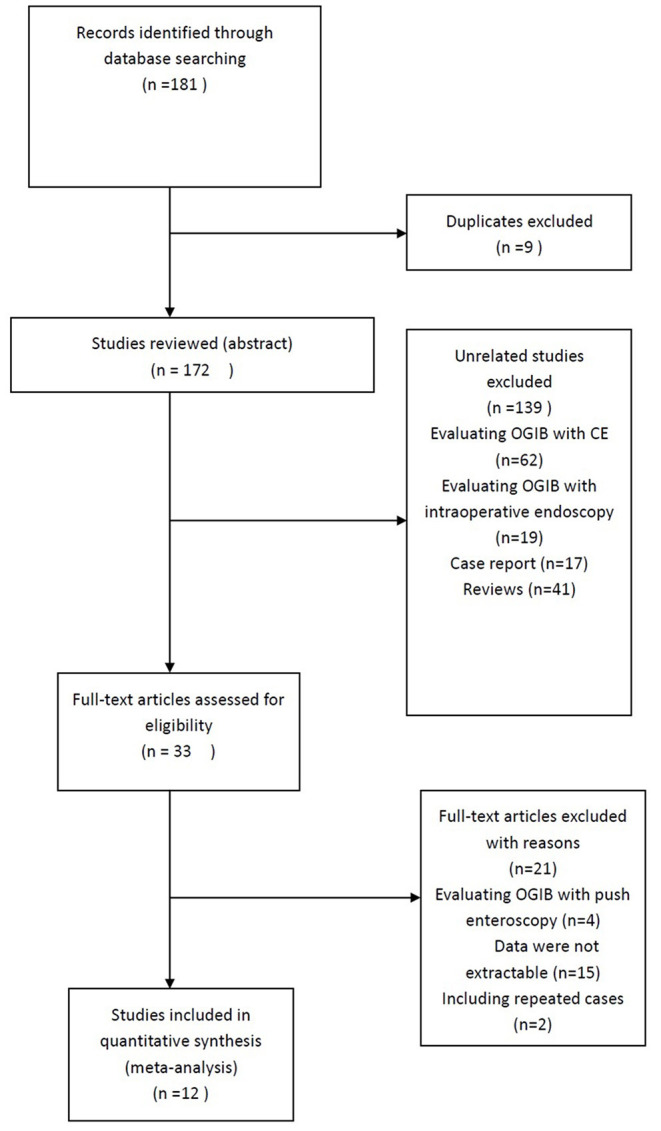
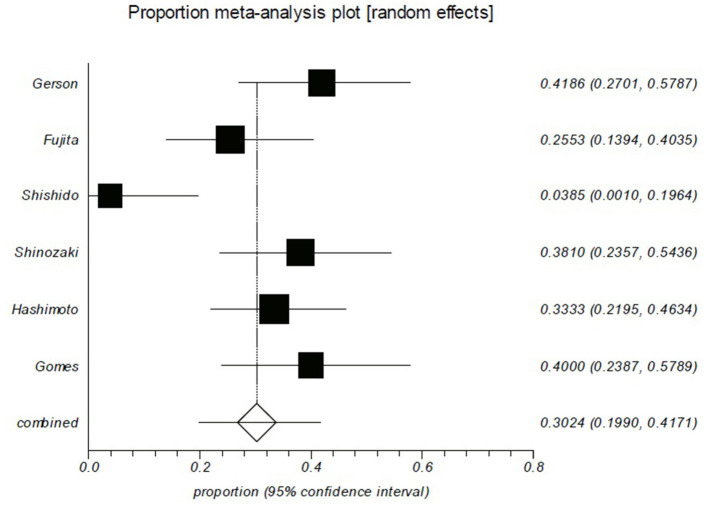
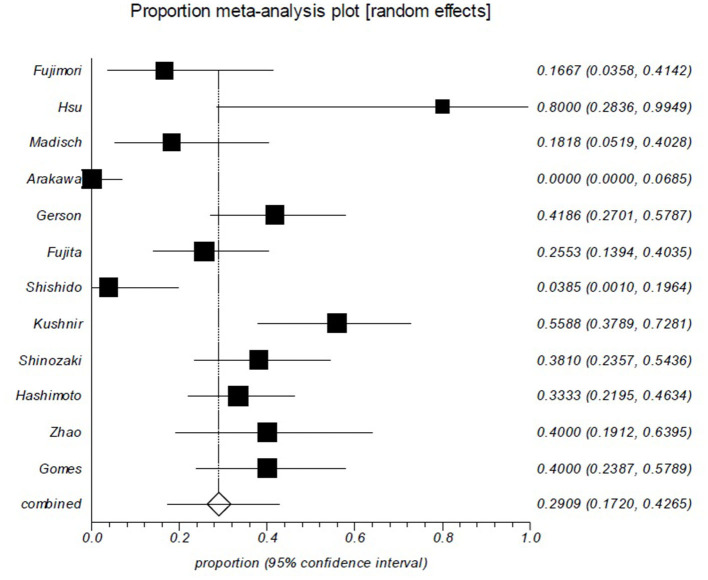
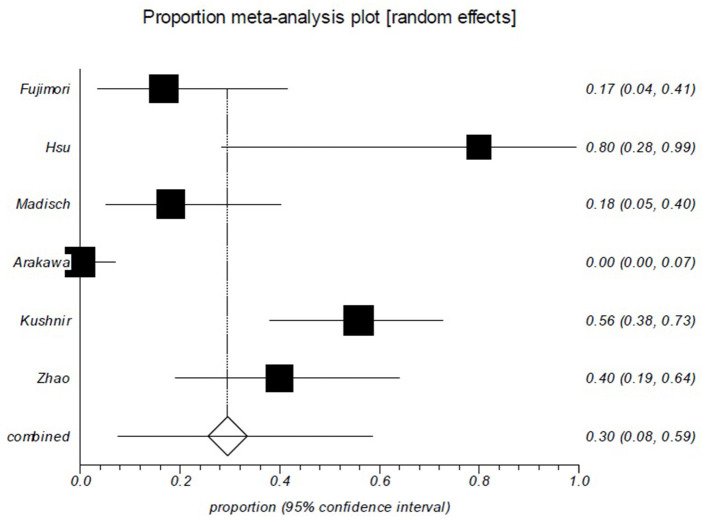
Twelve studies that involved a total of 407 patients were included in the analysis. The pooled rebleeding rate after negative BAE for OGIB was 29.1% (95% CI: 17.2-42.6%). Heterogeneity was significant among the studies (I = 88%; < 0.0001). The Chi-squared test did not show a difference in rebleeding rates between the short and long follow-up period groups ( = 0.142). The pooled proportion of patients who underwent further evaluation after rebleeding was 86.1%. Among the patients who underwent further evaluation, rebleeding sources were identified in 73.6% of patients, and 68.8% of the identified rebleeding lesions were in the small intestine.
A negative result of BAE in patients with OGIB indicates a subsequently low risk of rebleeding. Further evaluation should be considered after rebleeding.
对于不明原因消化道出血(OGIB)患者而言,找到出血部位颇具挑战性。气囊辅助小肠镜检查(BAE)已成为OGIB的首选诊断方式。BAE结果为阴性的患者的长期预后尚不明确。本研究旨在评估BAE结果为阴性的OGIB患者的长期预后,并通过对现有队列研究进行系统评价和荟萃分析,阐明再次出血时进一步检查的效果。
通过PubMed、EMBASE和Cochrane图书馆数据库检索研究。分析以下指标:BAE结果为阴性后的再出血率、不同随访期后的再出血率、再次出血后接受进一步评估的患者比例、确定再出血来源的患者百分比以及小肠再出血来源的患者百分比。使用I检验评估异质性。
分析纳入了12项研究,共涉及407例患者。OGIB患者BAE结果为阴性后的汇总再出血率为29.1%(95%CI:17.2 - 42.6%)。各研究间异质性显著(I = 88%;P < 0.0001)。卡方检验未显示短期和长期随访期组之间再出血率存在差异(P = 0.142)。再次出血后接受进一步评估的患者汇总比例为86.1%。在接受进一步评估的患者中,73.6%的患者确定了再出血来源,且68.8%的已确定再出血病变位于小肠。
OGIB患者BAE结果为阴性表明随后再出血风险较低。再次出血后应考虑进一步评估。