Department of Neurology, Odense University Hospital, Odense, Denmark.
Institute of Clinical Research, University of Southern Denmark, Odense, Denmark.
Front Immunol. 2022 Mar 2;13:761225. doi: 10.3389/fimmu.2022.761225. eCollection 2022.
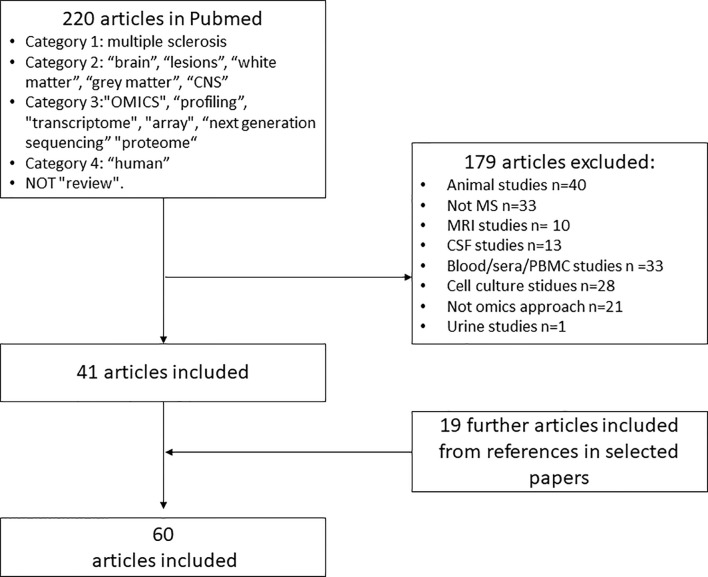
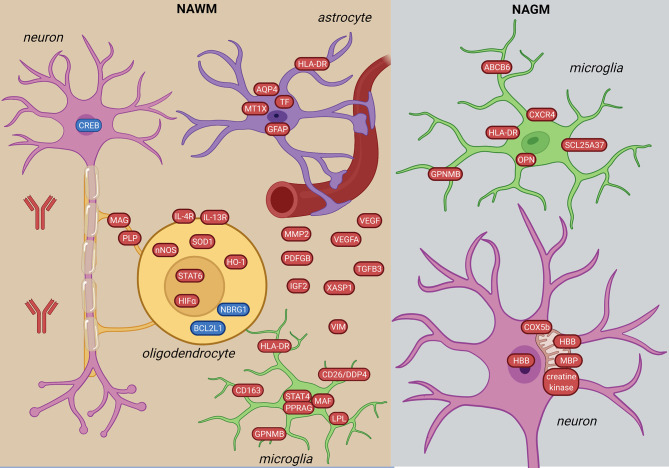
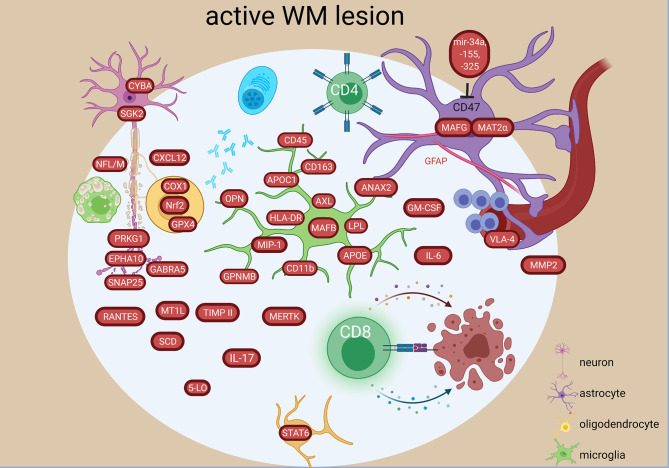
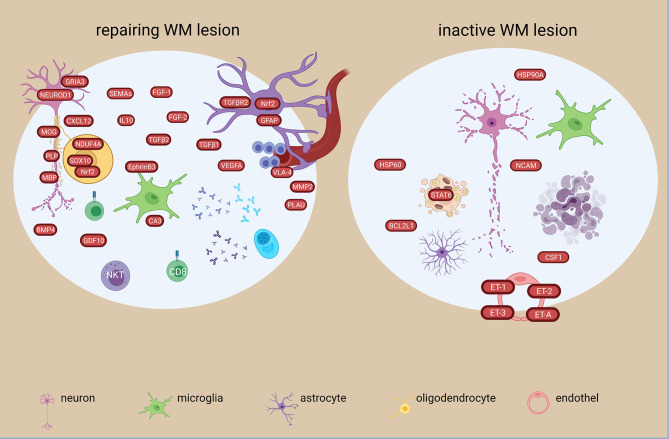
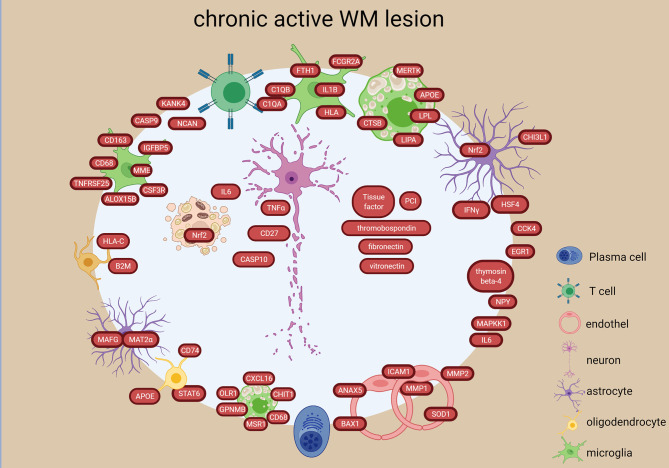
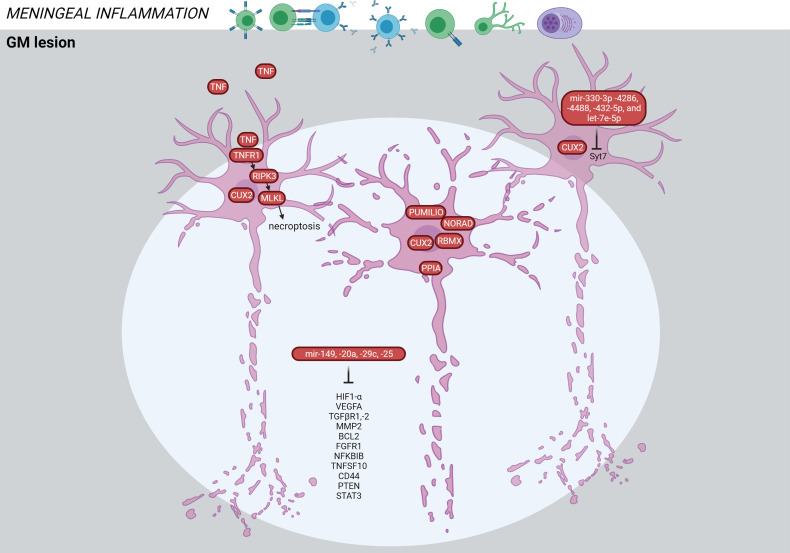
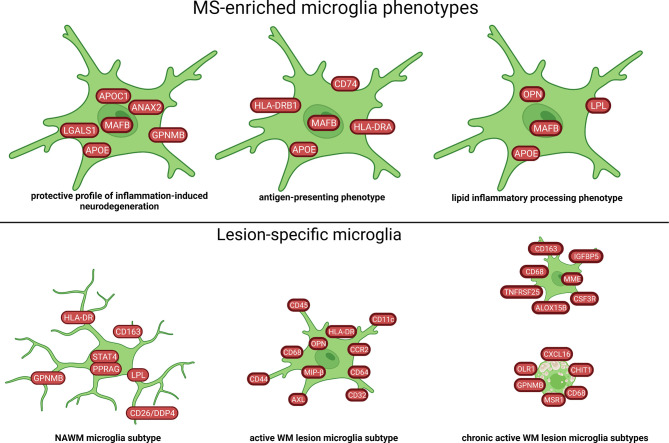
Multiple sclerosis (MS) is an inflammatory demyelinating and degenerative disease of the central nervous system (CNS). Although inflammatory responses are efficiently treated, therapies for progression are scarce and suboptimal, and biomarkers to predict the disease course are insufficient. Cure or preventive measures for MS require knowledge of core pathological events at the site of the tissue damage. Novelties in systems biology have emerged and paved the way for a more fine-grained understanding of key pathological pathways within the CNS, but they have also raised questions still without answers. Here, we systemically review the power of tissue and single-cell/nucleus CNS omics and discuss major gaps of integration into the clinical practice. Systemic search identified 49 transcriptome and 11 proteome studies of the CNS from 1997 till October 2021. Pioneering molecular discoveries indicate that MS affects the whole brain and all resident cell types. Despite inconsistency of results, studies imply increase in transcripts/proteins of semaphorins, heat shock proteins, myelin proteins, apolipoproteins and HLAs. Different lesions are characterized by distinct astrocytic and microglial polarization, altered oligodendrogenesis, and changes in specific neuronal subtypes. In all white matter lesion types, are highly expressed, and STAT6- and TGFβ-signaling are increased. In the grey matter lesions, TNF-signaling seems to drive cell death, and especially -expressing neurons may be susceptible to neurodegeneration. The vast heterogeneity at both cellular and lesional levels may underlie the clinical heterogeneity of MS, and it may be more complex than the current disease phenotyping in the clinical practice. Systems biology has not solved the mystery of MS, but it has discovered multiple molecules and networks potentially contributing to the pathogenesis. However, these results are mostly descriptive; focused functional studies of the molecular changes may open up for a better interpretation. Guidelines for acceptable quality or awareness of results from low quality data, and standardized computational and biological pipelines may help to overcome limited tissue availability and the "snap shot" problem of omics. These may help in identifying core pathological events and point in directions for focus in clinical prevention.
多发性硬化症(MS)是一种中枢神经系统(CNS)的炎症性脱髓鞘和退行性疾病。尽管炎症反应得到了有效治疗,但进展治疗方法却很少且效果不佳,用于预测疾病进程的生物标志物也不足。MS 的治愈或预防措施需要了解组织损伤部位的核心病理事件。系统生物学的新进展为更精细地了解中枢神经系统内的关键病理途径铺平了道路,但也提出了一些仍未得到解答的问题。在这里,我们系统地回顾了组织和单细胞/核中枢神经系统组学的力量,并讨论了将其整合到临床实践中的主要差距。系统搜索确定了 1997 年至 2021 年 10 月期间 49 项中枢神经系统转录组和 11 项蛋白质组研究。开创性的分子发现表明,MS 影响整个大脑和所有常驻细胞类型。尽管结果不一致,但研究表明半乳糖凝集素、热休克蛋白、髓鞘蛋白、载脂蛋白和 HLA 的转录本/蛋白增加。不同的病变特征是不同的星形胶质细胞和小胶质细胞极化、少突胶质细胞生成改变以及特定神经元亚型的变化。在所有的白质病变类型中,都高度表达,并且 STAT6 和 TGFβ 信号增加。在灰质病变中,TNF 信号似乎驱动细胞死亡,特别是表达的神经元可能容易发生神经退行性变。细胞和病变水平的巨大异质性可能是 MS 临床异质性的基础,它可能比目前临床实践中的疾病表型更为复杂。系统生物学并没有解开 MS 的谜团,但它发现了多个潜在参与发病机制的分子和网络。然而,这些结果大多是描述性的;对分子变化的集中功能研究可能会为更好的解释开辟道路。接受低质量数据结果的质量或意识的指南,以及标准化的计算和生物学管道可能有助于克服组织可用性有限和组学的“快照”问题。这可能有助于确定核心病理事件,并为临床预防指明重点方向。