Esmat Ibrahim M, Elsayed Ahmed M, El-Hariri Hazem M, Ashoor Tarek M
Department of Anesthesia and Intensive Care, Faculty of Medicine, Ain-Shams University, Cairo, Egypt.
Community Medicine Department, National Research Centre, Cairo, Egypt.
Anesthesiol Res Pract. 2022 Mar 9;2022:5061803. doi: 10.1155/2022/5061803. eCollection 2022.
The frequency of shivering regarding regional anesthesia is 55%. Newer effective and tolerable options for postspinal anesthesia shivering (PSAS) prophylaxis are necessary to improve patients' quality of care. This research assessed the impact of preemptive mirtazapine versus preemptive dexamethasone to decrease frequency and severity of PSAS in gynecological procedures.
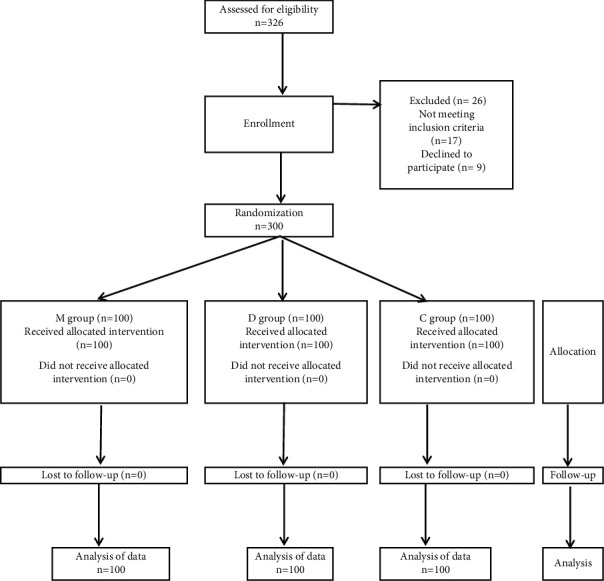
300 patients booked for gynecological procedures under spinal anesthesia (SA) were randomly apportioned into three groups (100 each) to get one preemptive dose of 30 mg mirtazapine tablet (M group), 8 mg dexamethasone diluted in 100 ml of saline infusion (D group) or placebo (C group) two hours before surgery. Incidence of clinically significant PSAS was the primary outcome. Core temperature, shivering score, hemodynamics changes, adverse events, and patient satisfaction score were documented as secondary outcomes.
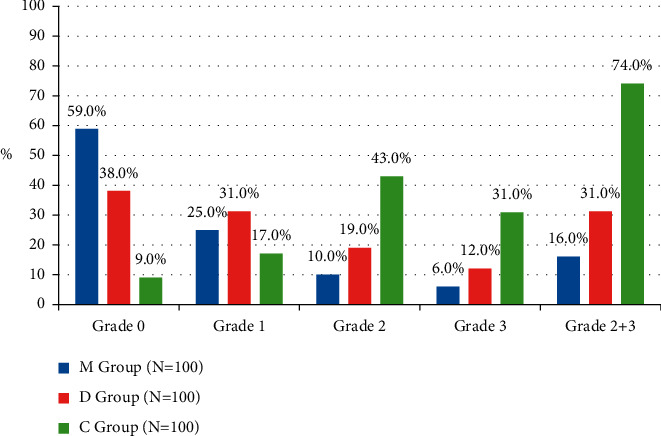
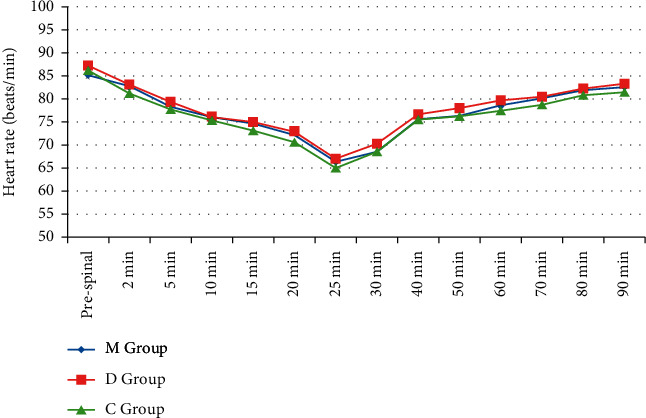
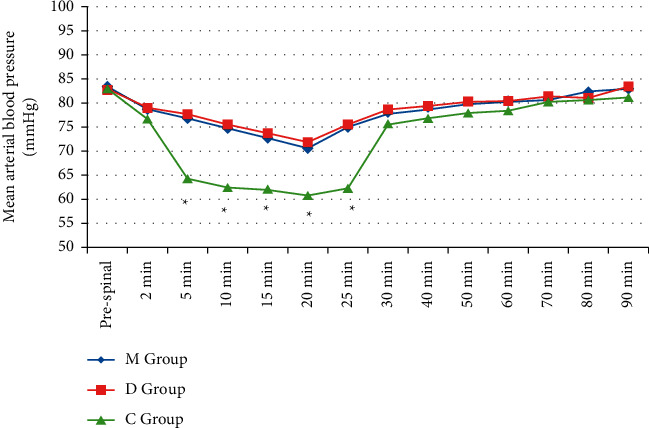
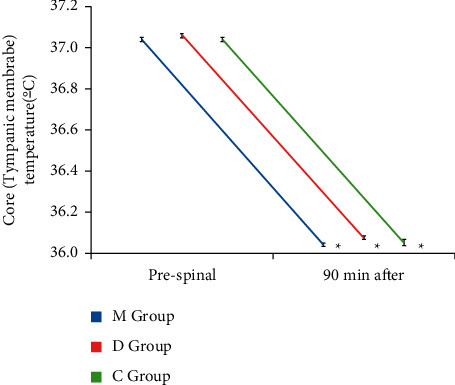
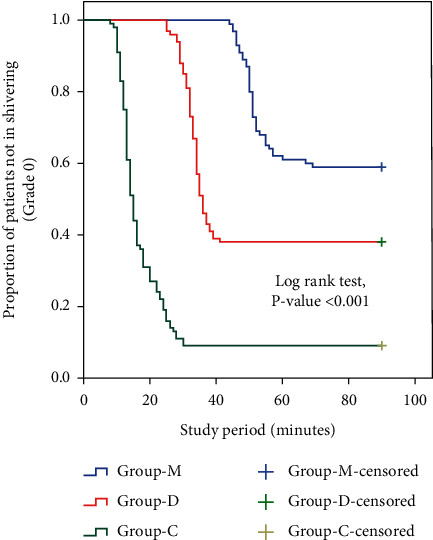
Compared with C group, mirtazapine and dexamethasone decreased incidence of clinically significant shivering (74% vs. 16% and 31%, respectively; < 0.001). M and D groups had less hypotensive episodes during 5-25 min after intrathecal injection ( < 0.001). 90 min after SA, tympanic temperatures were lower than baseline values in the three groups ( < 0.001). Pruritus, nausea, and vomiting were more often in C group ( < 0.001), whereas sedation was more frequent in M group ( < 0.001). C group had the lowest satisfaction scores ( < 0.001).
Prophylactic administration of mirtazapine or dexamethasone attenuated shivering with minimal hazards in patients scheduled for gynecological surgeries under spinal anesthesia with priority to mirtazapine. The trial is registered with NCT03675555.
区域麻醉时寒战的发生率为55%。为提高患者的护理质量,需要有更新的、有效且耐受性良好的预防脊麻后寒战(PSAS)的方法。本研究评估了预防性使用米氮平与地塞米松对降低妇科手术中PSAS的频率和严重程度的影响。
300例计划接受脊麻(SA)下妇科手术的患者被随机分为三组(每组100例),在手术前两小时分别给予一剂30毫克米氮平片(M组)、8毫克地塞米松稀释于100毫升生理盐水静脉输注(D组)或安慰剂(C组)。具有临床意义的PSAS的发生率是主要结局。记录核心体温、寒战评分、血流动力学变化、不良事件和患者满意度评分作为次要结局。
与C组相比,米氮平和地塞米松降低了具有临床意义的寒战发生率(分别为74%对16%和31%;P<0.001)。M组和D组在鞘内注射后5至25分钟内低血压发作较少(P<0.001)。SA后90分钟,三组的鼓膜温度均低于基线值(P<0.001)。瘙痒、恶心和呕吐在C组更常见(P<0.001),而镇静在M组更频繁(P<0.001)。C组的满意度评分最低(P<0.001)。
预防性给予米氮平或地塞米松可减轻接受脊麻的妇科手术患者的寒战,且风险最小,米氮平更具优势。该试验已在ClinicalTrials.gov上注册,注册号为NCT03675555。