Associate Professor, Department of International Health, Johns Hopkins Bloomberg School of Public Health, Baltimore, MD, USA. Correspondence:
Research Associate, Department of International Health, Johns Hopkins Bloomberg School of Public Health, Baltimore, MD, USA.
Sex Reprod Health Matters. 2021;29(3):2044198. doi: 10.1080/26410397.2022.2044198.
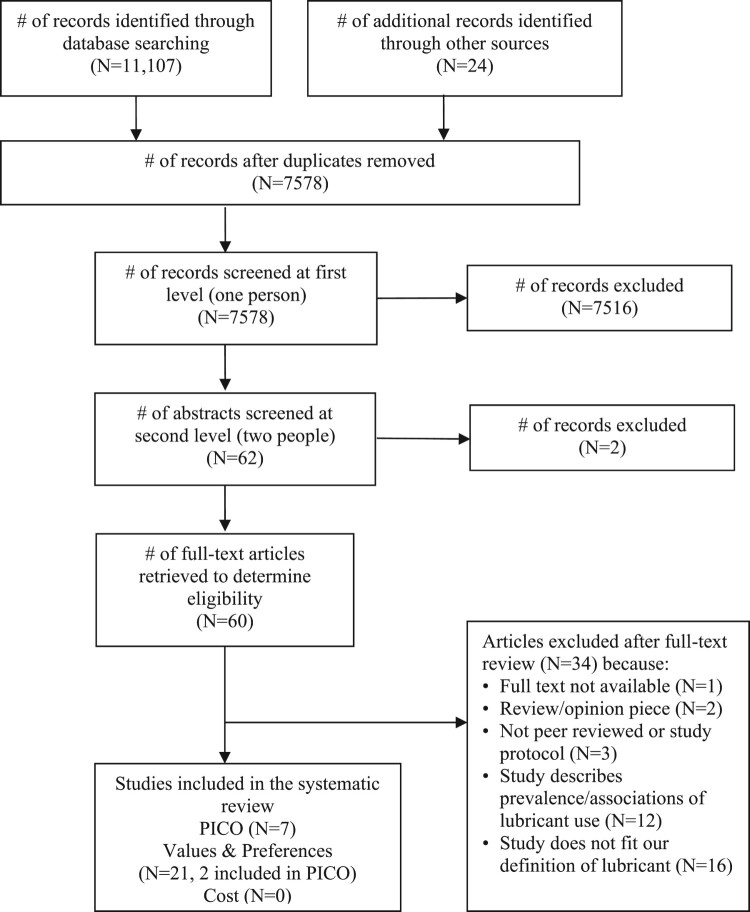
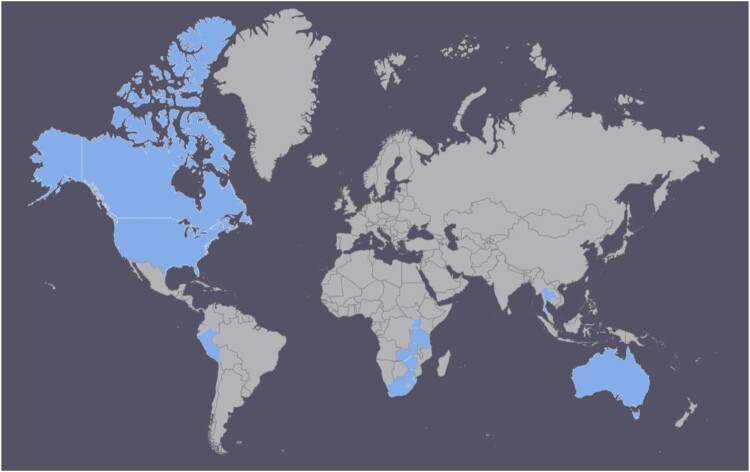
Promoting sexual health is a World Health Organization (WHO) priority. Lubricants are widely available and used to improve sexual pleasure and reduce pain during intercourse. To inform WHO's self-care interventions guideline, we conducted a systematic review of the peer-reviewed literature to answer the question: does use of lubricants during or prior to sex result in improved sexual health and well-being. We searched PubMed, CINAHL, LILACS and EMBASE on 8 July 2020 for effectiveness, values and preferences, and cost data related to commercially available vaginal and anal lubricants. Data were systematically extracted and qualitatively synthesised. Effectiveness evidence was summarised in GRADE evidence profiles. Seven studies met the effectiveness review criteria. Two randomised trials found lubricant use led to improved female sexual well-being and had no impact on incidence of human papillomavirus (moderate certainty evidence). One observational study with gay and bisexual men showed lubricants were associated with increased reports of pain during receptive intercourse and no difference in pain during insertive intercourse, but a reduced degree of pain in both types of intercourse (low/very low certainty evidence). One observational study with female breast cancer survivors found better outcomes of vaginal dryness and dyspareunia with lubricant use (very low certainty evidence). Twenty-one values and preferences studies from diverse populations globally found that most individuals supported lubricant use for reasons of comfort/reduced pain and sexual pleasure. No cost studies were identified. Although evidence is limited, lubricants appear to offer an acceptable approach to improving sexual health and well-being.
促进性健康是世界卫生组织(WHO)的优先事项。润滑剂广泛可用,用于提高性快感并减少性交时的疼痛。为了为 WHO 的自我保健干预指南提供信息,我们对同行评议文献进行了系统审查,以回答以下问题:在性交期间或之前使用润滑剂是否会改善性健康和幸福感。我们于 2020 年 7 月 8 日在 PubMed、CINAHL、LILACS 和 EMBASE 上搜索了与商业销售的阴道和肛门润滑剂相关的有效性、价值观和偏好以及成本数据。我们系统地提取了数据并进行了定性综合。有效性证据在 GRADE 证据概况中进行了总结。有 7 项研究符合有效性审查标准。两项随机试验发现,使用润滑剂可提高女性性健康幸福感,且对人乳头瘤病毒(HPV)的发病率没有影响(中度确定性证据)。一项针对男同性恋和双性恋男性的观察性研究表明,润滑剂与接受性性交时疼痛报告增加有关,但插入性性交时疼痛无差异,但两种类型的性交疼痛程度降低(低/非常低确定性证据)。一项针对女性乳腺癌幸存者的观察性研究发现,使用润滑剂可改善阴道干燥和性交疼痛(非常低确定性证据)。来自全球不同人群的 21 项价值观和偏好研究发现,大多数人支持使用润滑剂来提高舒适度/减轻疼痛和性快感。没有发现成本研究。尽管证据有限,但润滑剂似乎是改善性健康和幸福感的一种可接受的方法。