Balan Yuvaraj, Packirisamy Rajaa Muthu, Mohanraj P S
Pondicherry Institute of Medical Sciences, Kalapet, Puducherry, India.
Jawaharlal Institute of Postgraduate Medical Education and Research, Puducherry, India.
Arch Med Sci. 2020 Jun 15;18(2):459-465. doi: 10.5114/aoms.2020.96344. eCollection 2022.
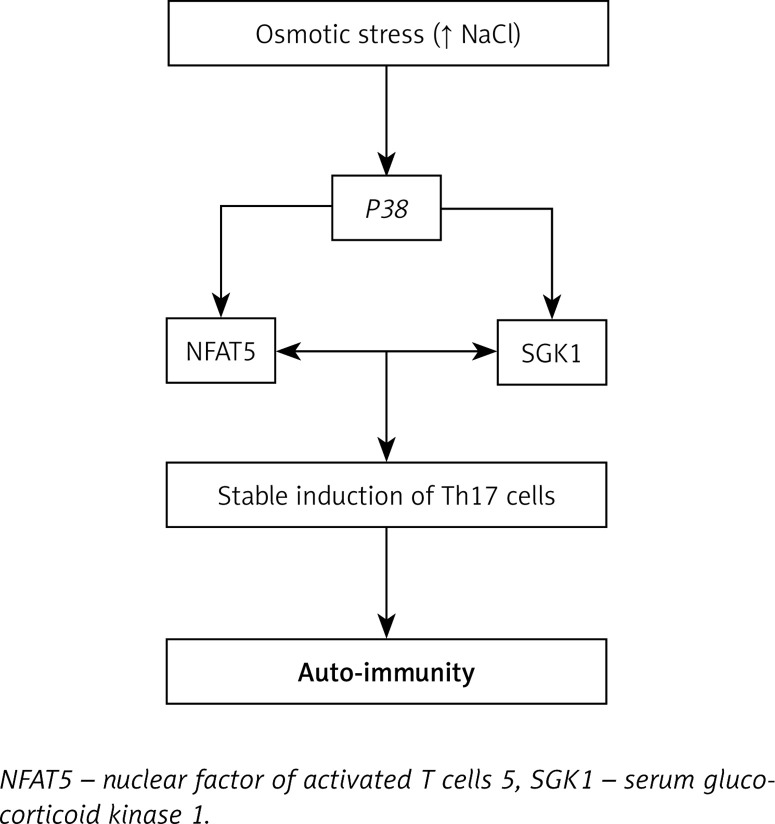
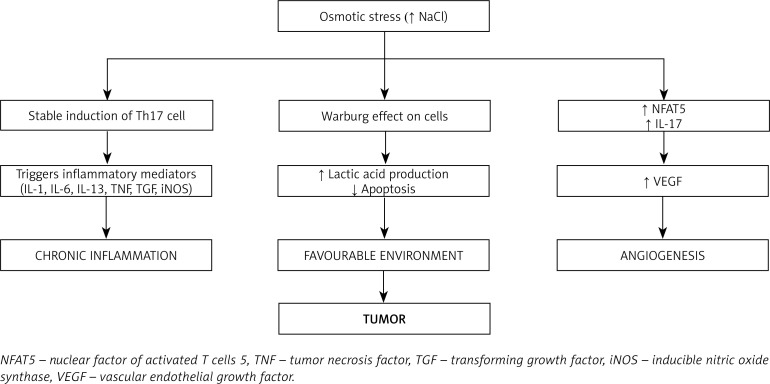
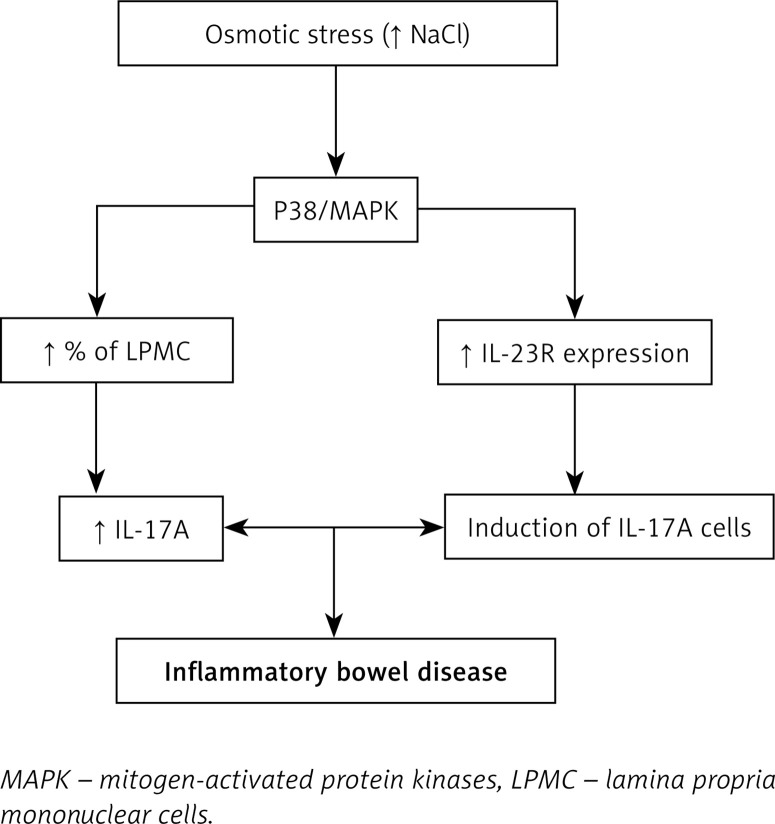
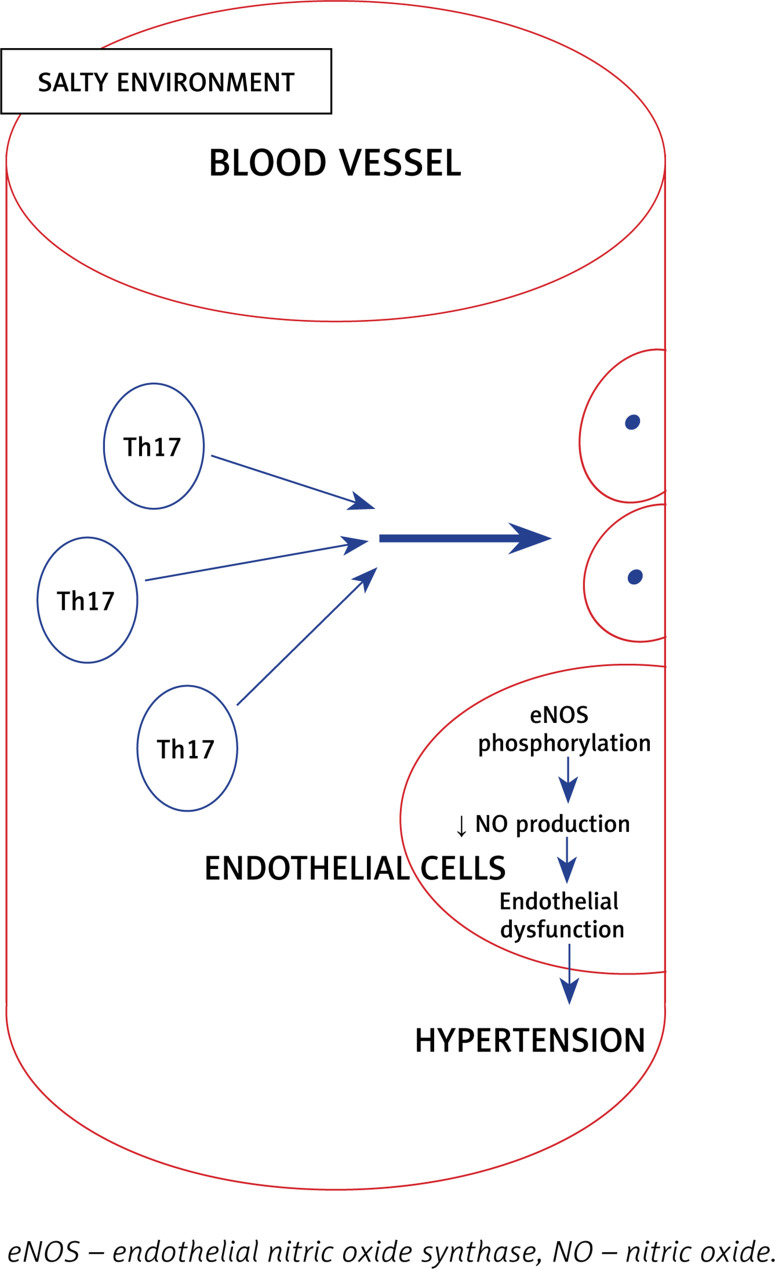
The incidence of immune-mediated inflammatory diseases (IMIDs) is on the rise. A high salt content in the diet was found to play a crucial role in mediating IMIDs. It was demonstrated that increased salt concentration favors the differentiation of CD4+ cells to pathogenic Th17 cells, which predispose to several inflammatory diseases by modulating the immunological milieu. In auto-immune diseases increased salt concentration causes stable induction of Th17 cells. In cancer, increased salt concentration triggers chronic inflammation and increases vascular endothelial growth factor levels. Salt-mediated proliferation of Th17 cells has been found to reduce nitric oxide production in the endothelial cells, leading to hypertension. Increased salt concentration was found to alter the intestinal flora, which favors local inflammation. This review attempts to explain the role of high salt concentration and its molecular pathways in causing IMIDs.
免疫介导的炎症性疾病(IMIDs)的发病率正在上升。研究发现,饮食中高盐含量在介导IMIDs方面起着关键作用。有研究表明,盐浓度升高有利于CD4+细胞分化为致病性Th17细胞,这些细胞通过调节免疫环境引发多种炎症性疾病。在自身免疫性疾病中,盐浓度升高会导致Th17细胞的稳定诱导。在癌症中,盐浓度升高会引发慢性炎症并增加血管内皮生长因子水平。已发现盐介导的Th17细胞增殖会减少内皮细胞中一氧化氮的产生,从而导致高血压。研究发现,盐浓度升高会改变肠道菌群,从而引发局部炎症。本综述试图解释高盐浓度及其分子途径在引发IMIDs中的作用。