Division of Orthopedic Surgery, Department of Surgery, University of Saskatchewan, 107 Wiggins Road, Saskatoon, SK, S7N 5E5, Canada.
Section of Orthopedic Surgery, Department of Surgery, University of Calgary, 2500 University Drive NW, Calgary, AB, T2N 1N4, Canada.
J Med Case Rep. 2022 Mar 23;16(1):115. doi: 10.1186/s13256-022-03336-4.
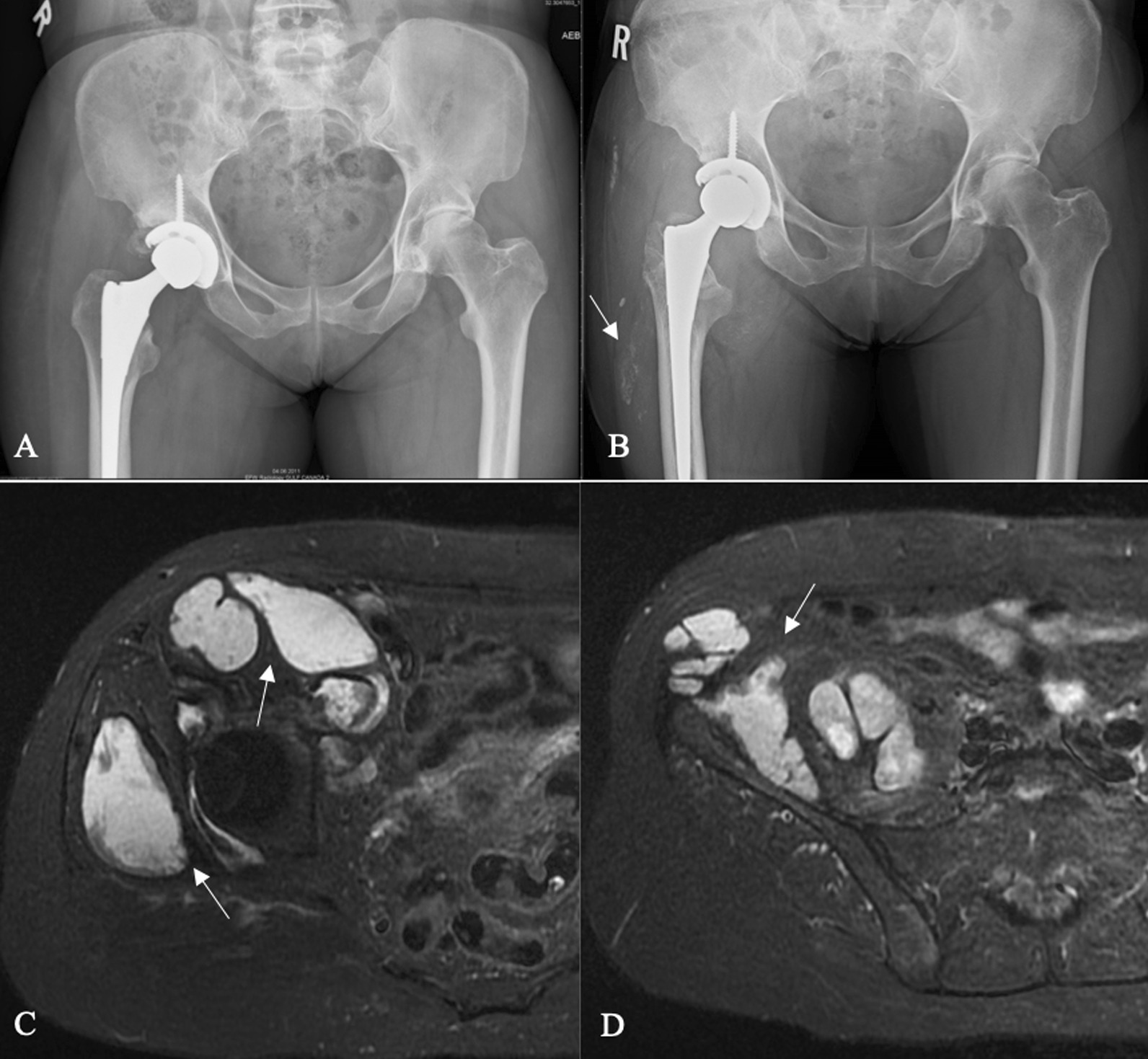
There has been increasing recognition of local and systemic adverse events associated with the release of metal ions and nanoparticles from hip arthroplasty components. Adverse local tissue reactions to metal ion debris can include periprosthetic solid and cystic masses known as pseudotumors. These masses can result in pain, swelling, extensive destruction to surrounding hip soft-tissues, and compression syndromes on neurovascular, gastrointestinal, and genitourinary structures. As reports of pseudotumors requiring multidisciplinary excision are limited, we present two pseudotumor cases that were excised through a combined approach.
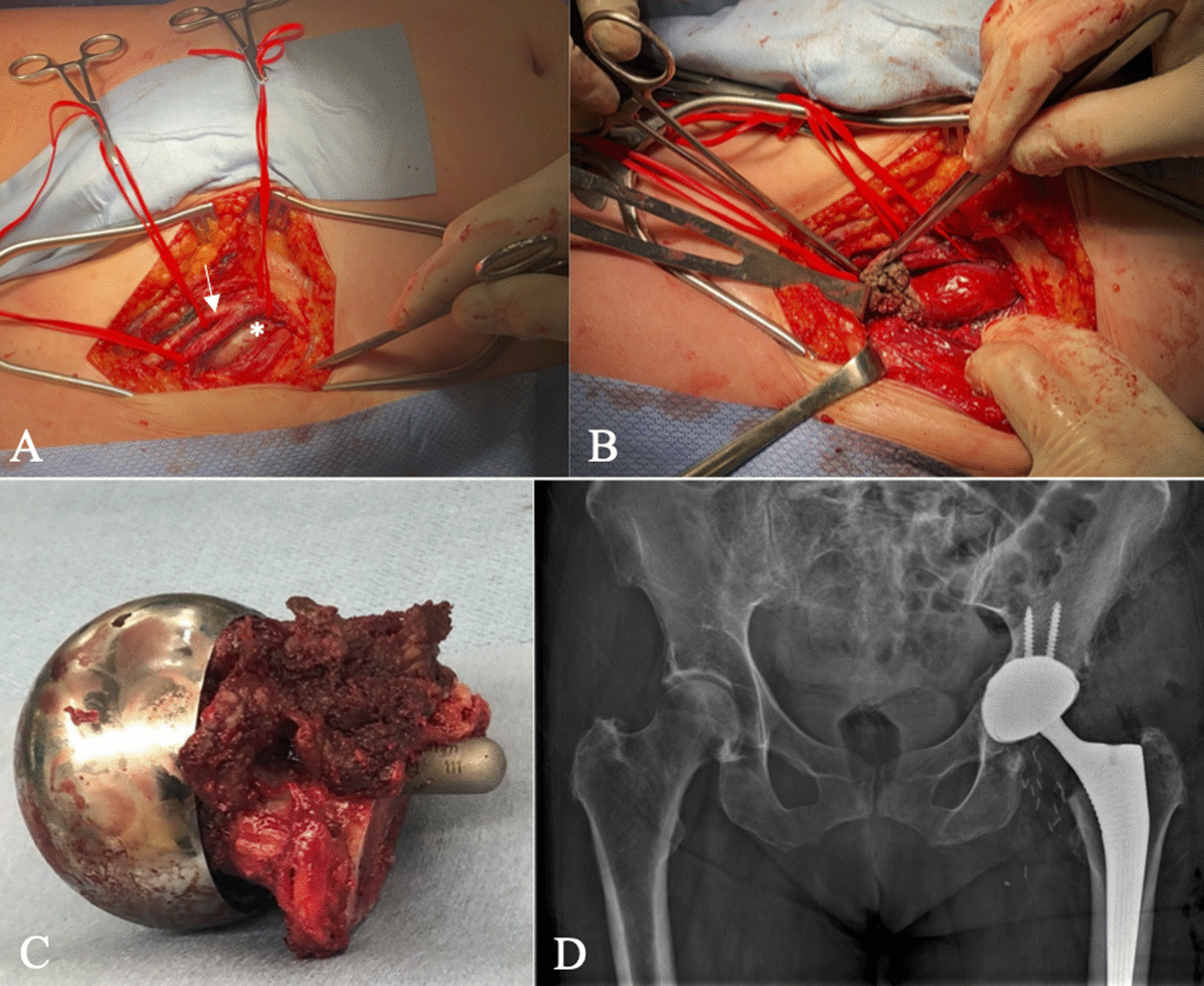
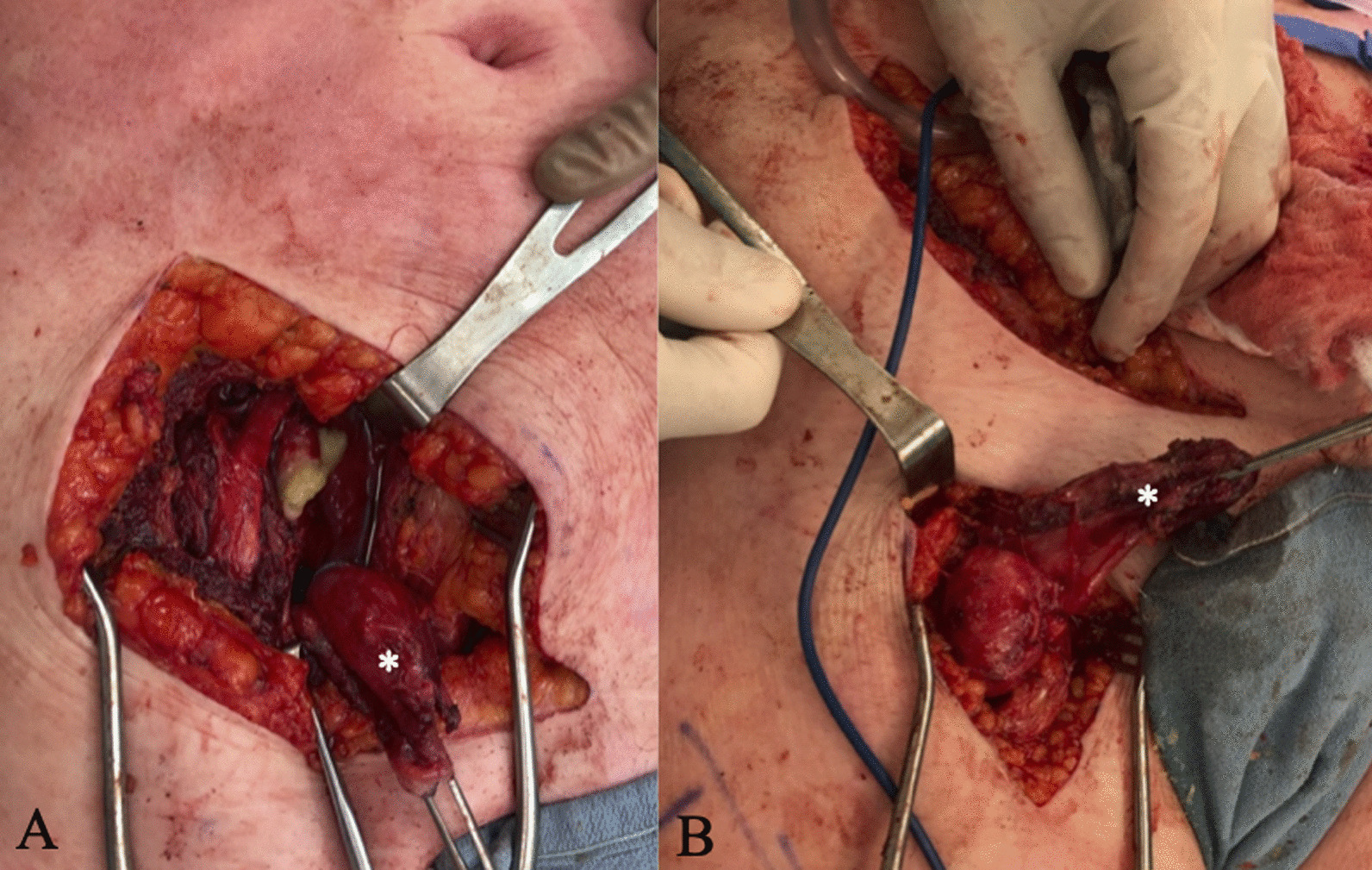
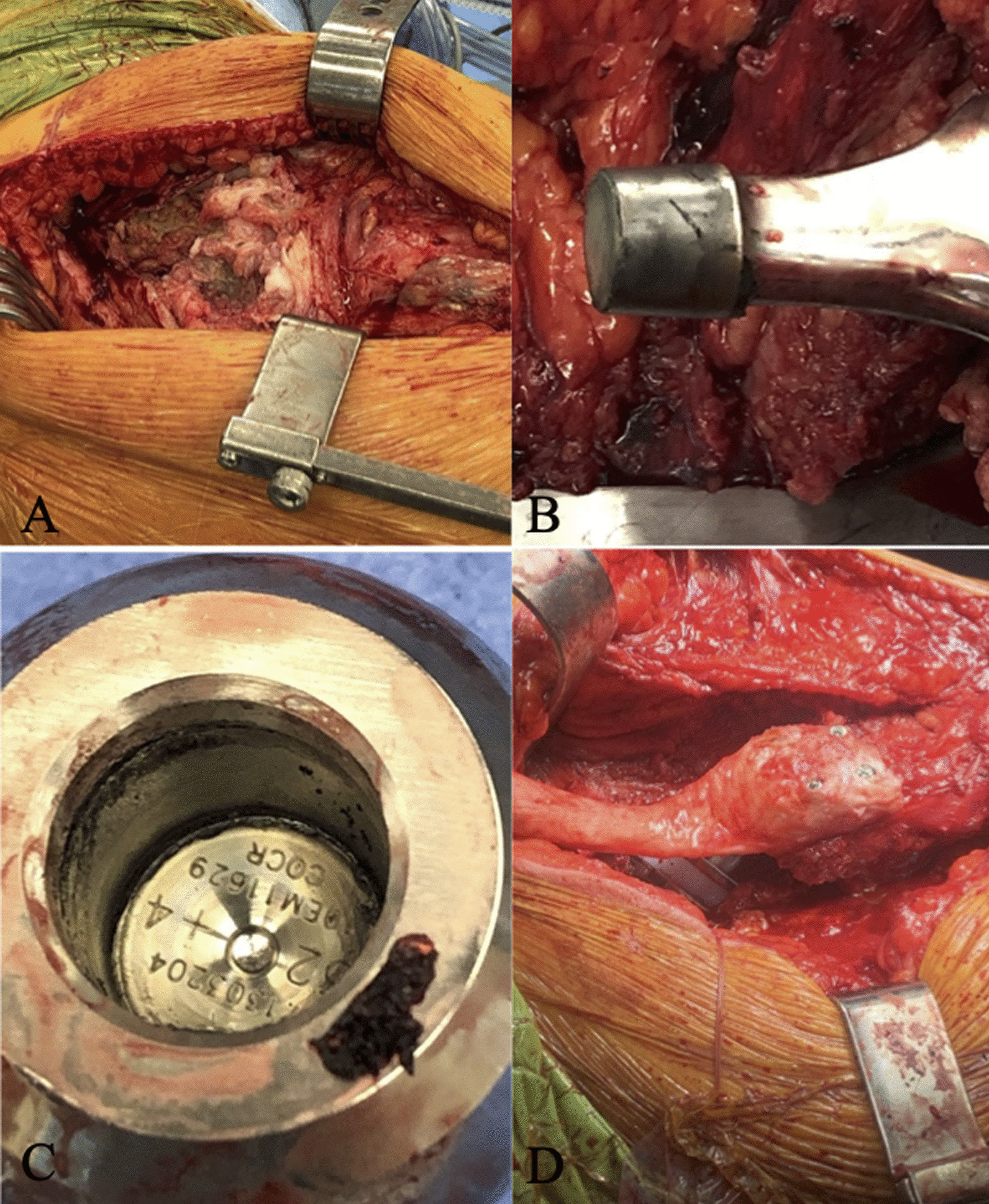
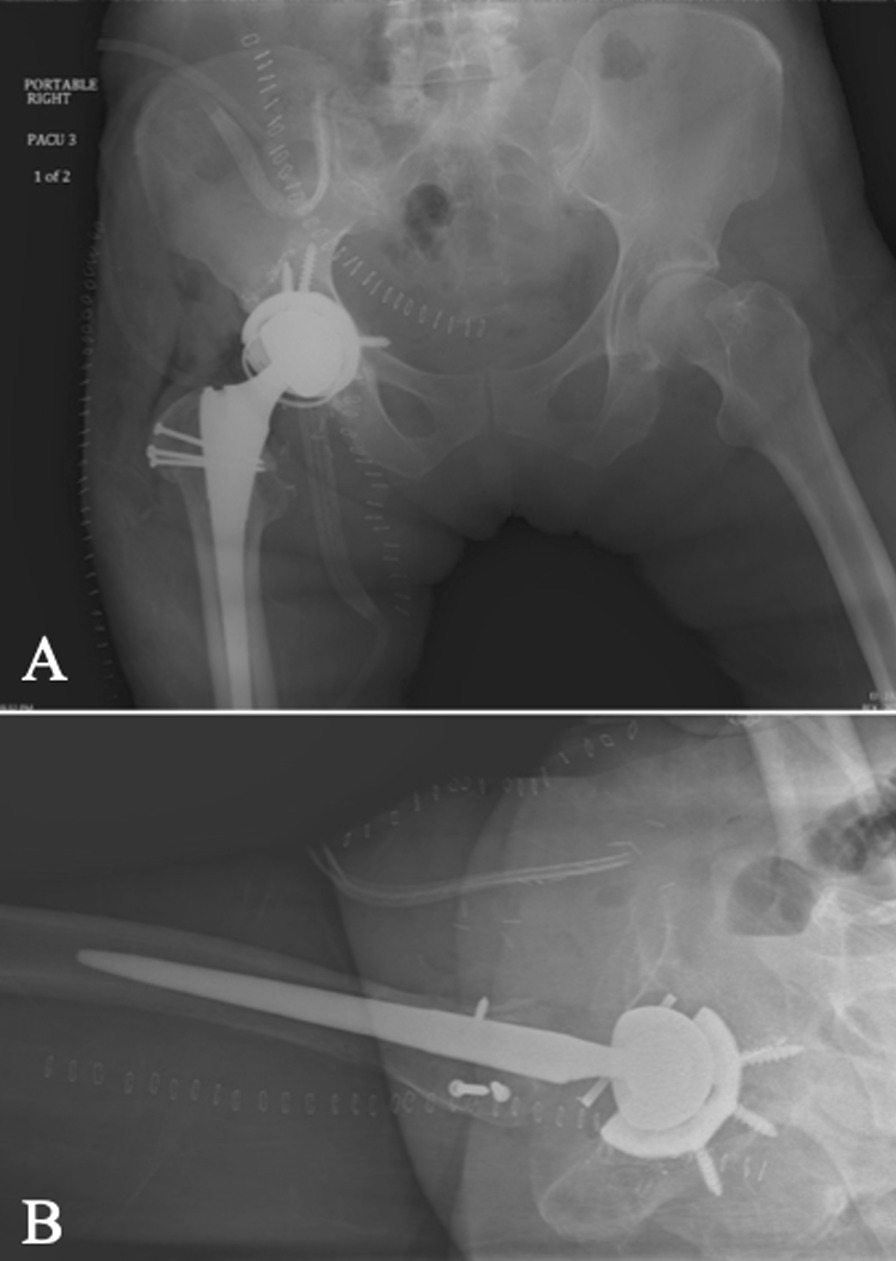
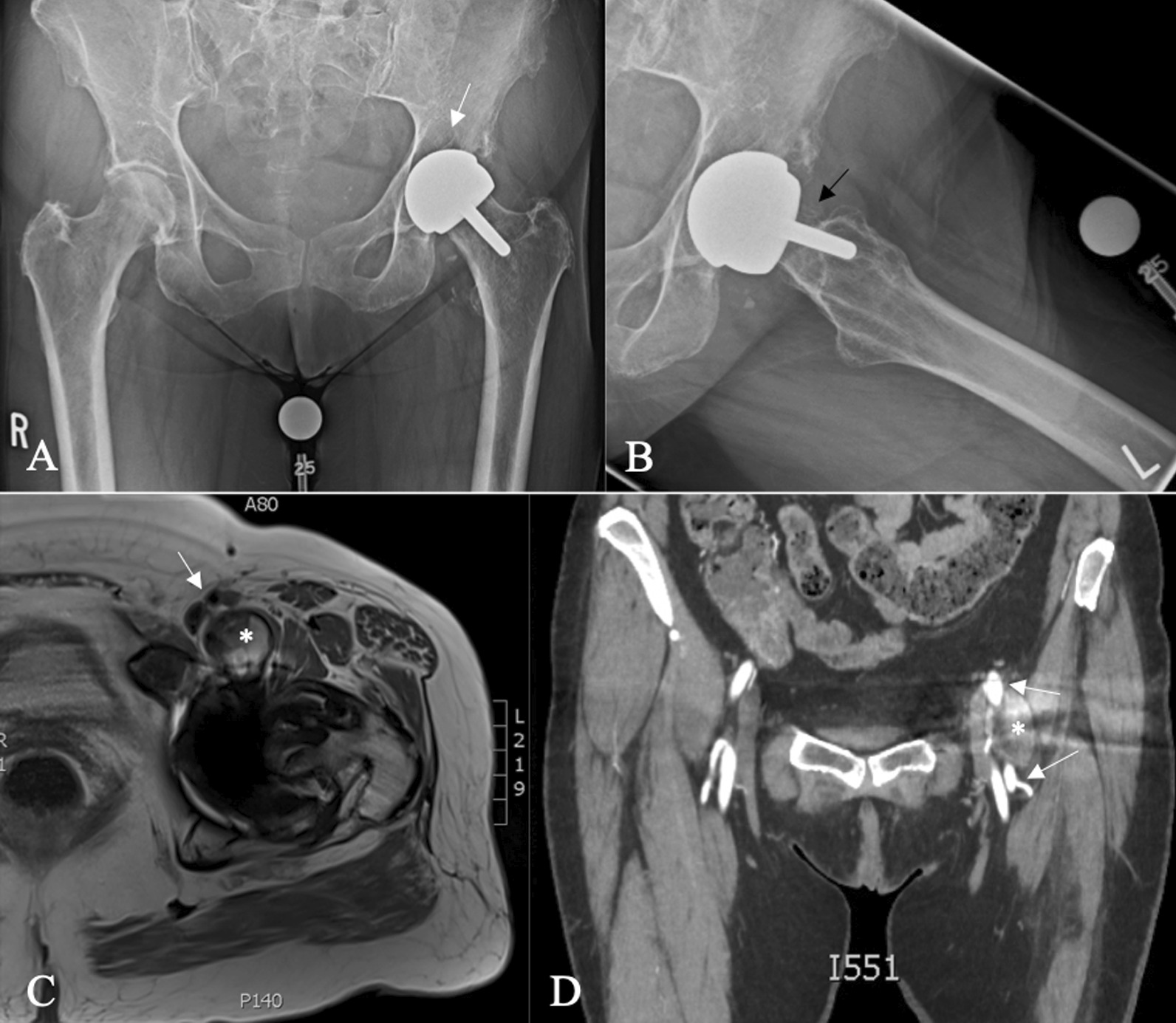
The first case involves a 60-year-old Caucasian female with a large pseudotumor with intrapelvic and vascular involvement associated with a metal-on-polyethylene total hip arthroplasty, excised with contributions from general surgery, vascular surgery, and orthopedic surgery. Pseudotumor excision was followed by a revision total hip reconstruction in addition to an abductor mechanism reconstruction with tendo-Achilles allograft. The second case is that of a 64-year-old Caucasian female with a pseudotumor in close relationship to the femoral vessels following a metal-on-metal hip resurfacing, excised with a combination of vascular surgery and orthopedic surgery, with subsequent revision total hip reconstruction.
There remains a lack of literature to support the extensiveness of pseudotumor excision required in complex cases with significant intrapelvic or vascular involvement. Given the potential for significant adverse effects of large masses, the authors' preference is to involve a multidisciplinary team to achieve a more comprehensive excision while minimizing the risk of potential complications.
越来越多的人认识到髋关节置换部件释放金属离子和纳米颗粒与局部和全身不良事件有关。金属离子碎片引起的不良局部组织反应包括称为假瘤的假体周围实性和囊性肿块。这些肿块可导致疼痛、肿胀、周围髋关节软组织广泛破坏以及对周围神经血管、胃肠道和泌尿生殖结构的压迫综合征。由于需要多学科切除的假肿瘤报告有限,我们提出了两个通过联合方法切除的假肿瘤病例。
第一个病例涉及一名 60 岁白人女性,她患有与金属对聚乙烯全髋关节置换术相关的大型假肿瘤,伴有盆腔内和血管受累,由普通外科、血管外科和骨科共同切除。假肿瘤切除后,除了使用跟腱-跟腱移植重建外展肌机制外,还进行了全髋关节翻修重建。第二个病例是一名 64 岁白人女性,在金属对金属髋关节表面置换术后,假肿瘤与股血管关系密切,由血管外科和骨科联合切除,随后进行了全髋关节翻修重建。
对于涉及骨盆内或血管严重受累的复杂病例,需要广泛切除假肿瘤,但目前文献仍缺乏支持。鉴于大肿块可能产生严重的不良影响,作者更倾向于多学科团队来实现更全面的切除,同时最大限度地降低潜在并发症的风险。