Mondal Md Ibrahim H, Haque Md Obaidul, Ahmed Firoz, Pervez Md Nahid, Naddeo Vincenzo, Ahmed Mohammad Boshir
Polymer and Textile Research Lab, Department of Applied Chemistry and Chemical Engineering, Rajshahi University, Rajshahi 6205, Bangladesh.
BCSIR Laboratories Rajshahi, Bangladesh Council of Scientific and Industrial Research, Rajshahi 6206, Bangladesh.
Gels. 2022 Mar 14;8(3):177. doi: 10.3390/gels8030177.
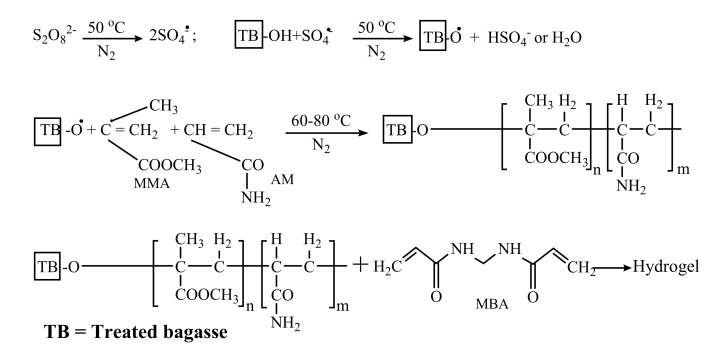
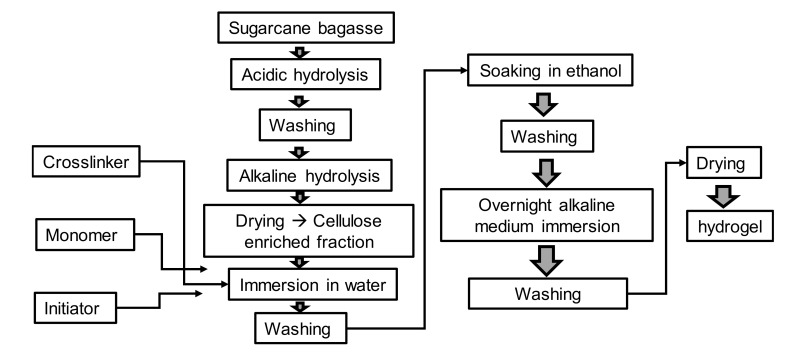
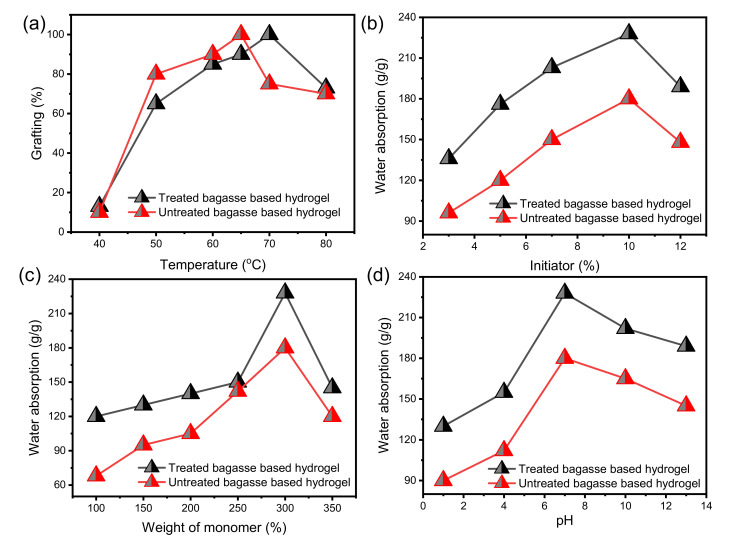
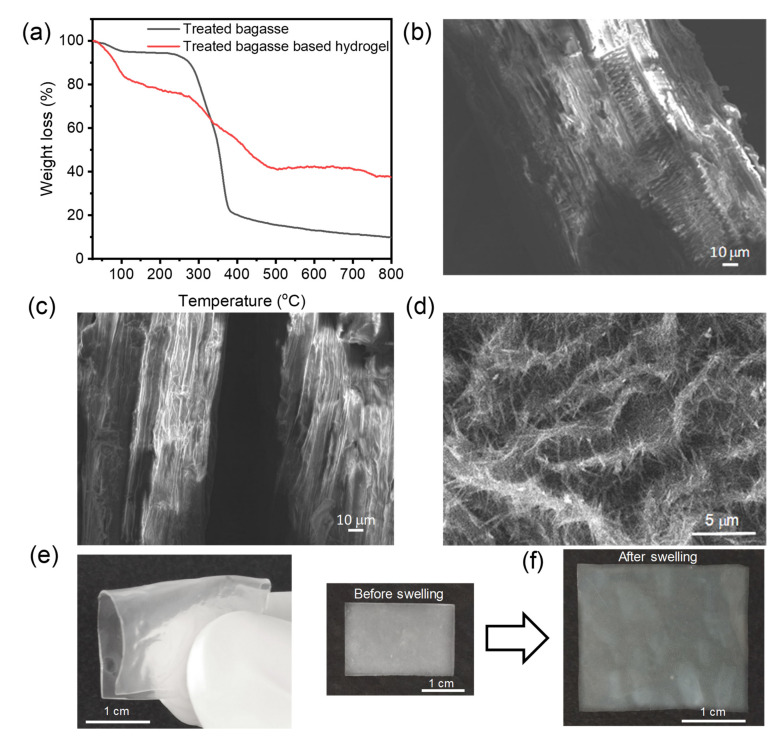
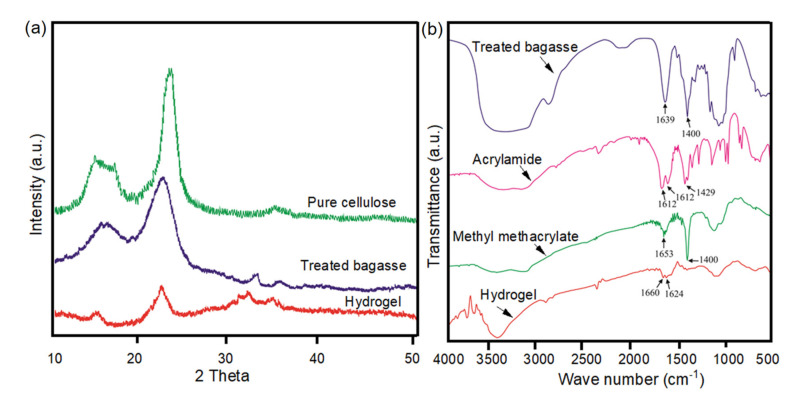
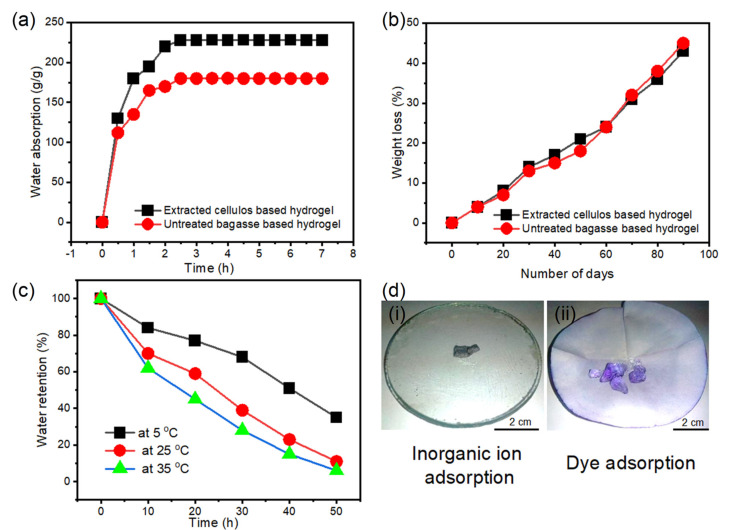
There is a great demand for biodegradable hydrogel, and cellulose enriched wastes materials are widely used to serve this purpose for various advance applications (e.g., biomedical and environmental). Sugarcane bagasse is cellulose-enriched agro-waste, abundantly grown in Bangladesh. This study aimed to treat sugarcane bagasse-based agro-waste using a sustainable and ecofriendly approach to produce hydrogel with super-swelling capacity for adsorption of copper, chromium, iron ions, methylene blue and drimaren red dyes. To increase the swelling property of hydrogels, copolymerization of hydrophilic monomers is an effective technique. Therefore, this study aimed to prepare hydrogel via free radical graft-copolymerization reaction among acrylamide, methyl methacrylate and treated bagasse in the presence of N,N-methylene-bis-acrylamide as a crosslinker and potassium persulphate as an initiator. To obtain maximum yield, reaction conditions were optimized. It was found that hydrogel obtained from chemically treated sugarcane bagasse showed maximum water absorption capacity of 228.0 g/g, whereas untreated bagassebased hydrogel could absorb ~50 g/g of water. Maximum adsorption capacity of 247.0 mg/g was found for copper ion. In addition, organic pollutant removal from industrial effluent also showed good performance, removing >90% of methylene blue and 62% of drimaren red dye, with shorter kinetics. The biodegradability study showed that after 90 days of exposure, the hydrogels degraded to about 43% of their own mass. Therefore, the produced hydrogel could be an alternative adsorbent to remove pollutants and also for other potential applications.
对可生物降解水凝胶有巨大需求,富含纤维素的废弃材料被广泛用于此目的以实现各种先进应用(例如生物医学和环境方面)。甘蔗渣是富含纤维素的农业废弃物,在孟加拉国大量种植。本研究旨在采用可持续且环保的方法处理基于甘蔗渣的农业废弃物,以生产具有超强溶胀能力的水凝胶,用于吸附铜、铬、铁离子、亚甲基蓝和直接耐晒大红染料。为提高水凝胶的溶胀性能,亲水性单体的共聚是一种有效技术。因此,本研究旨在通过丙烯酰胺、甲基丙烯酸甲酯与经处理的甘蔗渣在N,N - 亚甲基双丙烯酰胺作为交联剂以及过硫酸钾作为引发剂存在下的自由基接枝共聚反应来制备水凝胶。为获得最大产率,对反应条件进行了优化。结果发现,由化学处理过的甘蔗渣制得的水凝胶显示出最大吸水量为228.0 g/g,而未处理的基于甘蔗渣的水凝胶能吸收约50 g/g的水。铜离子的最大吸附容量为247.0 mg/g。此外,从工业废水中去除有机污染物也表现出良好性能,能去除>90%的亚甲基蓝和62%的直接耐晒大红染料,且动力学较短。生物降解性研究表明,暴露90天后,水凝胶降解至其自身质量的约43%。因此,所制备的水凝胶可作为去除污染物的替代吸附剂以及用于其他潜在应用。