School of Nutrition, Faculty of Agricultural and Food Sciences, Université Laval, Québec City, QC G1V 0A6, Canada.
Institute of Nutrition and Functional Foods, Université Laval, Québec City, QC G1V 0A6, Canada.
Mar Drugs. 2022 Feb 26;20(3):174. doi: 10.3390/md20030174.
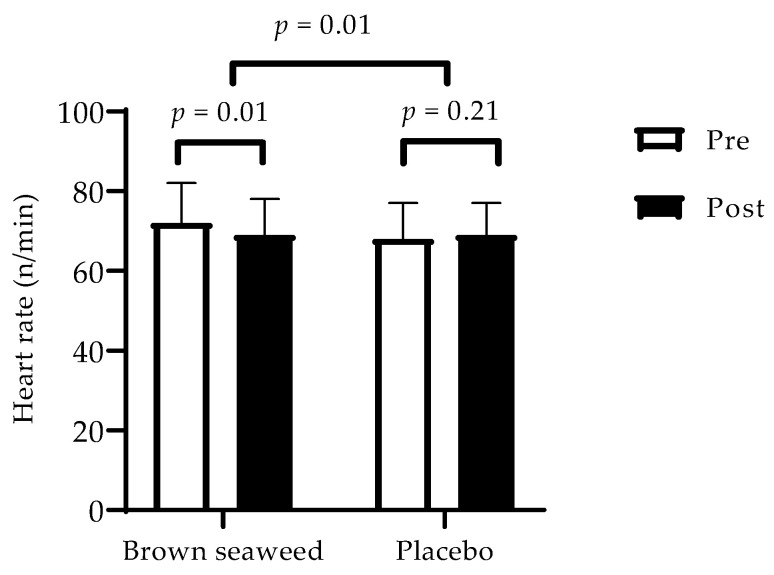
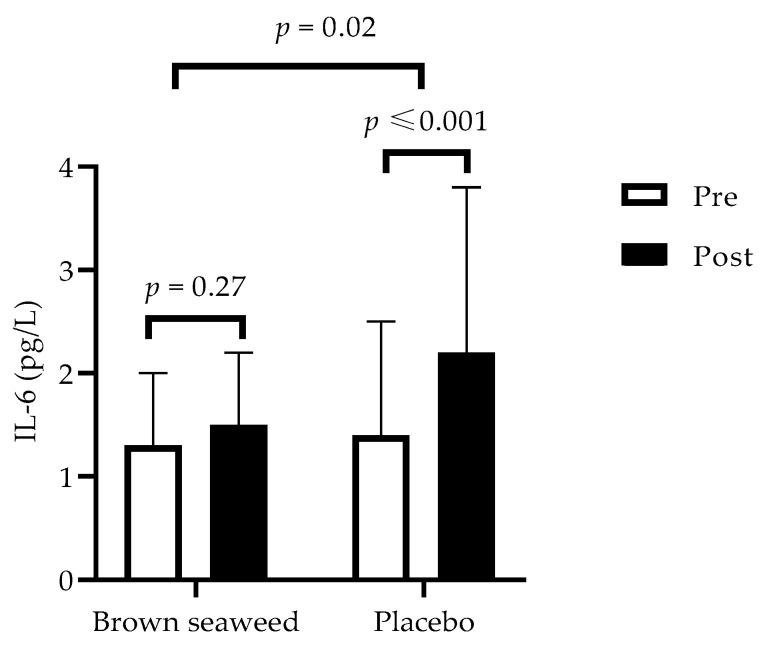
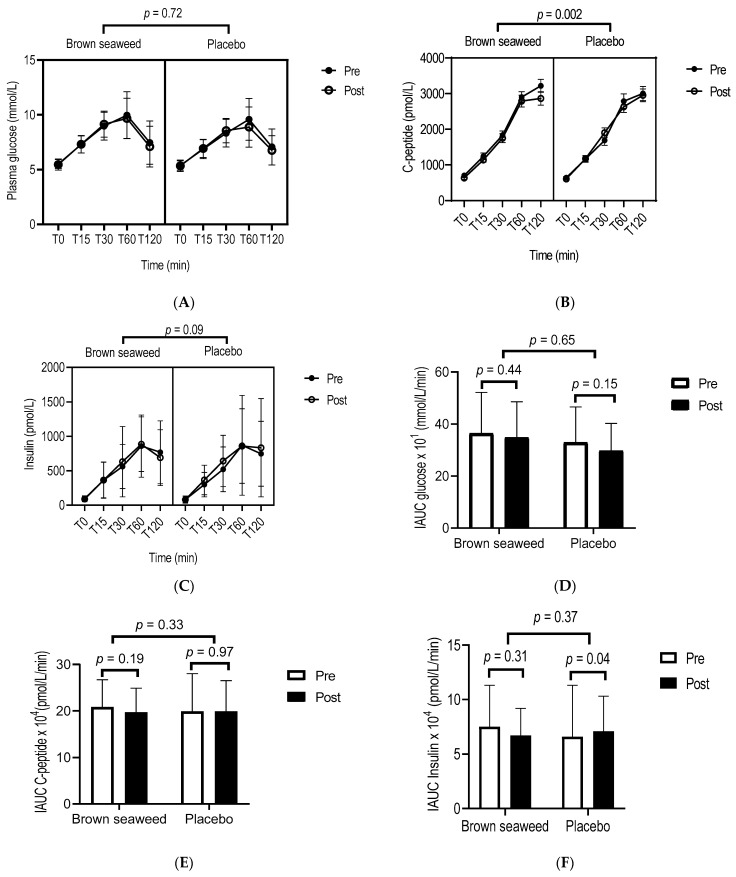
The objective of the present study was to test whether a brown seaweed extract rich in polyphenols combined with a low-calorie diet would induce additional weight loss and improve blood glucose homeostasis in association with a metabolic and inflammatory response in overweight/obese prediabetic subjects. Fifty-six overweight/obese, dysglycemic, and insulin-resistant men and women completed a randomized, placebo-controlled, double-blind, and parallel clinical trial. Subjects were administrated 500 mg/d of either brown seaweed extract or placebo combined with individualized nutritional advice for moderate weight loss over a period of 12 weeks. Glycemic, anthropometric, blood pressure, heart rate, body composition, lipid profile, gut integrity, and oxidative and inflammatory markers were measured before and at the end of the trial. No effect was observed on blood glucose. We observed significant but small decreases in plasma C-peptide at 120 min during 2 h-OGTT (3218 ± 181 at pre-intervention vs. 2865 ± 186 pmol/L at post-intervention in the brown seaweed group; 3004 ± 199 at pre-intervention vs. 2954 ± 179 pmol/L at post-intervention in the placebo group; changes between the two groups, = 0.002), heart rate (72 ± 10 at pre-intervention vs. 69 ± 9 (/min) at post-intervention in the brown seaweed group; 68 ± 9 at pre-intervention vs. 68 ± 8 (/min) at post-intervention in the placebo group; changes between the two groups, = 0.01), and an inhibition in the increase of pro-inflammatory interleukin-6 (IL-6) (1.3 ± 0.7 at pre-intervention vs. 1.5 ± 0.7 pg/L at post-intervention in the brown seaweed group; 1.4 ± 1.1 at pre-intervention vs. 2.2 ± 1.6 pg/L at post-intervention in the placebo group; changes between the two groups, = 0.02) following brown seaweed consumption compared with placebo in the context of moderate weight loss. Although consumption of brown seaweed extract had no effect on body weight or blood glucose, an early attenuation of the inflammatory response was observed in association with marginal changes in metabolic parameters related to the prevention of diabetes type 2.
本研究旨在测试富含多酚的褐藻提取物与低热量饮食相结合是否会在超重/肥胖前期糖尿病患者中诱导额外的体重减轻,并改善血糖稳态,同时伴随代谢和炎症反应。56 名超重/肥胖、血糖异常和胰岛素抵抗的男性和女性完成了一项随机、安慰剂对照、双盲和平行的临床试验。研究对象接受 500mg/d 的褐藻提取物或安慰剂,同时结合个性化营养建议,在 12 周内适度减重。在试验前和结束时测量血糖、人体测量、血压、心率、身体成分、血脂谱、肠道完整性以及氧化和炎症标志物。
血糖没有观察到效果。我们观察到在 2 小时 OGTT 中 120 分钟时血浆 C 肽有显著但较小的下降(褐藻组干预前为 3218±181pmol/L,干预后为 2865±186pmol/L;安慰剂组干预前为 3004±199pmol/L,干预后为 2954±179pmol/L;两组间变化, = 0.002),心率(褐藻组干预前为 72±10 次/分,干预后为 69±9 次/分;安慰剂组干预前为 68±9 次/分,干预后为 68±8 次/分;两组间变化, = 0.01),以及促炎细胞因子白细胞介素-6(IL-6)的增加受到抑制(褐藻组干预前为 1.3±0.7pg/L,干预后为 1.5±0.7pg/L;安慰剂组干预前为 1.4±1.1pg/L,干预后为 2.2±1.6pg/L;两组间变化, = 0.02)。与安慰剂相比,在适度减重的情况下,褐藻提取物的摄入对体重或血糖没有影响,但观察到炎症反应的早期减弱,同时与 2 型糖尿病预防相关的代谢参数发生了微小变化。