Department of Medical Neurobiology, Institute for Medical Research Israel-Canada (IMRIC), Faculty of Medicine and Edmond and Lily Safra Center for Brain Sciences (ELSC), The Hebrew University, Jerusalem 91120, Israel.
Biomolecules. 2022 Feb 28;12(3):382. doi: 10.3390/biom12030382.
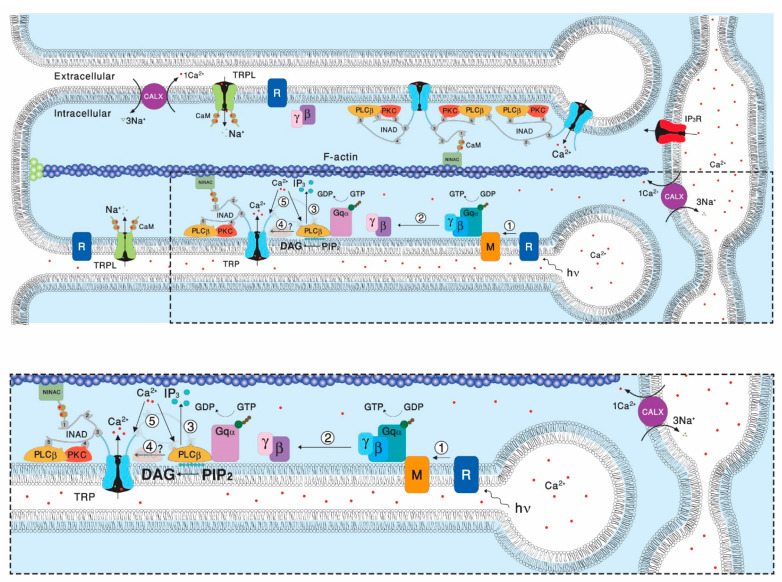
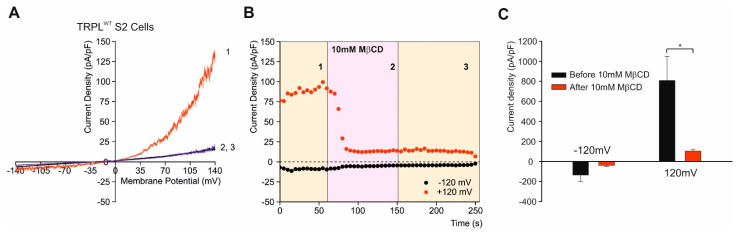
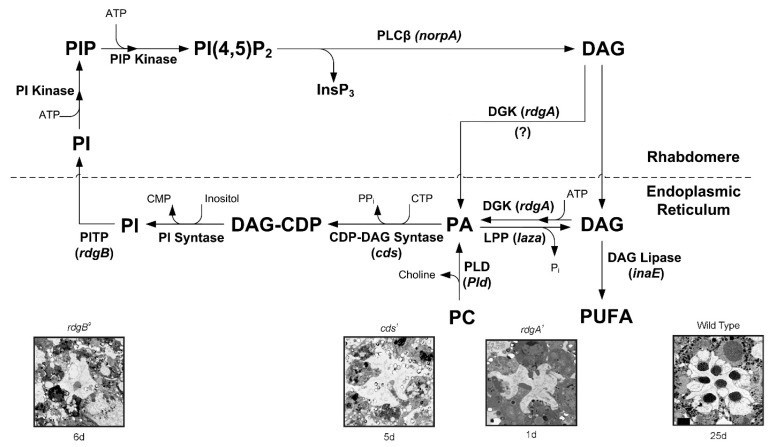
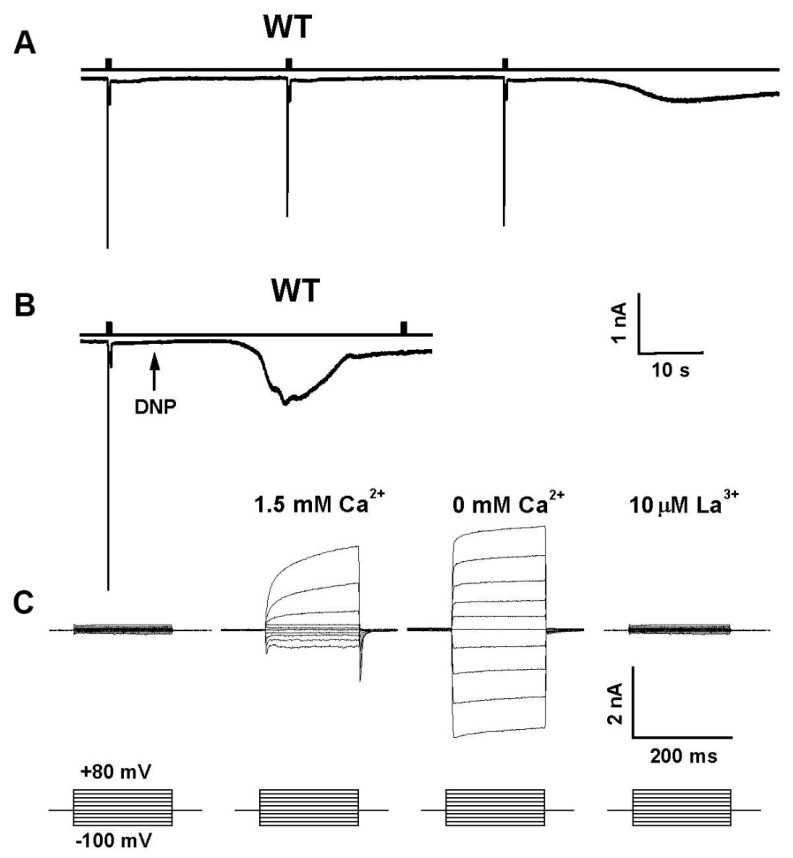
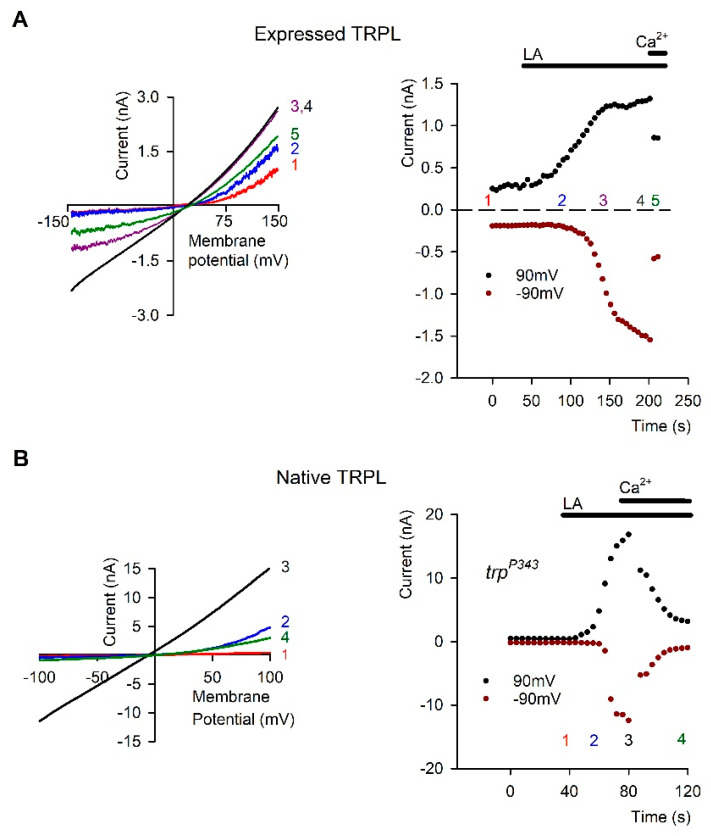
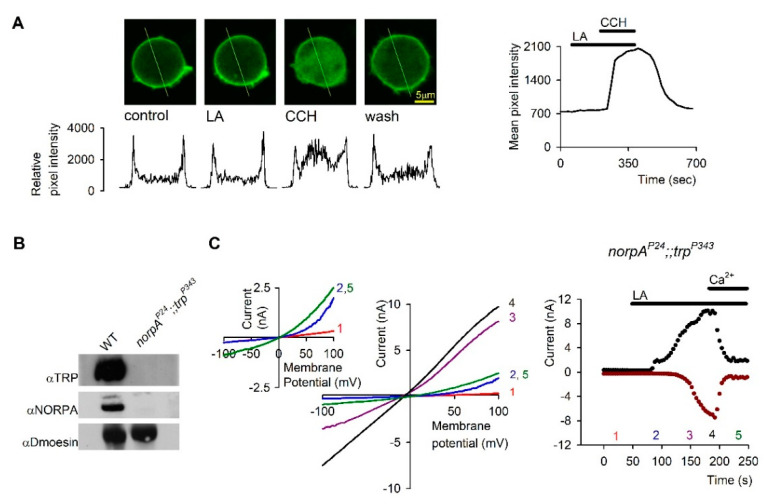
Transient Receptor Potential (TRP) channels constitute a large superfamily of polymodal channel proteins with diverse roles in many physiological and sensory systems that function both as ionotropic and metabotropic receptors. From the early days of TRP channel discovery, membrane lipids were suggested to play a fundamental role in channel activation and regulation. A prominent example is the TRP and TRP-like (TRPL) channels, which are predominantly expressed in the visual system of . Light activation of the TRP and TRPL channels, the founding members of the TRP channel superfamily, requires activation of phospholipase Cβ (PLC), which hydrolyzes phosphatidylinositol 4,5-bisphosphate (PIP) into Diacylglycerol (DAG) and Inositol 1, 4,5-trisphosphate (IP). However, the events required for channel gating downstream of PLC activation are still under debate and led to several hypotheses regarding the mechanisms by which lipids gate the channels. Despite many efforts, compelling evidence of the involvement of DAG accumulation, PIP depletion or IP-mediated Ca release in light activation of the TRP/TRPL channels are still lacking. Exogeneous application of poly unsaturated fatty acids (PUFAs), a product of DAG hydrolysis was demonstrated as an efficient way to activate the TRP/TRPL channels. However, compelling evidence for the involvement of PUFAs in physiological light-activation of the TRP/TRPL channels is still lacking. Light-induced mechanical force generation was measured in photoreceptor cells prior to channel opening. This mechanical force depends on PLC activity, suggesting that the enzymatic activity of PLC converting PIP into DAG generates membrane tension, leading to mechanical gating of the channels. In this review, we will present the roles of membrane lipids in light activation of TRP channels and present the many advantages of this model system in the exploration of TRP channel activation under physiological conditions.
瞬时受体电位 (TRP) 通道构成了一个大型的多模态通道蛋白超家族,在许多生理和感觉系统中具有多种功能,既是离子型通道又是代谢型受体。从 TRP 通道发现的早期开始,膜脂质就被认为在通道激活和调节中起着基本作用。一个突出的例子是 TRP 和 TRP 样 (TRPL) 通道,它们主要表达在 的视觉系统中。TRP 和 TRPL 通道的光激活,TRP 通道超家族的创始成员,需要激活磷脂酶 Cβ (PLC),PLC 将磷脂酰肌醇 4,5-二磷酸 (PIP) 水解成二酰基甘油 (DAG) 和肌醇 1,4,5-三磷酸 (IP)。然而,PLC 激活下游的通道门控事件仍存在争议,并导致了几种关于脂质门控通道机制的假说。尽管做了很多努力,但仍缺乏令人信服的证据表明 DAG 积累、PIP 耗竭或 IP 介导的 Ca 释放参与了 TRP/TRPL 通道的光激活。外源性应用多不饱和脂肪酸 (PUFAs),DAG 水解的产物,被证明是激活 TRP/TRPL 通道的有效方法。然而,仍缺乏令人信服的证据表明 PUFAs 参与了 TRP/TRPL 通道的生理光激活。在通道打开之前,在光感受器细胞中测量光诱导的机械力产生。这种机械力取决于 PLC 活性,这表明 PLC 将 PIP 转化为 DAG 的酶活性会产生膜张力,从而导致通道的机械门控。在这篇综述中,我们将介绍膜脂质在光激活 TRP 通道中的作用,并介绍该模型系统在探索生理条件下 TRP 通道激活方面的许多优势。