Uddin Saleem, Munir Muhammad Zeeshan, Gull Sadia, Khan Aamir Hamid, Khan Aimal, Khan Dilawar, Khan Muhammad Asif, Wu Yue, Sun Yuhan, Li Yun
National Engineering Laboratory for Tree Breeding, Key Laboratory of Genetics and Breeding in Forest Trees and Ornamental Plants of Ministry of Education, Beijing Advanced Innovation Center for Tree Breeding by Molecular Design (BAICFTBMD), Engineering Technology Research Center of Black Locust of National Forestry and Grassland Administration, College of Biological Sciences and Technology, Beijing Forestry University, Beijing 100083, China.
School of Environment and Energy, Shenzhen Graduate School, Peking University, Shenzhen 518055, China.
Genes (Basel). 2022 Feb 27;13(3):441. doi: 10.3390/genes13030441.
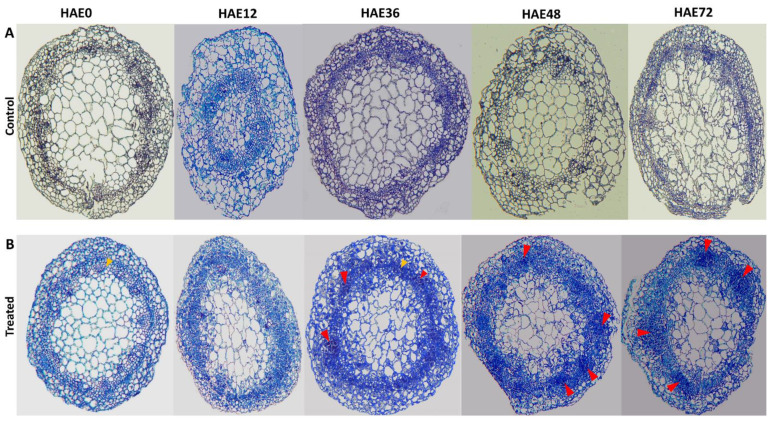
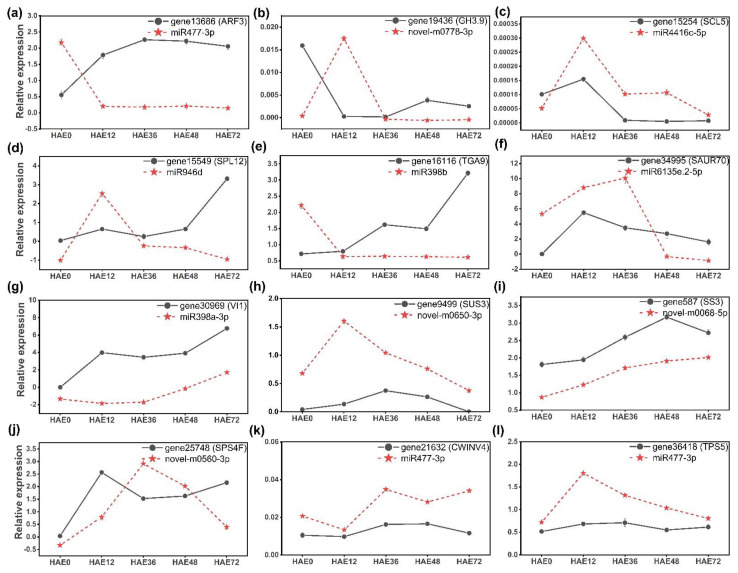
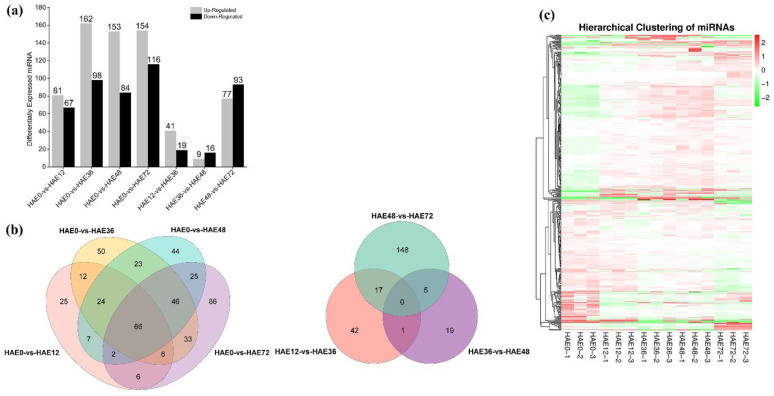
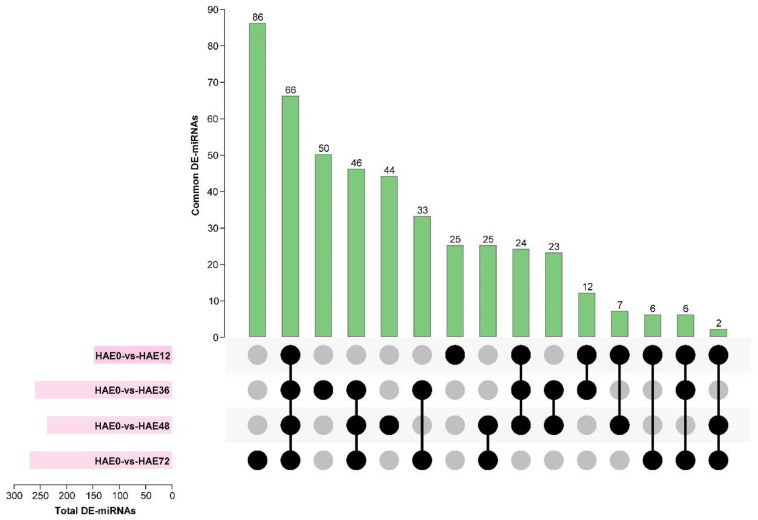
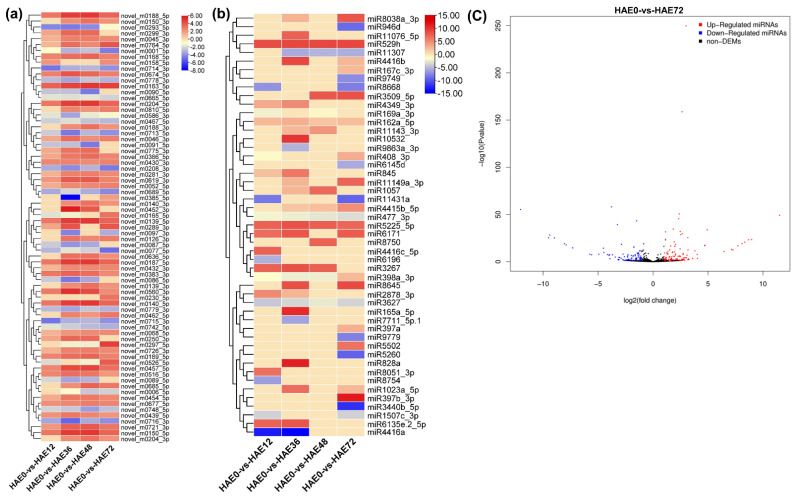
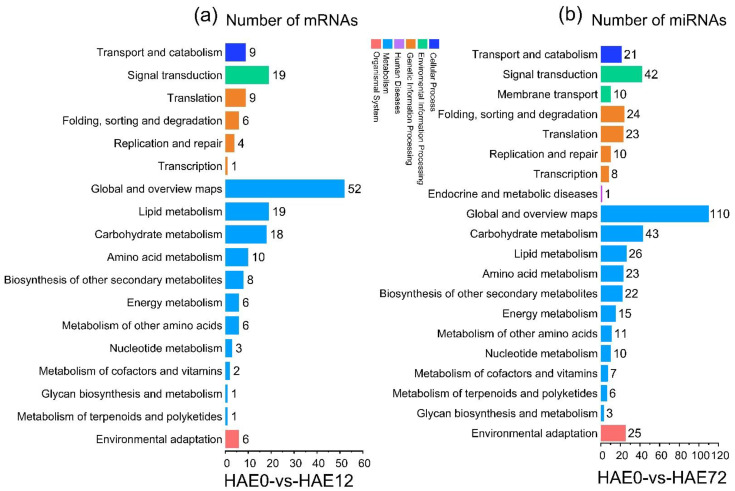
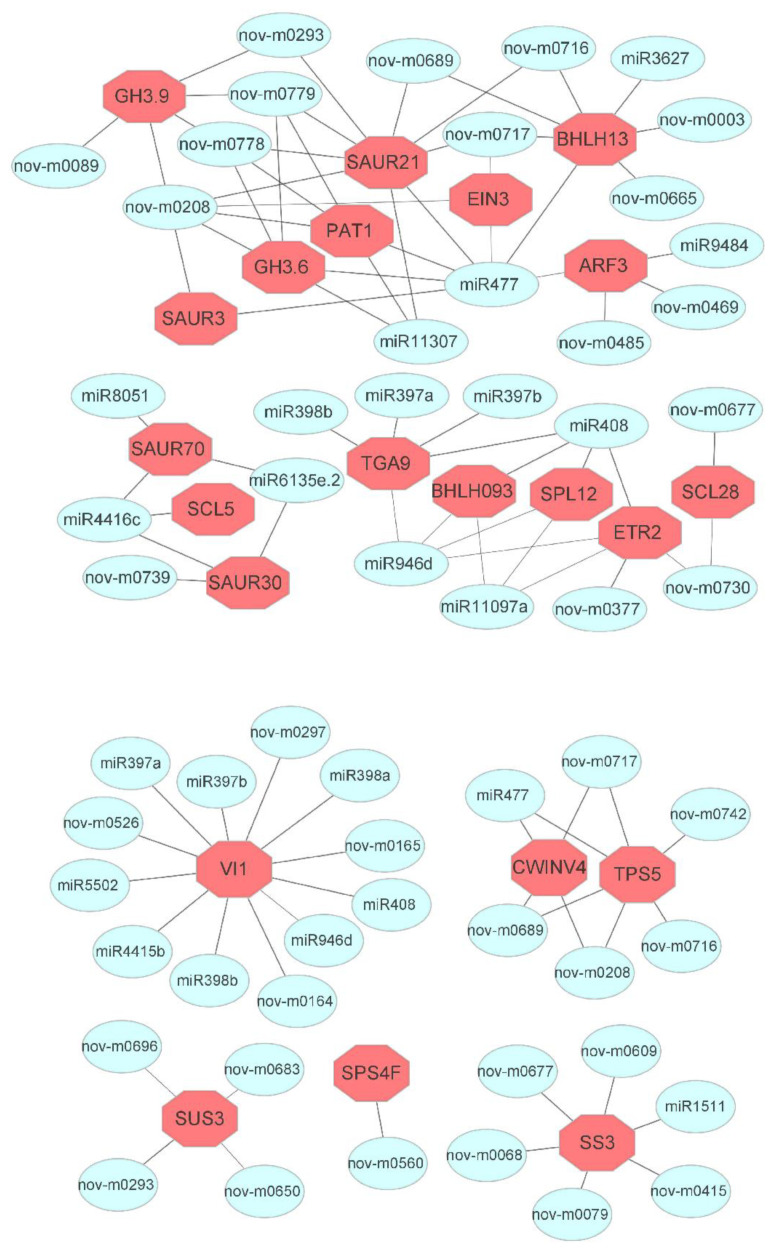
Tetraploid L. is a difficult-to-root species, and is vegetatively propagated through stem cuttings. Limited information is available regarding the adventitious root (AR) formation of dark-pretreated micro-shoot cuttings. Moreover, the role of specific miRNAs and their targeted genes during dark-pretreated AR formation under in vitro conditions has never been revealed. The dark pretreatment has successfully promoted and stimulated adventitious rooting signaling-related genes in tissue-cultured stem cuttings with the application of auxin (0.2 mg L IBA). Histological analysis was performed for AR formation at 0, 12, 36, 48, and 72 h after excision (HAE) of the cuttings. The first histological events were observed at 36 HAE in the dark-pretreated cuttings; however, no cellular activities were observed in the control cuttings. In addition, the present study aimed to uncover the role of differentially expressed (DE) microRNAs (miRNAs) and their targeted genes during adventitious root formation using the lower portion (1-1.5 cm) of tetraploid L. micro-shoot cuttings. The samples were analyzed using Illumina high-throughput sequencing technology for the identification of miRNAs at the mentioned time points. Seven DE miRNA libraries were constructed and sequenced. The DE number of 81, 162, 153, 154, 41, 9, and 77 miRNAs were upregulated, whereas 67, 98, 84, 116, 19, 16, and 93 miRNAs were downregulated in the following comparisons of the libraries: 0-vs-12, 0-vs-36, 0-vs-48, 0-vs-72, 12-vs-36, 36-vs-48, and 48-vs-72, respectively. Furthermore, we depicted an association between ten miRNAs (novel-m0778-3p, miR6135e.2-5p, miR477-3p, miR4416c-5p, miR946d, miR398b, miR389a-3p, novel m0068-5p, novel-m0650-3p, and novel-m0560-3p) and important target genes (auxin response factor-3, gretchen hagen-9, scarecrow-like-1, squamosa promoter-binding protein-like-12, small auxin upregulated RNA-70, binding protein-9, vacuolar invertase-1, starch synthase-3, sucrose synthase-3, probable starch synthase-3, cell wall invertase-4, and trehalose phosphatase synthase-5), all of which play a role in plant hormone signaling and starch and sucrose metabolism pathways. The quantitative polymerase chain reaction (qRT-PCR) was used to validate the relative expression of these miRNAs and their targeted genes. These results provide novel insights and a foundation for further studies to elucidate the molecular factors and processes controlling AR formation in woody plants.
四倍体柳属植物是一种难生根的物种,通过茎插条进行无性繁殖。关于暗预处理微茎插条不定根(AR)形成的信息有限。此外,在体外条件下,特定miRNA及其靶向基因在暗预处理AR形成过程中的作用从未被揭示。通过施加生长素(0.2 mg/L IBA),暗预处理成功促进并刺激了组织培养茎插条中不定根形成信号相关基因。对插条切除后0、12、36、48和72小时(HAE)的AR形成进行了组织学分析。在暗预处理插条中,在36 HAE观察到了最初的组织学事件;然而,在对照插条中未观察到细胞活动。此外,本研究旨在利用四倍体柳属植物微茎插条的下部(1-1.5厘米)揭示差异表达(DE)miRNA及其靶向基因在不定根形成过程中的作用。使用Illumina高通量测序技术对样品进行分析,以在上述时间点鉴定miRNA。构建并测序了七个DE miRNA文库。在文库的以下比较中,81、162、153、154、41、9和77个miRNA的DE数量上调,而67、98、84、116、19、16和93个miRNA下调:0对12、0对36、0对48、0对72、12对36、36对48和48对72。此外,我们描绘了十个miRNA(novel-m0778-3p、miR6135e.2-5p、miR477-3p、miR4416c-5p、miR946d、miR398b、miR389a-3p、novel m0068-5p、novel-m0650-3p和novel-m0560-3p)与重要靶基因(生长素反应因子-3、格雷琴·哈根-9、稻草人样-1、鳞状启动子结合蛋白样-12、小生长素上调RNA-70、结合蛋白-9、液泡转化酶-1、淀粉合酶-3、蔗糖合酶-3、可能的淀粉合酶-3、细胞壁转化酶-4和海藻糖磷酸合酶-5)之间的关联,所有这些基因在植物激素信号传导以及淀粉和蔗糖代谢途径中发挥作用。使用定量聚合酶链反应(qRT-PCR)验证这些miRNA及其靶向基因的相对表达。这些结果为进一步研究阐明控制木本植物AR形成的分子因素和过程提供了新的见解和基础。