Aberdeen Cardiovascular and Diabetes Centre, Institute of Medical Sciences, School of Medicine, Medical Sciences and Nutrition, University of Aberdeen, Foresterhill, Aberdeen AB25 2ZD, UK.
Int J Mol Sci. 2022 Mar 9;23(6):2944. doi: 10.3390/ijms23062944.
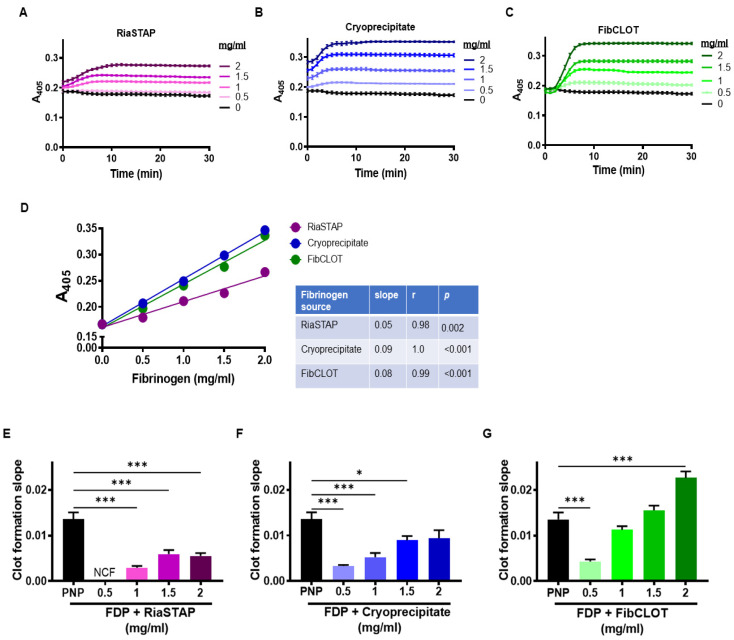
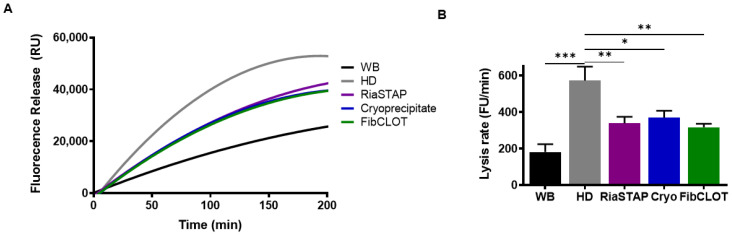
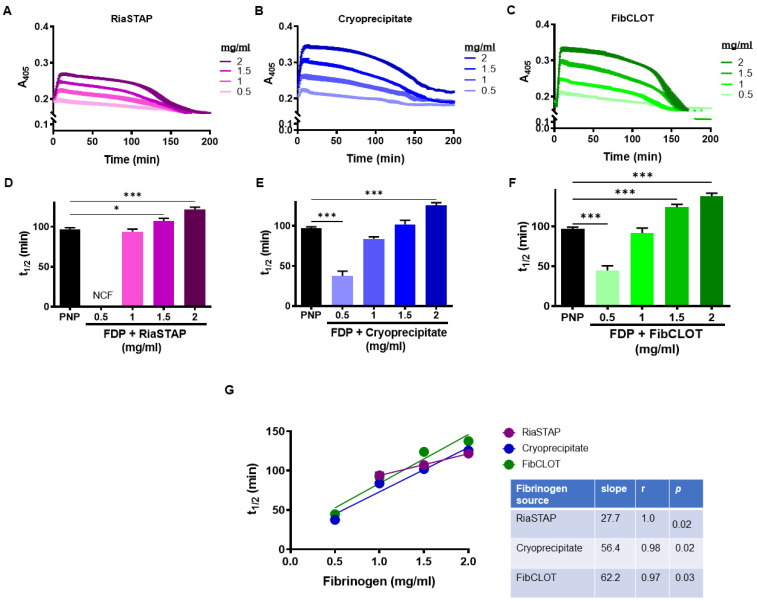
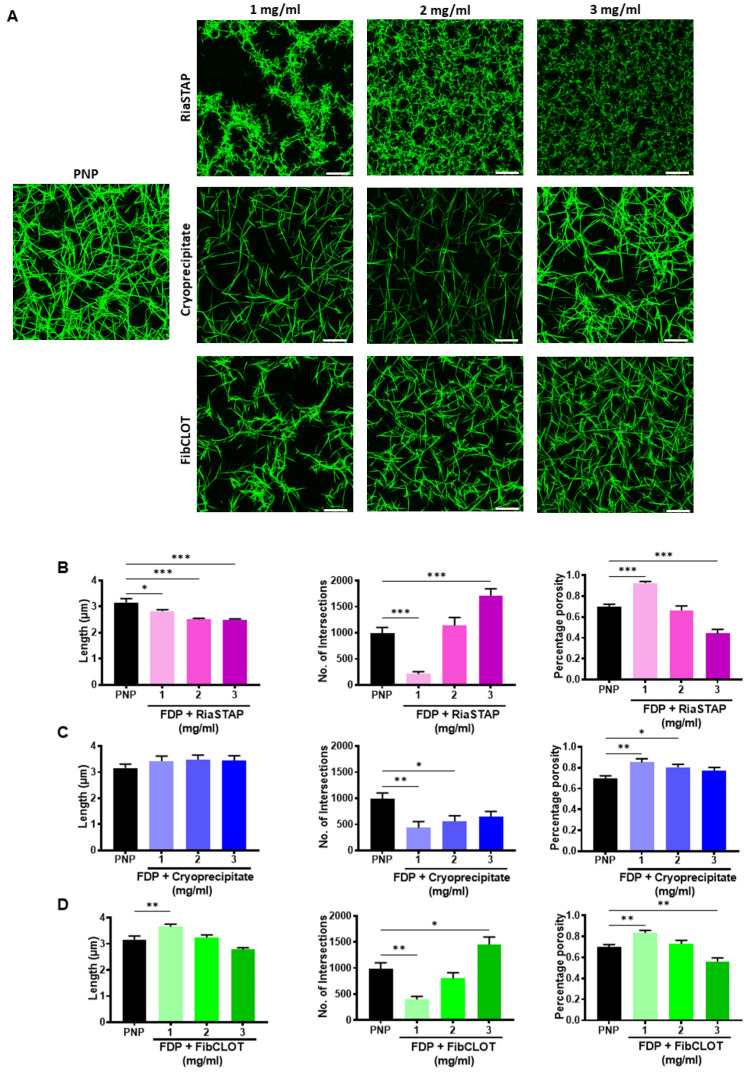
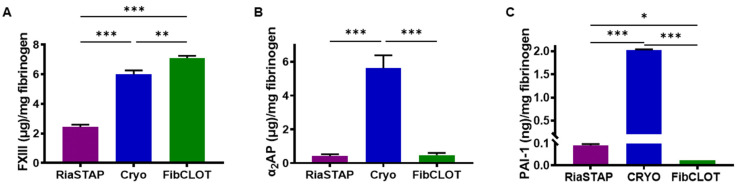
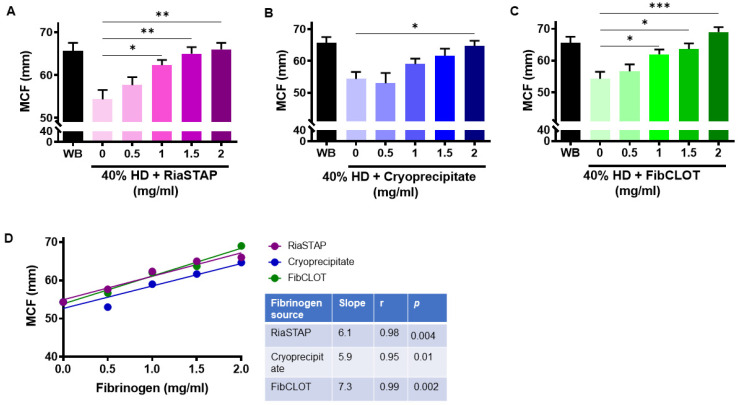
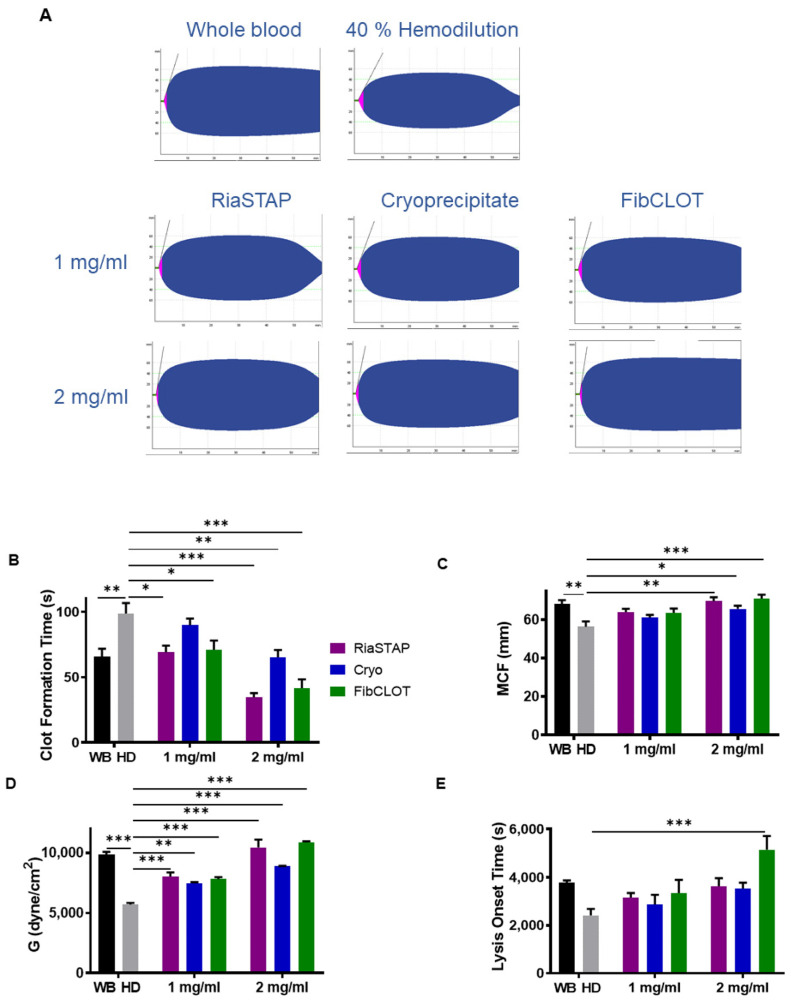
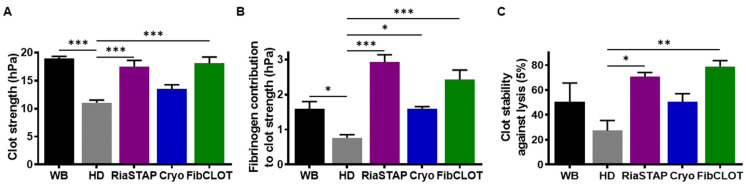
Loss of fibrinogen is a feature of trauma-induced coagulopathy (TIC), and restoring this clotting factor is protective against hemorrhages. We compared the efficacy of cryoprecipitate, and of the fibrinogen concentrates RiaSTAP and FibCLOT in restoring the clot integrity in models of TIC. Cryoprecipitate and FibCLOT produced clots with higher maximal absorbance and enhanced resistance to lysis relative to RiaSTAP. The fibrin structure of clots, comprising cryoprecipitate and FibCLOT, mirrored those of normal plasma, whereas those with RiaSTAP showed stunted fibers and reduced porosity. The hemodilution of whole blood reduced the maximum clot firmness (MCF) as assessed by thromboelastography. MCF could be restored with the inclusion of 1 mg/mL of fibrinogen, but only FibCLOT was effective at stabilizing against lysis. The overall clot strength, measured using the Quantra hemostasis analyzer, was restored with both fibrinogen concentrates but not cryoprecipitate. αantiplasmin and plasminogen activator inhibitor-1 (PAI-1) were constituents of cryoprecipitate but were negligible in RiaSTAP and FibCLOT. Interestingly, cryoprecipitate and FibCLOT contained significantly higher factor XIII (FXIII) levels, approximately three-fold higher than RiaSTAP. Our data show that 1 mg/mL fibrinogen, a clinically achievable concentration, can restore adequate clot integrity. However, FibCLOT, which contained more FXIII, was superior in normalizing the clot structure and in stabilizing hemodiluted clots against mechanical and fibrinolytic degradation.
纤维蛋白原的丢失是创伤性凝血病(TIC)的特征,而恢复这种凝血因子可以预防出血。我们比较了冷沉淀、纤维蛋白原浓缩物 RiaSTAP 和 FibCLOT 在恢复 TIC 模型中血凝块完整性方面的疗效。与 RiaSTAP 相比,冷沉淀和 FibCLOT 产生的血凝块具有更高的最大吸光度和增强的抗溶解能力。由冷沉淀和 FibCLOT 组成的血凝块的纤维蛋白结构反映了正常血浆的纤维蛋白结构,而 RiaSTAP 的纤维蛋白结构则显示出发育不良的纤维和降低的多孔性。全血的稀释会降低血栓弹性描记法(TEG)评估的最大血凝块硬度(MCF)。通过添加 1mg/mL 的纤维蛋白原可以恢复 MCF,但只有 FibCLOT 能有效抵抗溶解。使用 Quantra 止血分析仪测量的整体血凝块强度可以通过两种纤维蛋白原浓缩物恢复,但不能通过冷沉淀恢复。α抗纤溶酶和纤溶酶原激活物抑制剂-1(PAI-1)是冷沉淀的组成部分,但在 RiaSTAP 和 FibCLOT 中可以忽略不计。有趣的是,冷沉淀和 FibCLOT 含有明显更高水平的因子 XIII(FXIII),约比 RiaSTAP 高 3 倍。我们的数据表明,1mg/mL 的纤维蛋白原(一种临床可实现的浓度)可以恢复足够的血凝块完整性。然而,FibCLOT 含有更多的 FXIII,在使血凝块结构正常化和稳定稀释的血凝块对抗机械和纤维蛋白溶解降解方面更为优越。