Division of Digestive Surgery, Department of Surgery, Kyoto Prefectural University of Medicine, Kyoto 602-8566, Japan.
First Department of Surgery, Faculty of Medicine, University of Yamanashi, Kofu 400-8510, Japan.
Int J Mol Sci. 2022 Mar 17;23(6):3264. doi: 10.3390/ijms23063264.
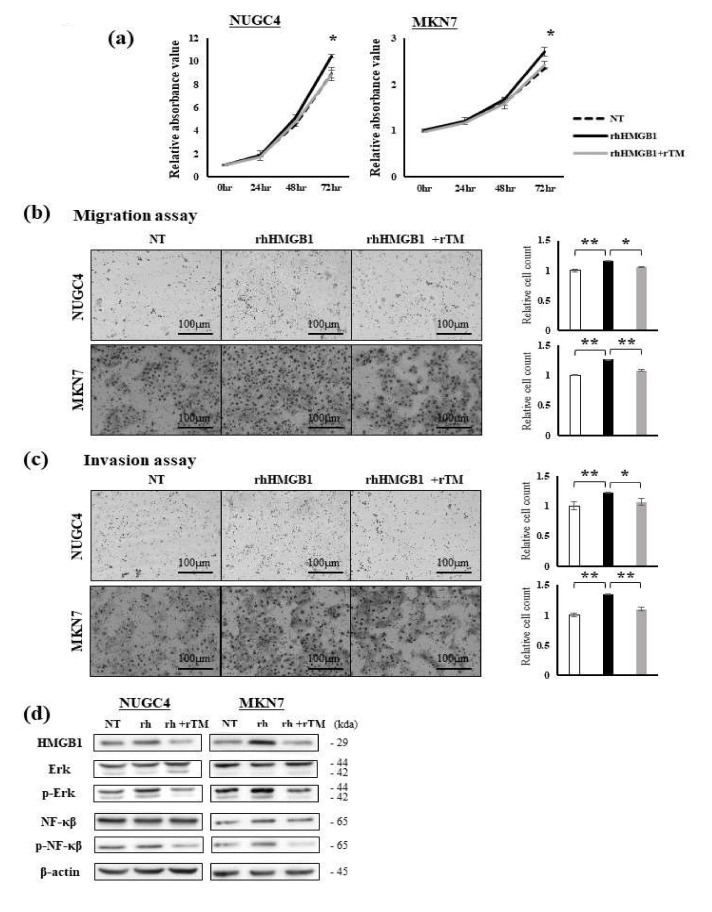
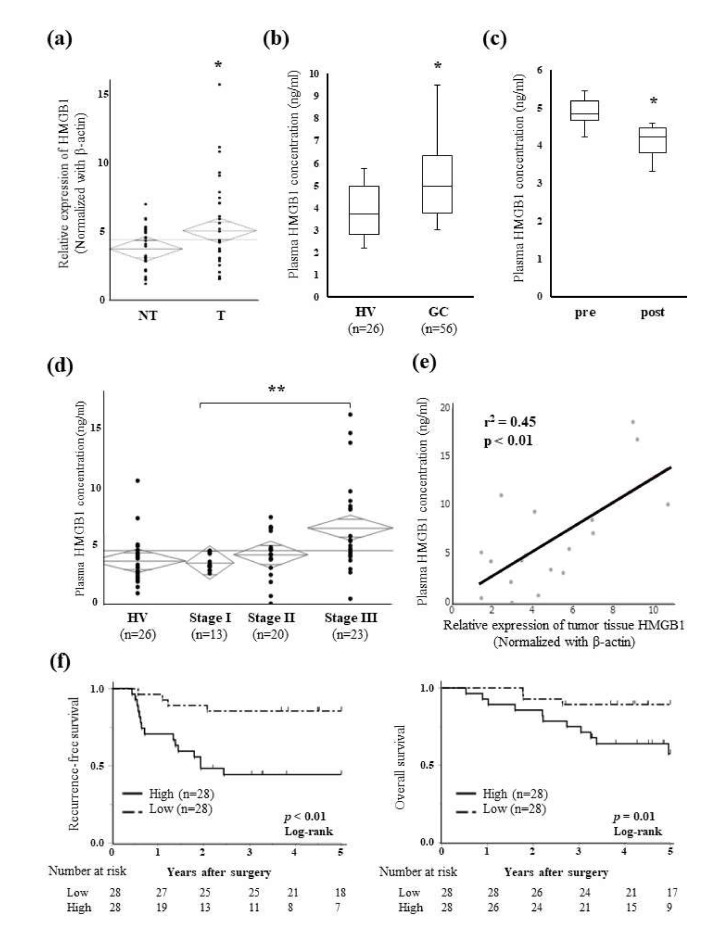
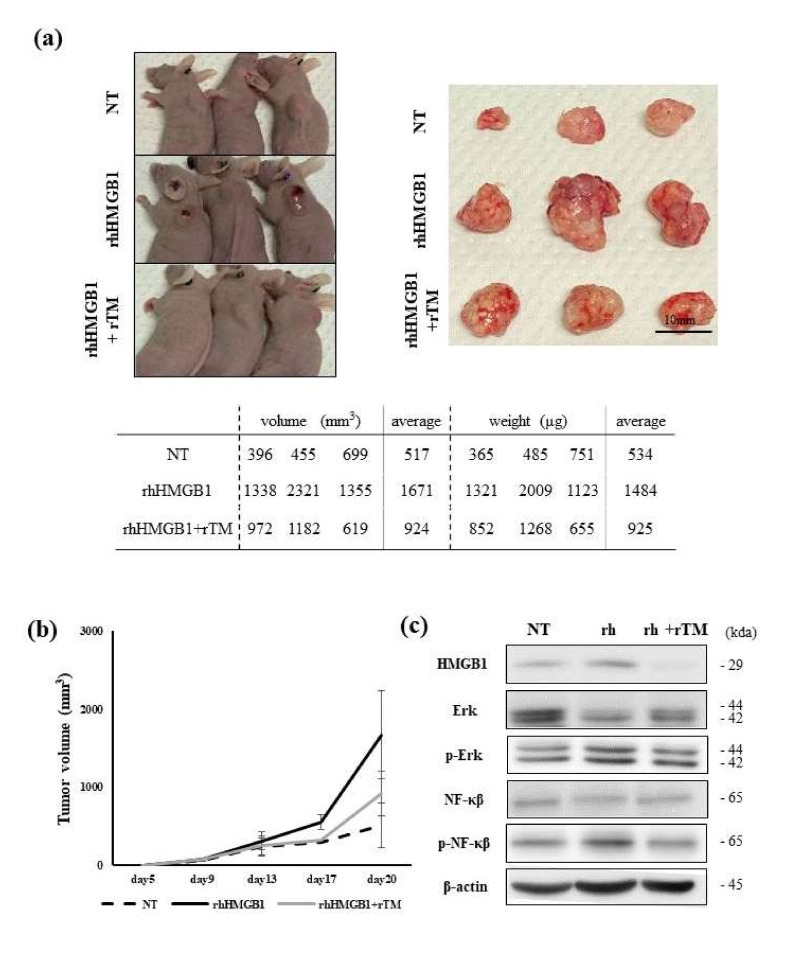
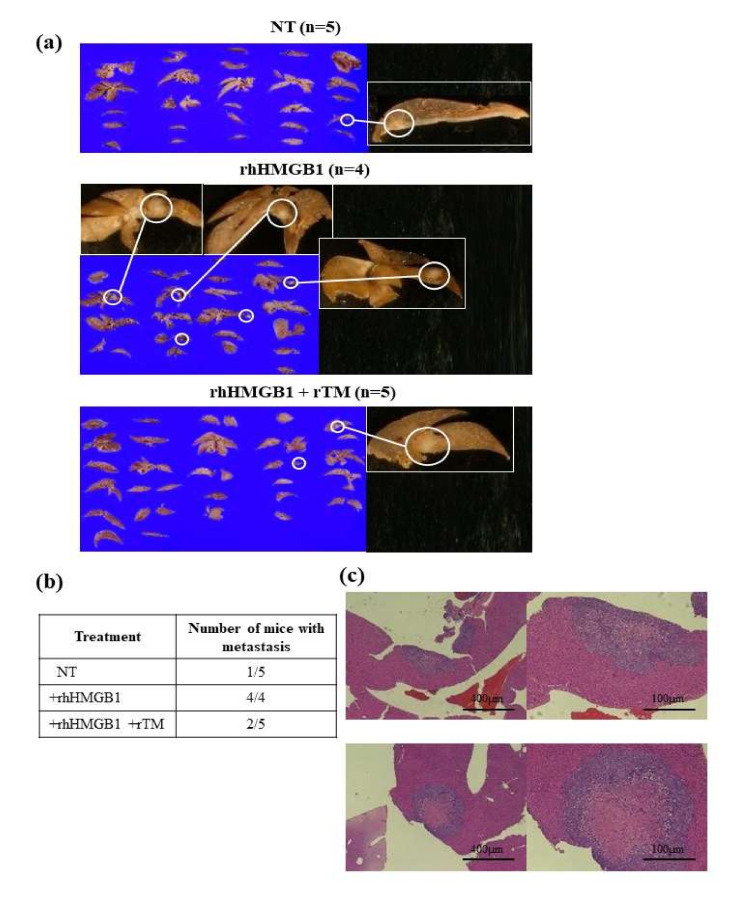
Background: High-mobility group box-1 (HMGB1) is involved in the tumorigenesis and metastasis of various cancers. The present study investigated the roles of extracellular HMGB1 in the progression of gastric cancer (GC) and the therapeutic effects of recombinant human soluble thrombomodulin (rTM) targeting HMGB1. Methods: The effects of extracellular HMGB1 and rTM on GC cells were assessed using proliferation and Transwell assays. Their effects on local tumor growth and metastasis were evaluated using subcutaneous tumor and liver metastasis mouse models, respectively. Plasma HMGB1 concentrations in GC patients were measured using ELISA. The relationships between plasma HMGB1 concentrations and the prognosis and clinicopathological factors of patients were also investigated. Results: GC proliferation, migration, and invasion abilities were promoted by increases in extracellular HMGB1 concentrations and alleviated by rTM. In the subcutaneous tumor model, local tumor growth was promoted by the addition of rhHMGB1 and alleviated by rTM. Similar changes occurred in the liver metastasis model. Recurrence-free survival (p < 0.01) and overall survival (p = 0.01) were significantly worse in patients with high plasma HMGB1 concentrations. Conclusion: Plasma HMGB1 concentrations are a prognostic marker in GC patients. Extracellular HMGB1 promotes cancer progression and has potential as a novel treatment target in GC cells for rTM.
高迁移率族蛋白 B1(HMGB1)参与多种癌症的发生和转移。本研究探讨了细胞外 HMGB1 在胃癌(GC)进展中的作用以及针对 HMGB1 的重组人可溶性血栓调节蛋白(rTM)的治疗效果。
使用增殖和 Transwell 测定法评估细胞外 HMGB1 和 rTM 对 GC 细胞的作用。分别使用皮下肿瘤和肝转移小鼠模型评估它们对局部肿瘤生长和转移的影响。使用 ELISA 测量 GC 患者的血浆 HMGB1 浓度。还研究了血浆 HMGB1 浓度与患者预后和临床病理因素之间的关系。
GC 增殖、迁移和侵袭能力随着细胞外 HMGB1 浓度的增加而增强,rTM 则减轻了这种作用。在皮下肿瘤模型中,rhHMGB1 的添加促进了局部肿瘤生长,rTM 减轻了这种作用。在肝转移模型中也发生了类似的变化。高血浆 HMGB1 浓度患者的无复发生存率(p < 0.01)和总生存率(p = 0.01)明显较差。
血浆 HMGB1 浓度是 GC 患者的预后标志物。细胞外 HMGB1 促进癌症进展,rTM 可能成为 GC 细胞的新型治疗靶点。