Research Division, Sidra Medicine, Doha 26999, Qatar.
College of Health and Life Sciences, Hamad Bin Khalifa University, Doha 34110, Qatar.
Int J Mol Sci. 2022 Mar 21;23(6):3369. doi: 10.3390/ijms23063369.
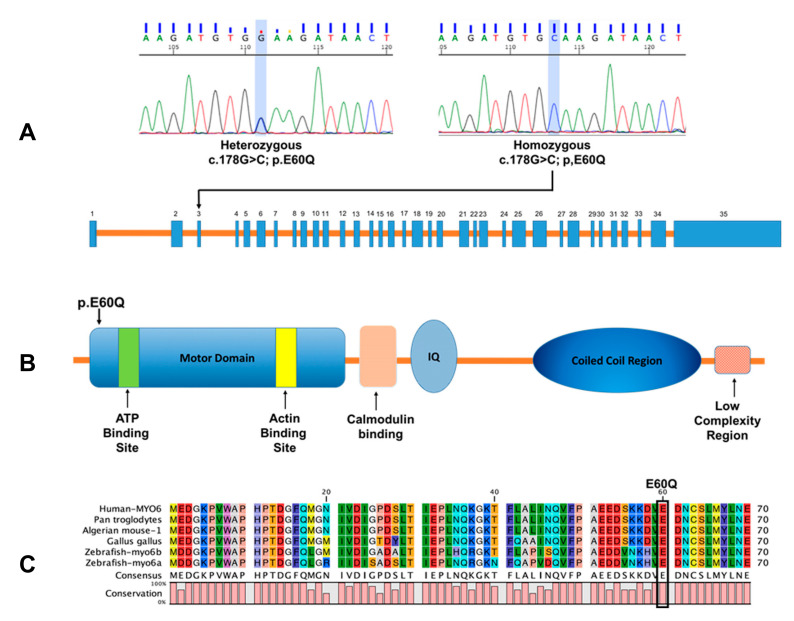
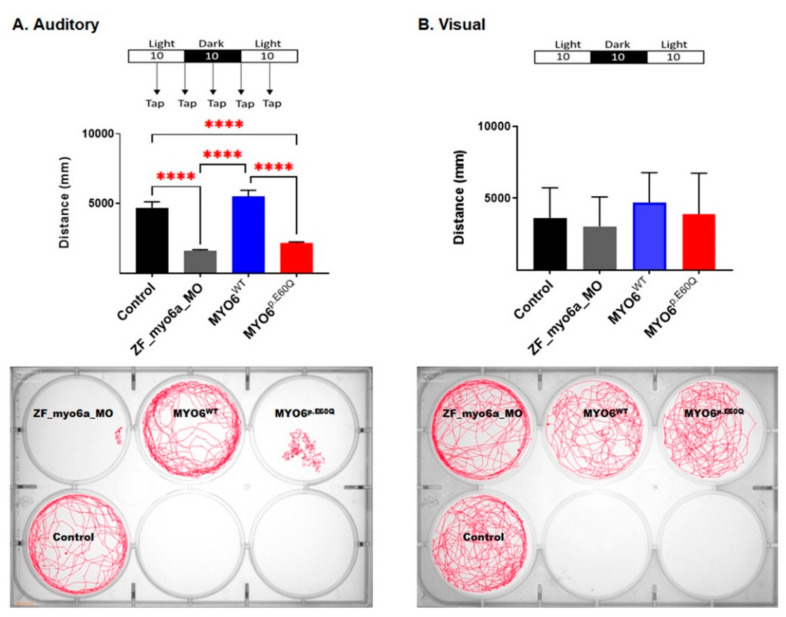
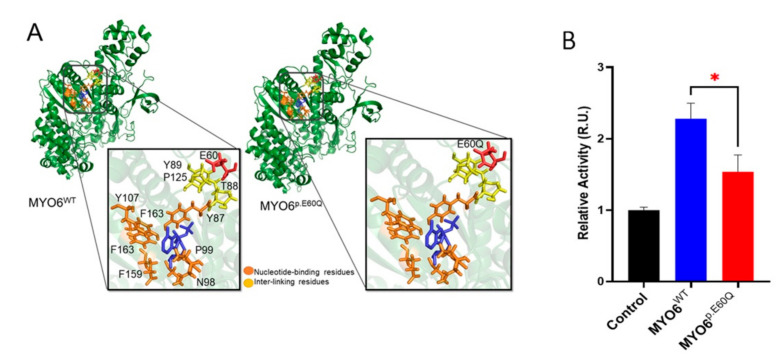
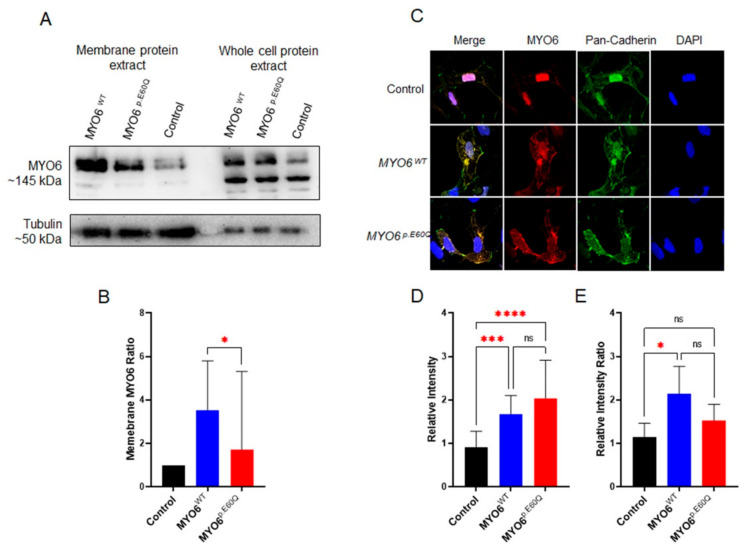
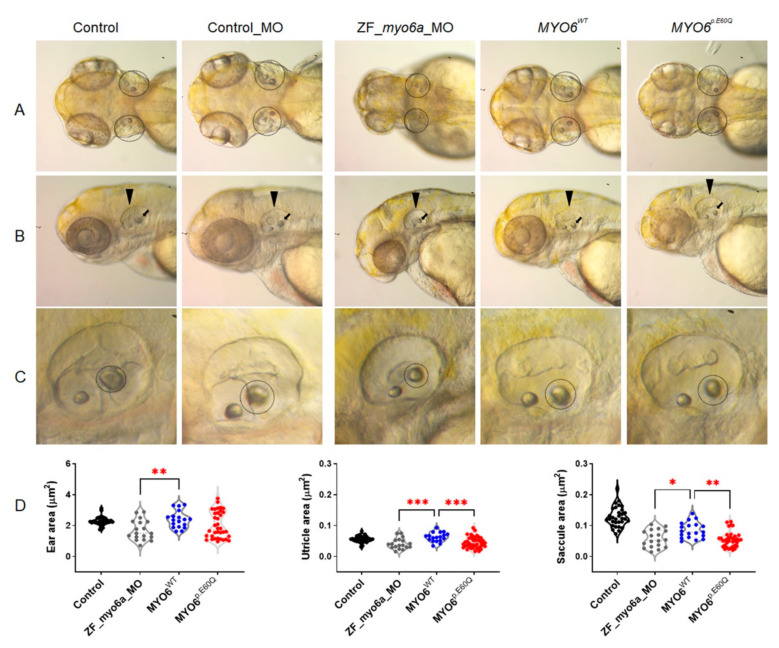
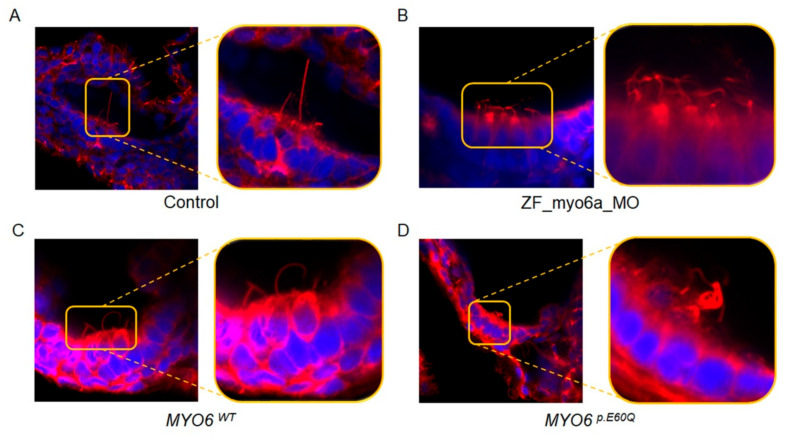
Hereditary hearing loss (HHL) is a common genetic disorder accounting for at least 60% of pre-lingual deafness in children, of which 70% is inherited in an autosomal recessive pattern. The long tradition of consanguinity among the Qatari population has increased the prevalence of HHL, which negatively impacts the quality of life. Here, we functionally validated the pathogenicity of the c.178G>C, p.E60Q mutation in the MYO6 gene, which was detected previously in a Qatari HHL family, using cellular and animal models. In vitro analysis was conducted in HeLa cells transiently transfected with plasmids carrying MYO6WT or MYO6p.E60Q, and a zebrafish model was generated to characterize the in vivo phenotype. Cells transfected with MYO6WT showed higher expression of MYO6 in the plasma membrane and increased ATPase activity. Modeling the human MYO6 variants in zebrafish resulted in severe otic defects. At 72 h post-injection, MYO6p.E60Q embryos demonstrated alterations in the sizes of the saccule and utricle. Additionally, zebrafish with MYO6p.E60Q displayed super-coiled and bent hair bundles in otic hair cells when compared to control and MYO6WT embryos. In conclusion, our cellular and animal models add support to the in silico prediction that the p.E60Q missense variant is pathogenic and damaging to the protein. Since the c.178G>C MYO6 variant has a 0.5% allele frequency in the Qatari population, about 400 times higher than in other populations, it could contribute to explaining the high prevalence of hearing impairment in Qatar.
遗传性听力损失 (HHL) 是一种常见的遗传疾病,至少占儿童先天性耳聋的 60%,其中 70% 以常染色体隐性遗传模式遗传。卡塔尔人口之间长期的近亲关系增加了 HHL 的患病率,这对生活质量产生了负面影响。在这里,我们使用细胞和动物模型,对之前在一个卡塔尔 HHL 家族中检测到的 MYO6 基因 c.178G>C,p.E60Q 突变的致病性进行了功能验证。在瞬时转染携带 MYO6WT 或 MYO6p.E60Q 质粒的 HeLa 细胞中进行体外分析,并生成了一种斑马鱼模型来描述体内表型。转染 MYO6WT 的细胞在质膜中显示出更高的 MYO6 表达和增加的 ATP 酶活性。在斑马鱼中模拟人类 MYO6 变体导致严重的耳缺陷。在注射后 72 小时,MYO6p.E60Q 胚胎的囊和耳石大小发生改变。此外,与对照和 MYO6WT 胚胎相比,MYO6p.E60Q 斑马鱼的耳毛细胞中的毛束显示出超螺旋和弯曲。总之,我们的细胞和动物模型为体外预测提供了支持,即 p.E60Q 错义变体是致病的,并对蛋白质造成损害。由于 c.178G>C MYO6 变体在卡塔尔人口中的等位基因频率为 0.5%,大约比其他人群高 400 倍,因此它可能有助于解释卡塔尔听力损伤的高患病率。