Kawaratani Hideto, Kondo Yasuteru, Tatsumi Ryoji, Kawabe Naoto, Tanabe Norikazu, Sakamaki Akira, Okumoto Kazuo, Uchida Yoshihito, Endo Kei, Kawaguchi Takumi, Oikawa Tsunekazu, Ishizu Yoji, Hige Shuhei, Takami Taro, Terai Shuji, Ueno Yoshiyuki, Mochida Satoshi, Takikawa Yasuhiro, Torimura Takuji, Matsuura Tomokazu, Ishigami Masatoshi, Koike Kazuhiko, Yoshiji Hitoshi
Department of Gastroenterology, Nara Medical University, Kashihara 634-8521, Japan.
Department of Hepatology, Sendai Kousei Hospital, Sendai 980-0873, Japan.
J Clin Med. 2022 Mar 12;11(6):1571. doi: 10.3390/jcm11061571.
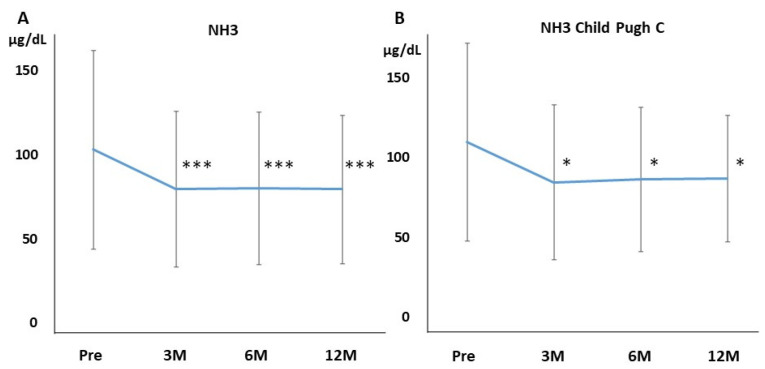
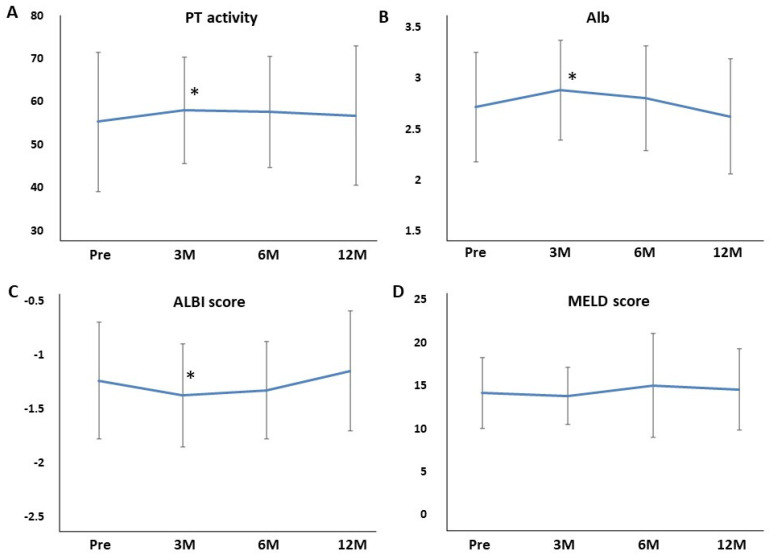
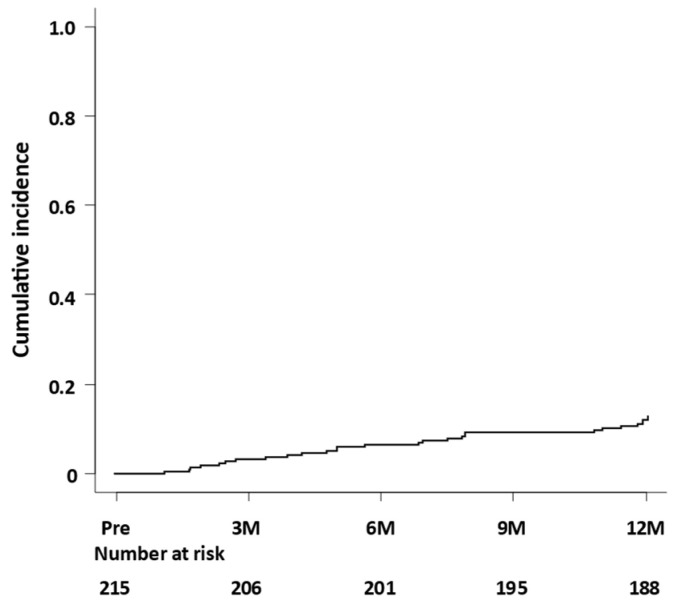
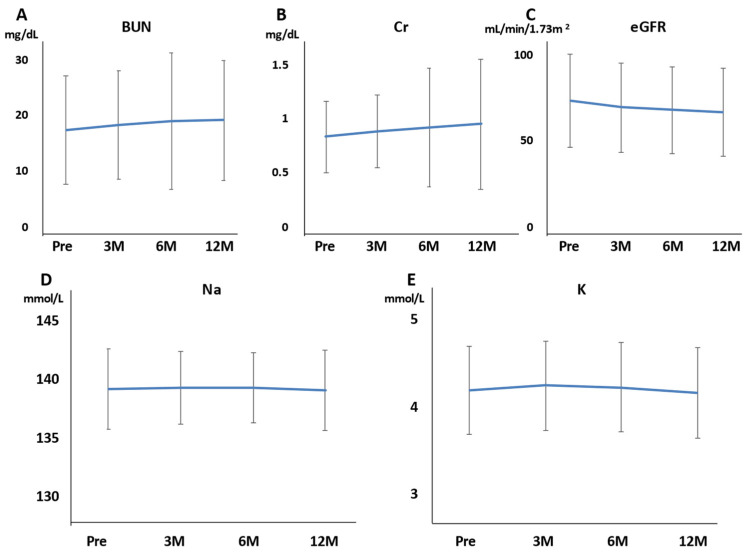
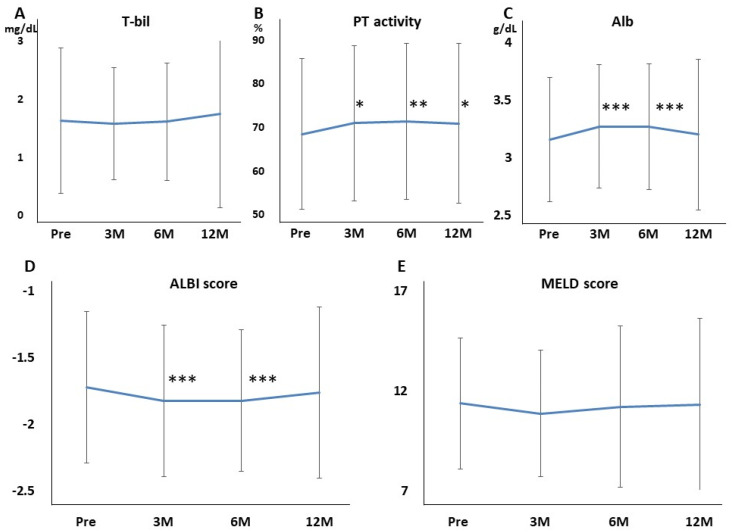
Background: Rifaximin is commonly used for hepatic encephalopathy (HE). However, the effects of long-term treatment for Japanese people are limited. Therefore, this study aimed to investigate the effects and safety of long-term treatment with rifaximin on HE. Methods: A total of 215 patients with cirrhosis administered with rifaximin developed overt or covert HE, which was diagnosed by an attending physician for >12 months. Laboratory data were extracted at pretreatment and 3, 6, and 12 months after rifaximin administration. The long-term effect of rifaximin was evaluated, and the incidence of overt HE during 12 months and adverse events was extracted. Results: Ammonia levels were significantly improved after 3 months of rifaximin administration and were continued until 12 months. There were no serious adverse events after rifaximin administration. The number of overt HE incidents was 9, 14, and 27 patients within 3, 6, and 12 months, respectively. Liver enzymes, renal function, and electrolytes did not change after rifaximin administration. Prothrombin activity is a significant risk factor for the occurrence of overt HE. The serum albumin, prothrombin activity, and albumin−bilirubin (ALBI) scores were statistically improved after 3 and 6 months of rifaximin administration. Moreover, the same results were obtained in patients with Child−Pugh C. Conclusions: The long-term rifaximin treatment was effective and safe for patients with HE, including Child−Pugh C.
利福昔明常用于治疗肝性脑病(HE)。然而,长期治疗对日本人的效果有限。因此,本研究旨在探讨利福昔明长期治疗HE的疗效和安全性。方法:共有215例接受利福昔明治疗的肝硬化患者发生显性或隐性HE,由主治医师诊断超过12个月。在利福昔明给药前及给药后3、6和12个月提取实验室数据。评估利福昔明的长期疗效,并提取12个月内显性HE的发生率和不良事件。结果:利福昔明给药3个月后氨水平显著改善,并持续至12个月。利福昔明给药后无严重不良事件。在3、6和12个月内,显性HE事件的患者人数分别为9、14和27例。利福昔明给药后肝酶、肾功能和电解质未发生变化。凝血酶原活性是显性HE发生的重要危险因素。利福昔明给药3和6个月后,血清白蛋白、凝血酶原活性和白蛋白-胆红素(ALBI)评分在统计学上有所改善。此外,Child-Pugh C级患者也得到了相同的结果。结论:长期使用利福昔明治疗HE患者,包括Child-Pugh C级患者,是有效且安全的。