Jiang Zhiwu, Qin Le, Tang Yuou, Liao Rui, Shi Jingxuan, He Bingjia, Li Shanglin, Zheng Diwei, Cui Yuanbin, Wu Qiting, Long Youguo, Yao Yao, Wei Zhihui, Hong Qilan, Wu Yi, Mai Yuanbang, Gou Shixue, Li Xiaoping, Weinkove Robert, Norton Sam, Luo Wei, Feng Weineng, Zhou Hongsheng, Liu Qifa, Chen Jiekai, Lai Liangxue, Chen Xinwen, Pei Duanqing, Graf Thomas, Liu Xingguo, Li Yangqiu, Liu Pentao, Zhang Zhenfeng, Li Peng
China-New Zealand Joint Laboratory of Biomedine and Health, State Key Laboratory of Respiratory Disease, Guangdong Provincial Key Laboratory of Stem Cell and Regenerative Medicine, Chinese Academy of Sciences Key Laboratory of Stem Cell and Regenerative Medicine, Guangzhou Institutes of Biomedicine and Health, Chinese Academy of Sciences, Guangzhou, China.
Department of Radiology; Guangdong Provincial Education Department Key Laboratory of Nano-Immunoregulation Tumour Microenvironment; Guangzhou Key Laboratory for Research and Development of Nano-Biomedical Technology for Diagnosis and Therapy, the Second Affiliated Hospital of Guangzhou Medical University, Guangzhou, China.
Biomark Res. 2022 Mar 24;10(1):13. doi: 10.1186/s40364-022-00358-4.
Adoptive cell therapy (ACT) is a particularly promising area of cancer immunotherapy, engineered T and NK cells that express chimeric antigen receptors (CAR) are being explored for treating hematopoietic malignancies but exhibit limited clinical benefits for solid tumour patients, successful cellular immunotherapy of solid tumors demands new strategies.
Inactivation of BCL11B were performed by CRISPR/Cas9 in human T cells. Immunophenotypic and transcriptional profiles of sgBCL11B T cells were characterized by cytometer and transcriptomics, respectively. sgBCL11B T cells are further engineered with chimeric antigen receptor. Anti-tumor activity of ITNK or CAR-ITNK cells were evaluated in preclinical and clinical studies.
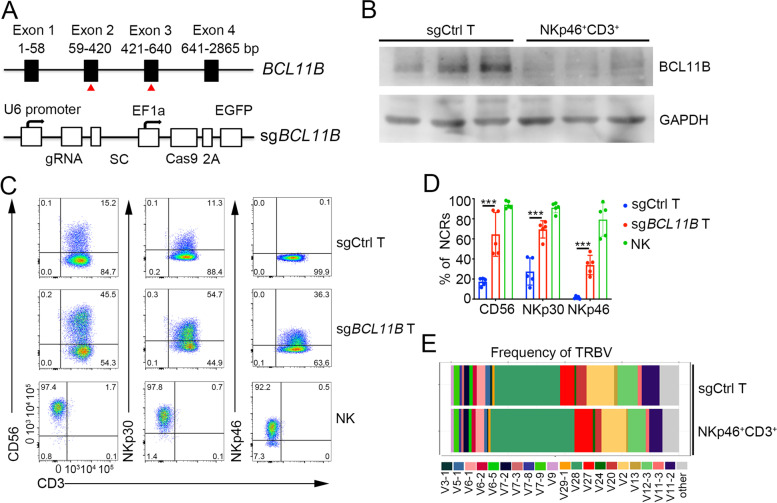
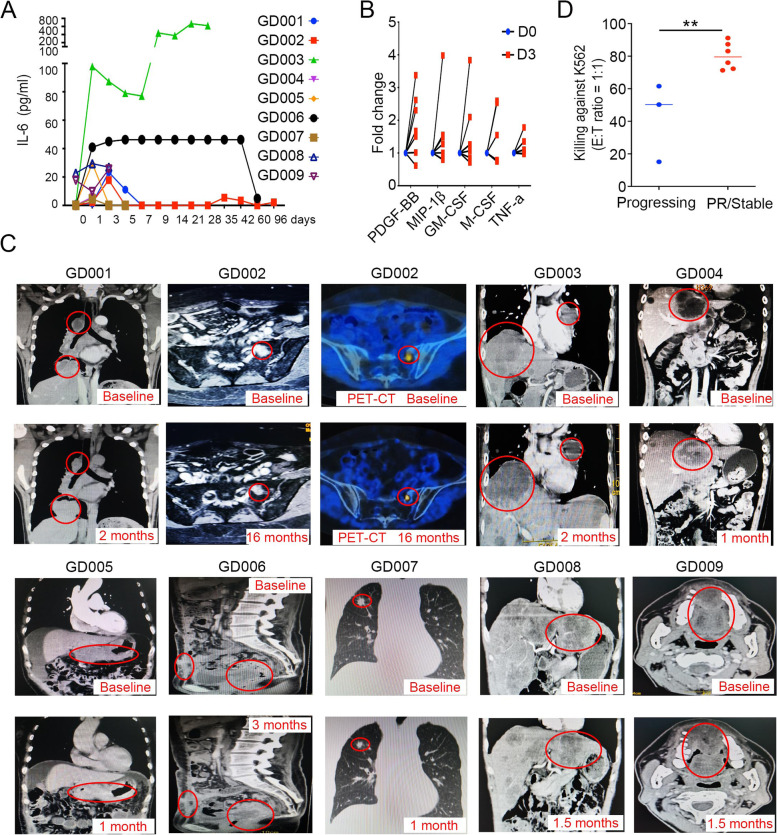
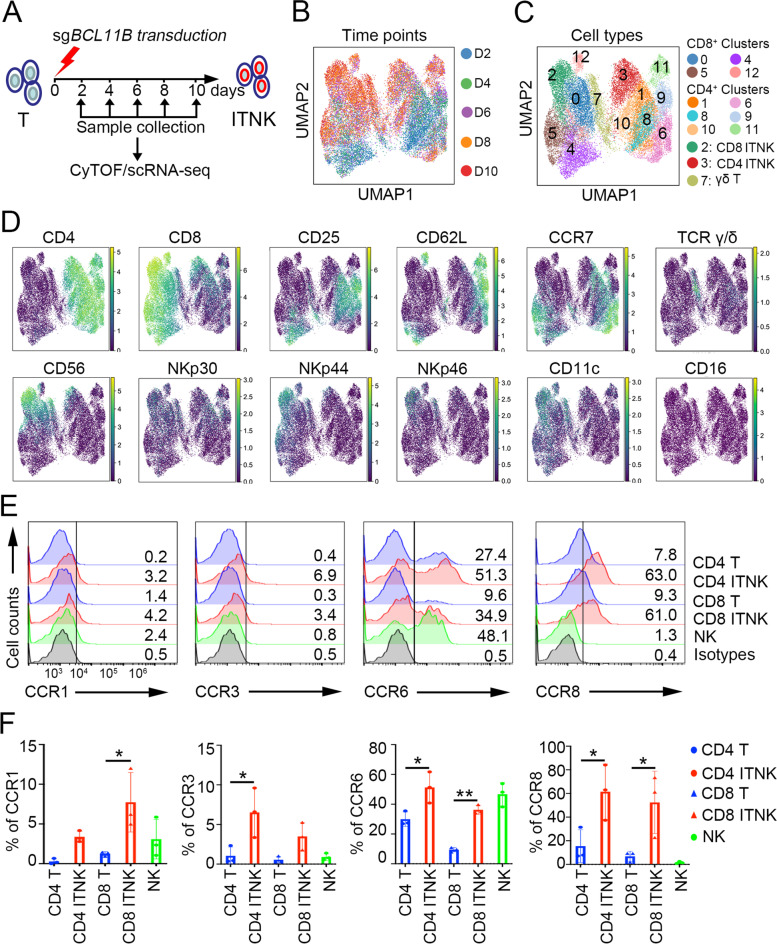
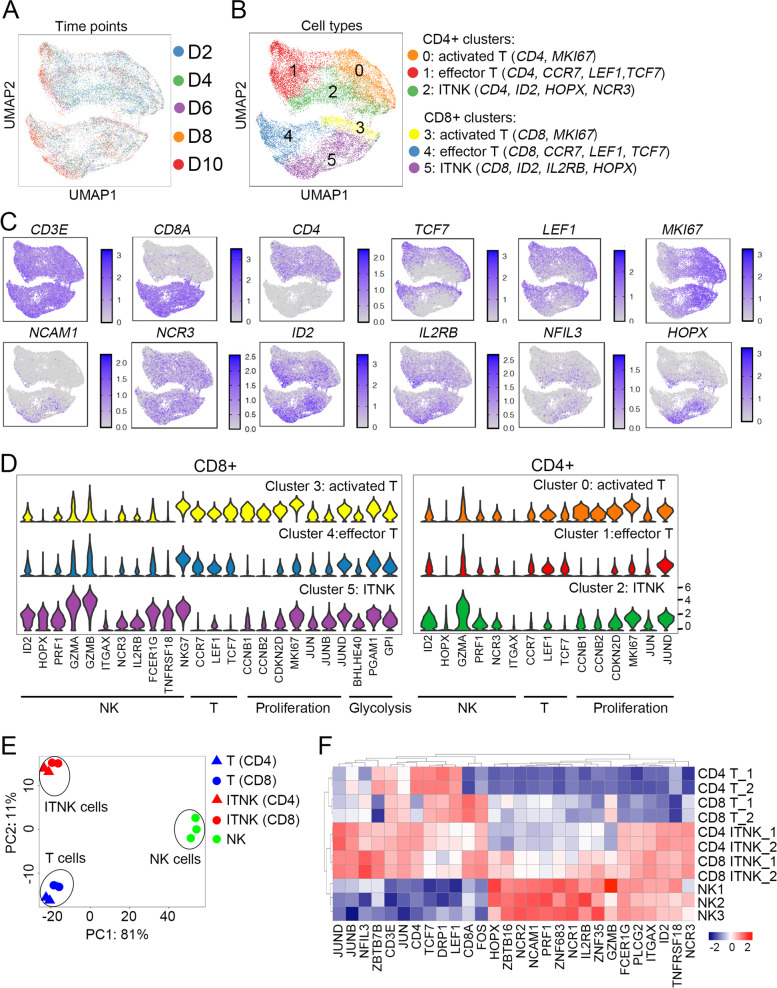
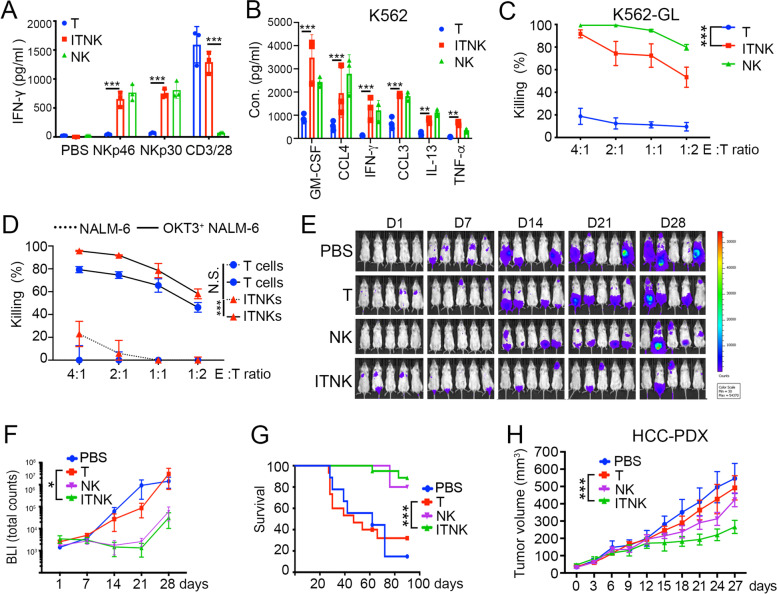
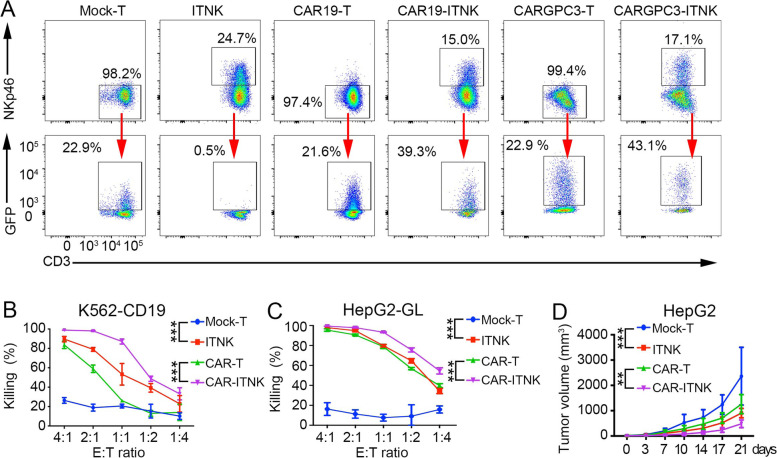
We report that inactivation of BCL11B in human CD8 and CD4 T cells induced their reprogramming into induced T-to-natural killer cells (ITNKs). ITNKs contained a diverse TCR repertoire; downregulated T cell-associated genes such as TCF7 and LEF1; and expressed high levels of NK cell lineage-associated genes. ITNKs and chimeric antigen receptor (CAR)-transduced ITNKs selectively lysed a variety of cancer cells in culture and suppressed the growth of solid tumors in xenograft models. In a preliminary clinical study, autologous administration of ITNKs in patients with advanced solid tumors was well tolerated, and tumor stabilization was seen in six out nine patients, with one partial remission.
The novel ITNKs thus may be a promising novel cell source for cancer immunotherapy.
ClinicalTrials.gov, NCT03882840 . Registered 20 March 2019-Retrospectively registered.
过继性细胞疗法(ACT)是癌症免疫疗法中一个特别有前景的领域,表达嵌合抗原受体(CAR)的工程化T细胞和自然杀伤(NK)细胞正被用于探索治疗血液系统恶性肿瘤,但对实体瘤患者的临床益处有限,实体瘤的成功细胞免疫疗法需要新的策略。
通过CRISPR/Cas9技术使人T细胞中的BCL11B失活。分别用细胞仪和转录组学对sgBCL11B T细胞的免疫表型和转录谱进行表征。sgBCL11B T细胞进一步用嵌合抗原受体进行工程改造。在临床前和临床研究中评估ITNK或CAR-ITNK细胞的抗肿瘤活性。
我们报道,人CD8和CD4 T细胞中BCL11B的失活诱导其重编程为诱导性T细胞向自然杀伤细胞(ITNK)。ITNK具有多样的TCR库;下调了TCF7和LEF1等T细胞相关基因;并表达高水平的NK细胞谱系相关基因。ITNK和嵌合抗原受体(CAR)转导的ITNK在培养物中选择性地裂解多种癌细胞,并在异种移植模型中抑制实体瘤的生长。在一项初步临床研究中,晚期实体瘤患者自体给予ITNK耐受性良好,9名患者中有6名肿瘤稳定,并出现1例部分缓解。
因此,新型ITNK可能是一种有前景的癌症免疫治疗新细胞来源。
ClinicalTrials.gov,NCT03882840。2019年3月20日注册——追溯注册。