Hamdan-Partida Aída, González-García Samuel, Martínez-Ruíz Francisco Javier, Zavala-Sánchez Miguel Ángel, Bustos-Hamdan Anaíd, Bustos-Martínez Jaime
Departamento de Atención a la Salud, Universidad Autónoma Metropolitana-Xochimilco, Mexico City 04960, Mexico.
Doctorado en Ciencias Biológicas y de la Salud, Universidad Autónoma Metropolitana, Mexico City 04960, Mexico.
Microorganisms. 2022 Mar 21;10(3):669. doi: 10.3390/microorganisms10030669.
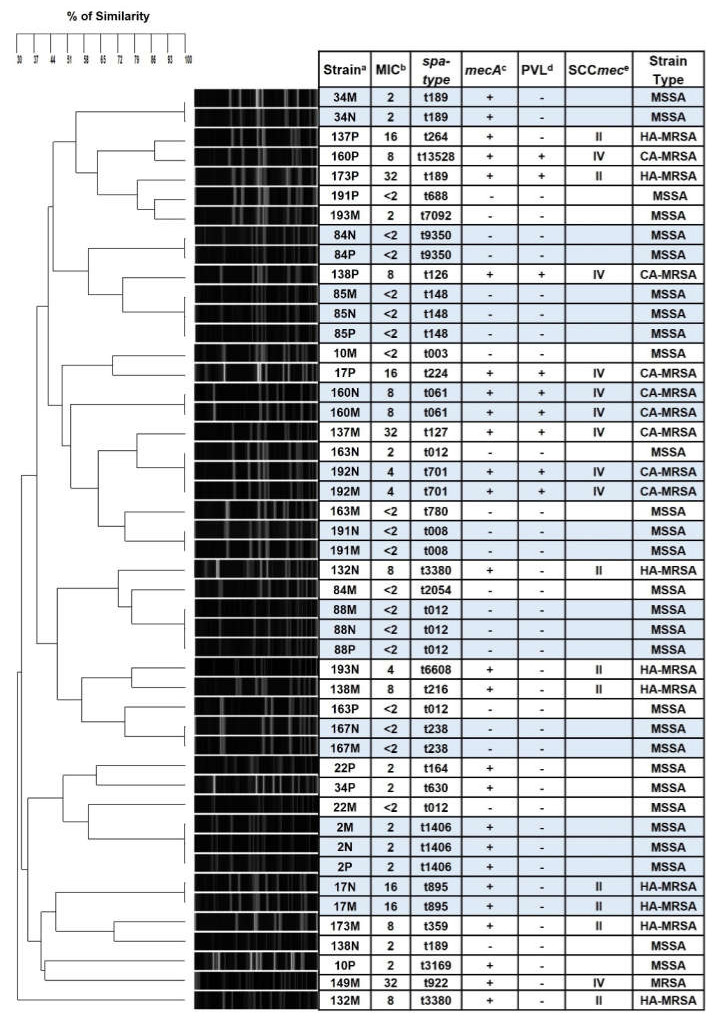
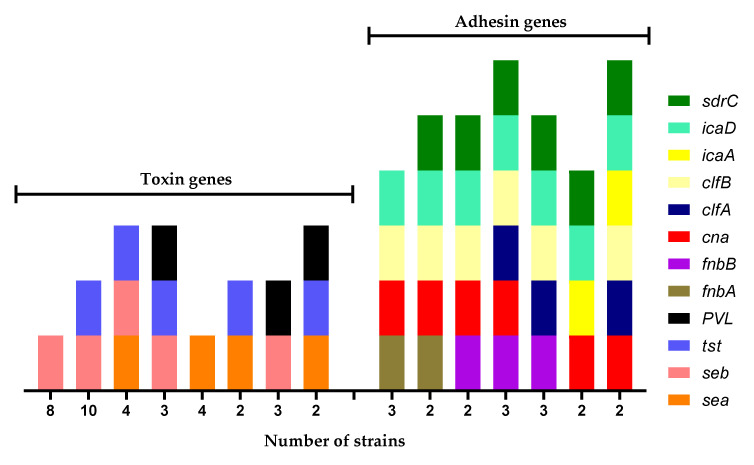
The widespread use of mobile phones (MP) among healthcare personnel might be considered as an important source of contamination. One of the most pathogenic bacteria to humans is , which can be transmitted through the constant use of MP. Nevertheless, which specific type of strains are transmitted and which are their sources have not been sufficiently studied. The aim of this study is to determine the source of contamination of MP and characterize the corresponding genotypic and phenotypic properties of the strains found. Nose, pharynx, and MP samples were taken from a group of health science students. We were able to determinate the clonality of the isolated strains by pulsed-field gel electrophoresis (PFGE) and gene typing (type). Adhesin and toxin genes were detected, and the capacity of biofilm formation was determined. Several of the MP exhibited strains of present in the nose and/or pharynx of their owners. methicillin-susceptible (MSSA), hospital-acquired methicillin-resistant (HA-MRSA), and community-acquired methicillin-resistant (CA-MRSA) strains were found, which indicated a variety of genotypes. This study concludes that MP can be contaminated with the strains of present in the nose and/or pharynx of the owners; these strains can be of different types and there is no dominant genotype.
医护人员中手机的广泛使用可能被视为一个重要的污染源。对人类致病性最强的细菌之一是 ,它可通过手机的持续使用进行传播。然而,究竟传播哪些特定类型的菌株以及它们的来源是什么,尚未得到充分研究。本研究的目的是确定手机的污染源,并对所发现菌株的相应基因型和表型特性进行表征。从一组健康科学专业学生身上采集了鼻腔、咽部和手机样本。我们能够通过脉冲场凝胶电泳(PFGE)和 基因分型(型)来确定分离菌株的克隆性。检测了黏附素和毒素基因,并测定了生物膜形成能力。几部手机显示出其主人鼻腔和/或咽部存在的 菌株。发现了甲氧西林敏感 (MSSA)、医院获得性耐甲氧西林 (HA-MRSA) 和社区获得性耐甲氧西林 (CA-MRSA) 菌株,这表明存在多种基因型。本研究得出结论,手机可能被其主人鼻腔和/或咽部存在的 菌株污染;这些菌株可能属于不同类型,且不存在优势基因型。