Bao Zhendong, Zhu Yuanmin, Zhang Kai, Feng Yumei, Zhang Meng, Li Ruili, Yu Longjiang
Institute of Resource Biology and Biotechnology, Department of Biotechnology, College of Life Science and Technology, Huazhong University of Science and Technology, No. 1037 Luoyu Road, Wuhan, 430074, China.
Key Laboratory of Molecular Biophysics, Ministry of Education, Wuhan, 430074, China.
Biotechnol Biofuels Bioprod. 2022 Mar 25;15(1):33. doi: 10.1186/s13068-022-02126-w.
Schizochytrium sp. is a marine heterotrophic protist and an important sustainable resource for high value-added docosahexaenoic acid in the future. The production of different phenotypes during the continuous subculture of Schizochytrium sp. results in a serious reduction in lipid yield and complicates the used of this strain in scientific research and industrial production. Hence, obtaining an improved understanding of the phenotypic differences and molecular mechanisms underlying the cell-to-cell heterogeneity of Schizochytrium sp. is necessary.
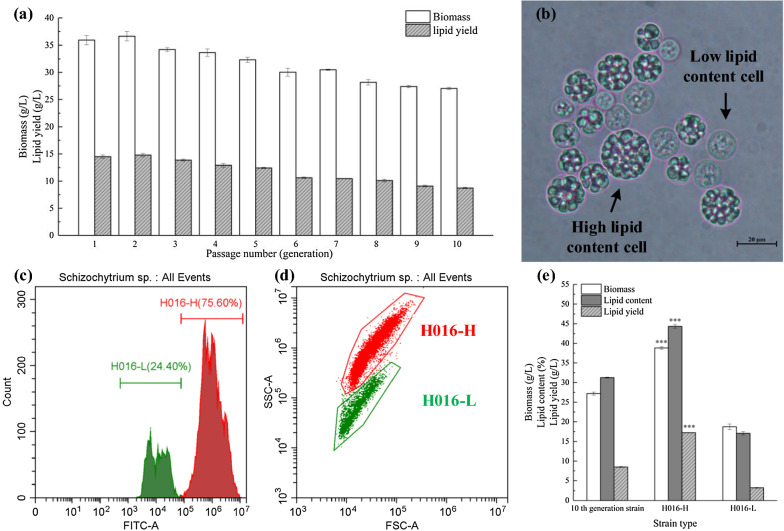
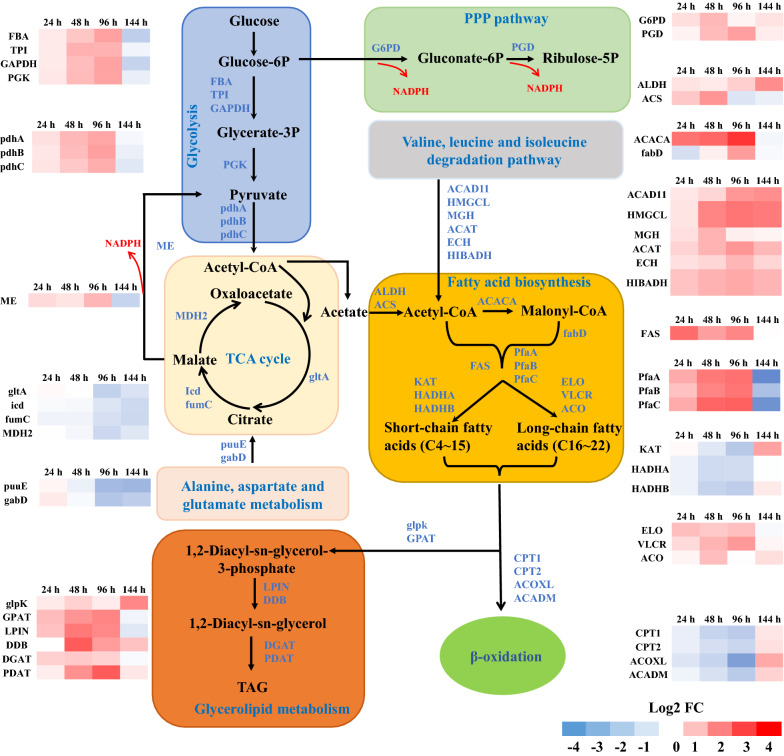
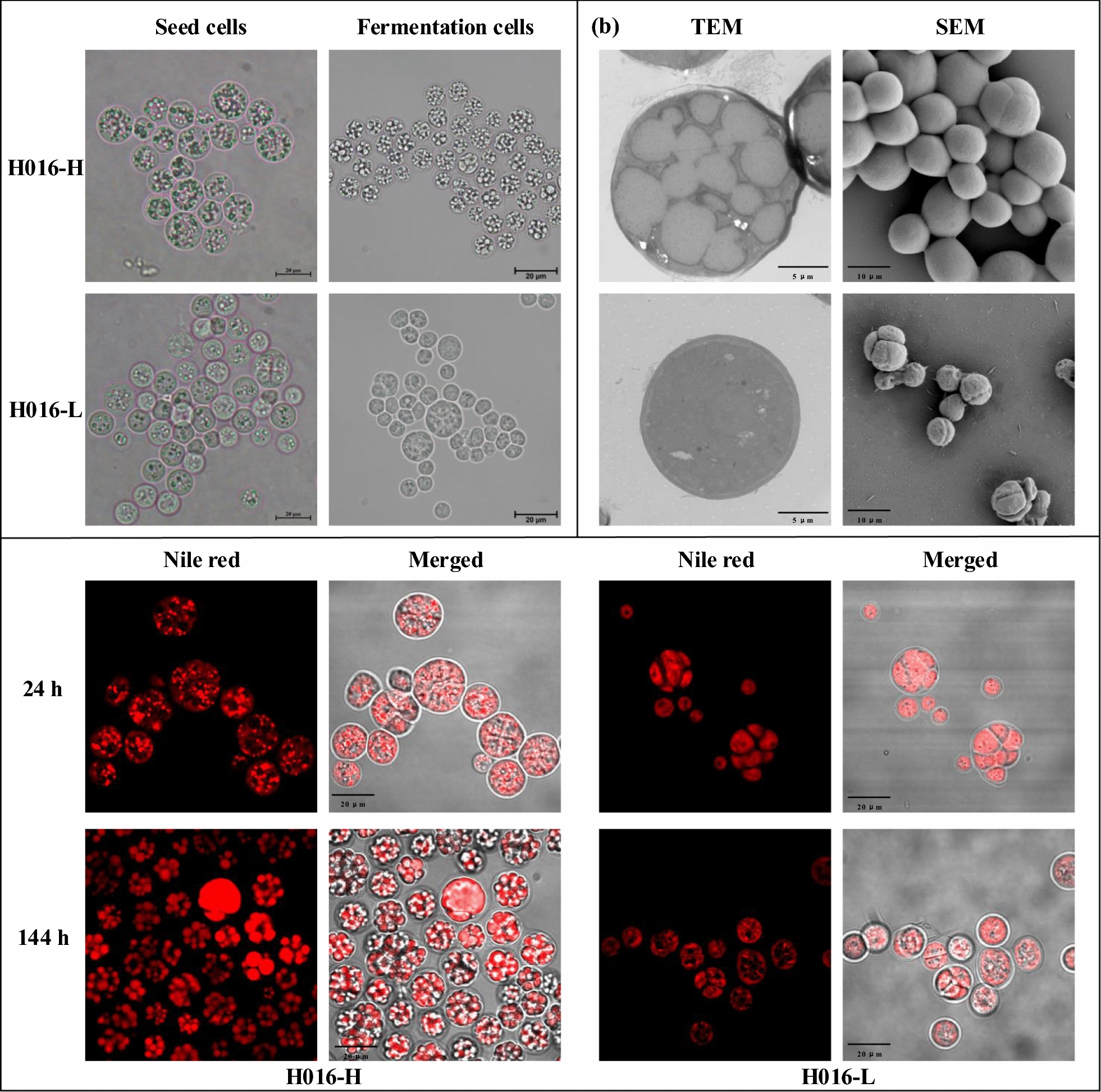
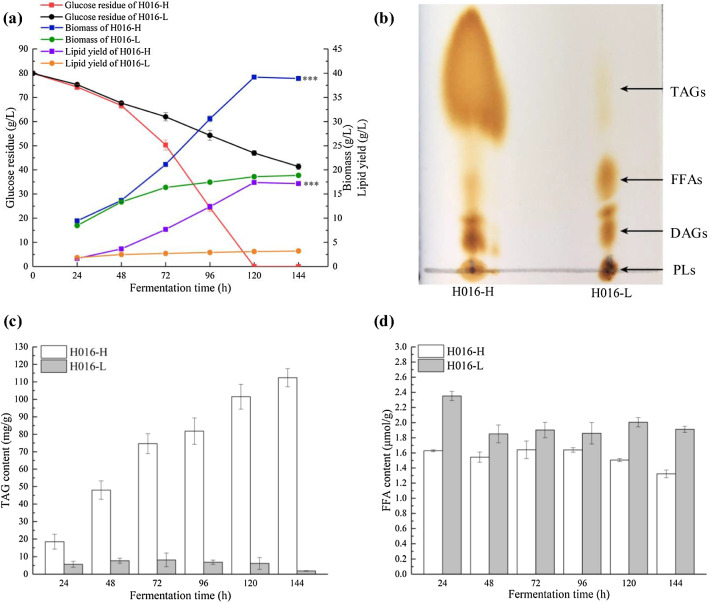
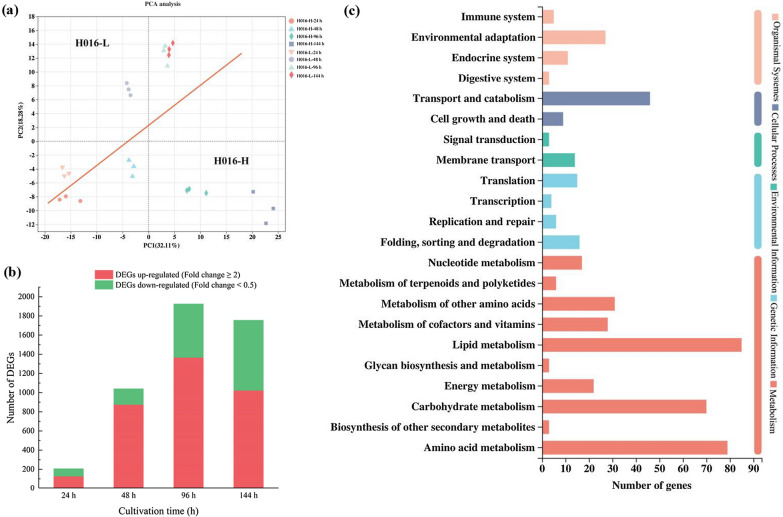
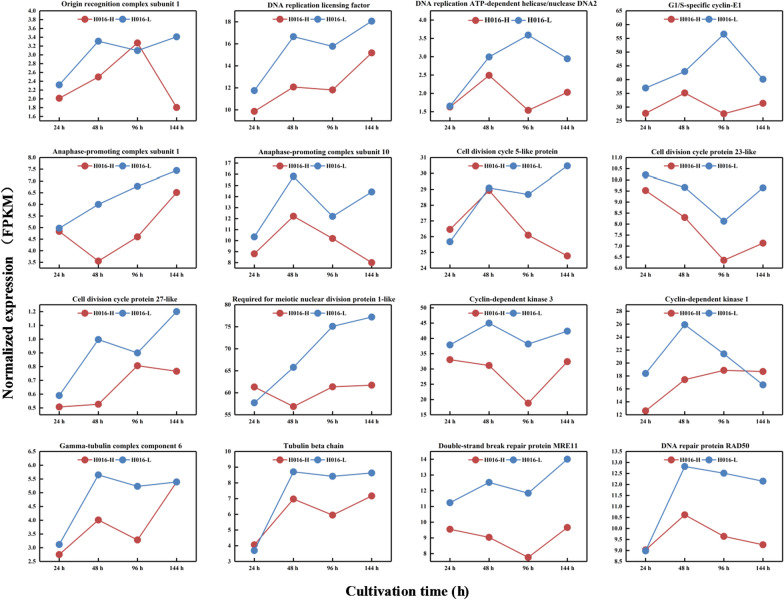
After continuous culture passage, Schizochytrium sp. H016 differentiated into two subpopulations with different morphologies and showed decreased capacity for lipid production. The presence of cell subpopulations with degraded lipid droplets led to a substantial decrease in overall lipid yield. Here, a rapid screening strategy based on fluorescence-activated cell sorting was proposed to classify and isolate subpopulations quickly in accordance with their lipid-producing capability. The final biomass and lipid yield of the subpopulation with high cell lipid content (i.e., H016-H) were 38.83 and 17.22 g/L, respectively, which were 2.07- and 5.38-fold higher than those of the subpopulation with low lipid content (i.e., H016-L), respectively. Subsequently, time‑resolved transcriptome analysis was performed to elucidate the mechanism of phenotypic heterogeneity in different subpopulations. Results showed that the expression of genes related to the cell cycle and lipid degradation was significantly upregulated in H016-L, whereas the metabolic pathways related to fatty acid synthesis and glyceride accumulation were remarkably upregulated in H016-H.
This study innovatively used flow cytometry combined with transcriptome technology to provide new insights into the phenotypic heterogeneity of different cell subpopulations of Schizochytrium sp. Furthermore, these results lay a strong foundation for guiding the breeding of oleaginous microorganisms with high lipid contents.
裂殖壶菌是一种海洋异养原生生物,是未来高附加值二十二碳六烯酸的重要可持续资源。裂殖壶菌连续传代培养过程中出现不同表型,导致脂质产量严重下降,使该菌株在科研和工业生产中的应用复杂化。因此,有必要深入了解裂殖壶菌细胞间异质性的表型差异和分子机制。
连续传代培养后,裂殖壶菌H016分化为两个形态不同的亚群,脂质生产能力下降。存在脂质小滴降解的细胞亚群导致总体脂质产量大幅下降。在此,提出了一种基于荧光激活细胞分选的快速筛选策略,以根据其脂质生产能力快速分类和分离亚群。高细胞脂质含量亚群(即H016-H)的最终生物量和脂质产量分别为38.83 g/L和17.22 g/L,分别比低脂质含量亚群(即H016-L)高2.07倍和5.38倍。随后,进行了时间分辨转录组分析,以阐明不同亚群表型异质性的机制。结果表明,与细胞周期和脂质降解相关的基因在H016-L中显著上调,而与脂肪酸合成和甘油酯积累相关的代谢途径在H016-H中显著上调。
本研究创新性地将流式细胞术与转录组技术相结合,为裂殖壶菌不同细胞亚群的表型异质性提供了新的见解。此外,这些结果为指导高脂质含量油质微生物的育种奠定了坚实基础。