Tsutsuki Hiroyasu, Zhang Tianli, Yahiro Kinnosuke, Ono Katsuhiko, Fujiwara Yukio, Iyoda Sunao, Wei Fan-Yan, Monde Kazuaki, Seto Kazuko, Ohnishi Makoto, Oshiumi Hiroyuki, Akaike Takaaki, Sawa Tomohiro
Department of Microbiology, Graduate School of Medical Sciences, Kumamoto University, 1-1-1 Honjo, Chuo-ku, Kumamoto 860-8556, Japan.
Department of Microbiology and Infection Control Sciences, Kyoto Pharmaceutical University, 5 Misasagi-Nakauchi-cho, Yamashina-ku, Kyoto 607-8414, Japan.
iScience. 2022 Mar 10;25(4):104050. doi: 10.1016/j.isci.2022.104050. eCollection 2022 Apr 15.
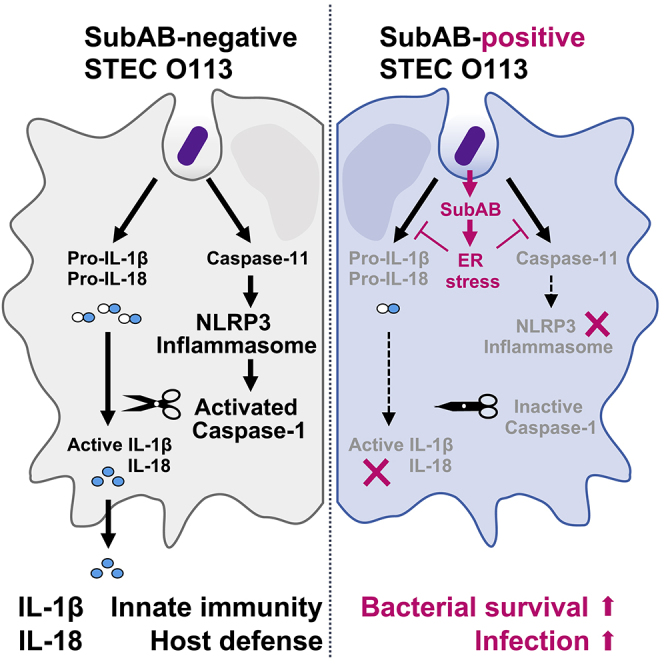
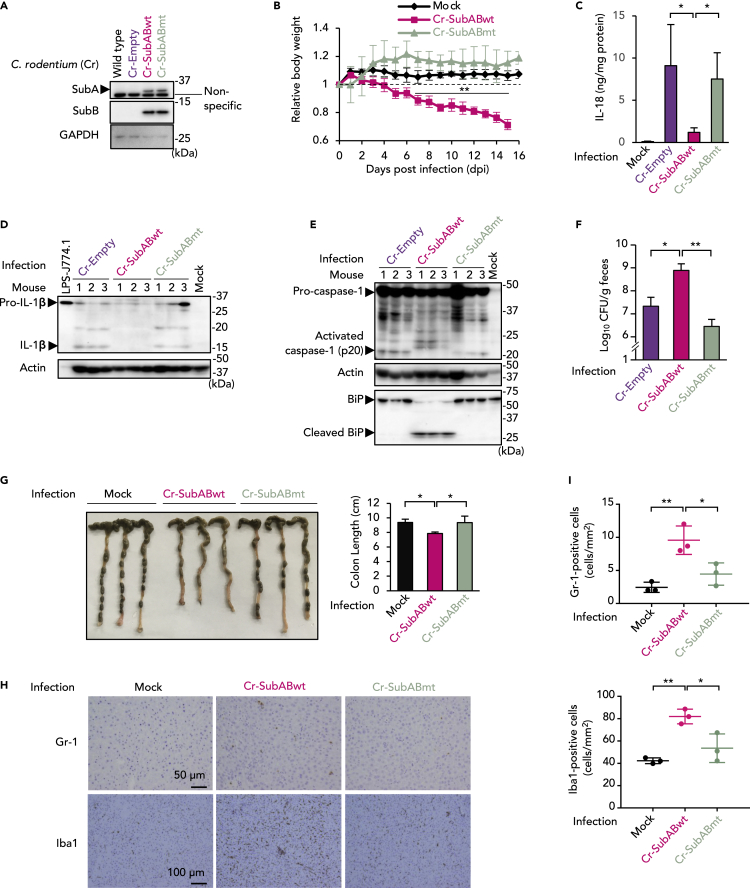
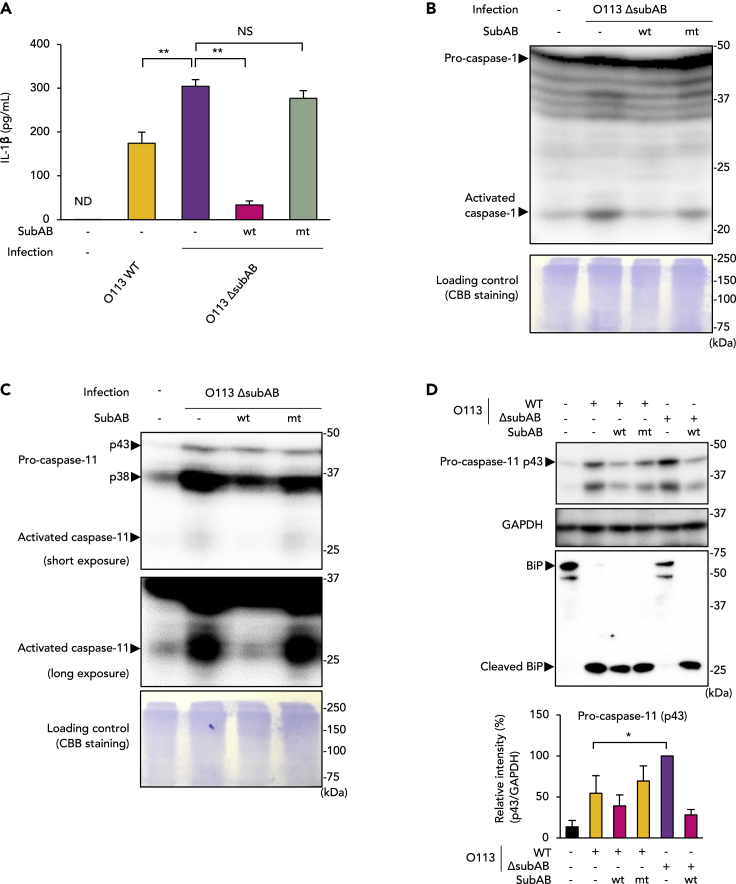
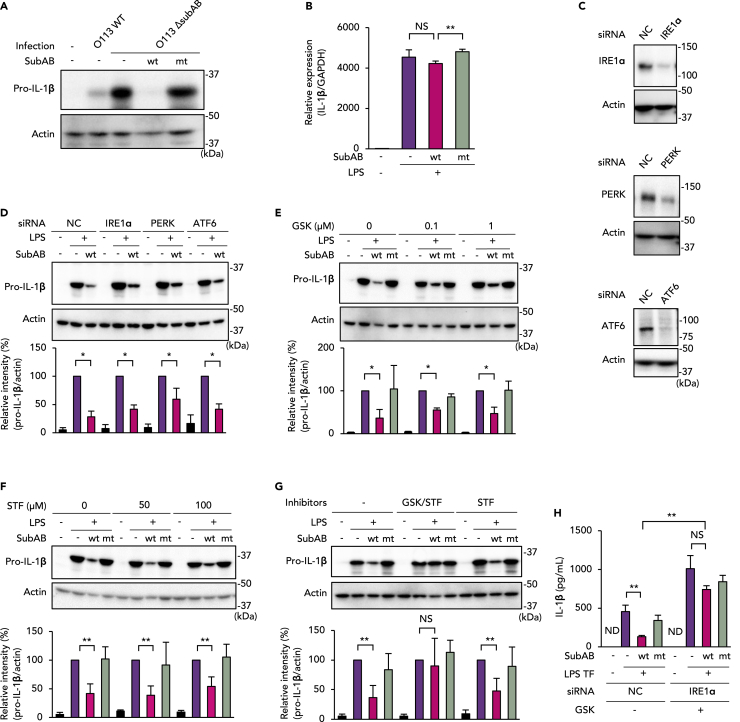
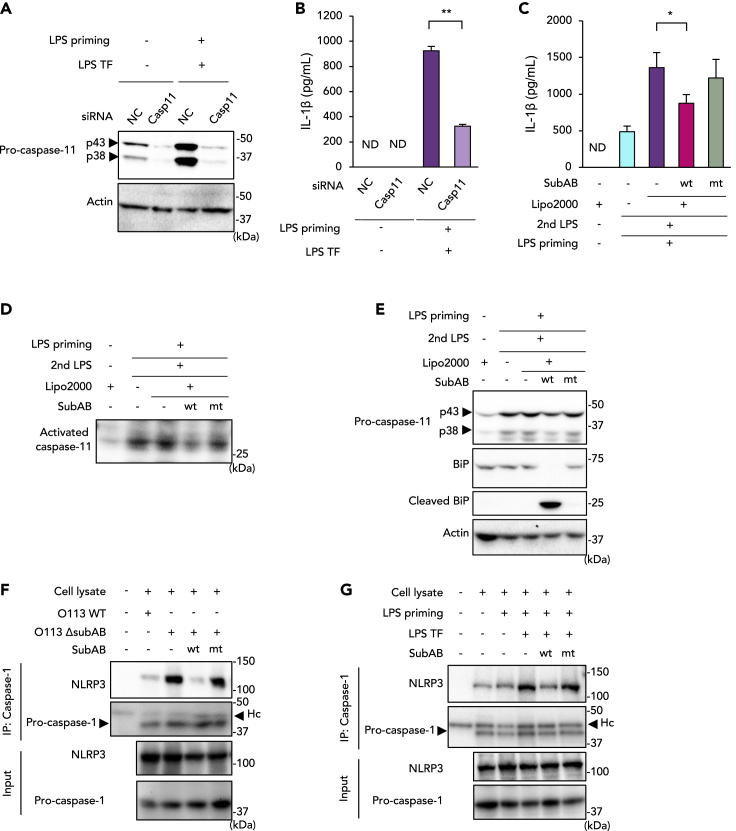
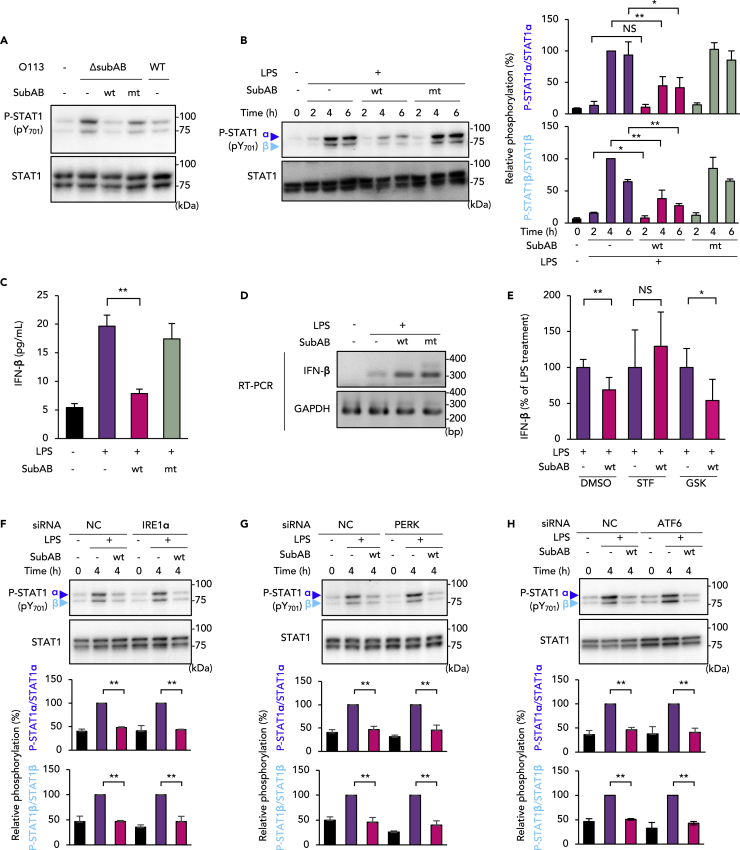
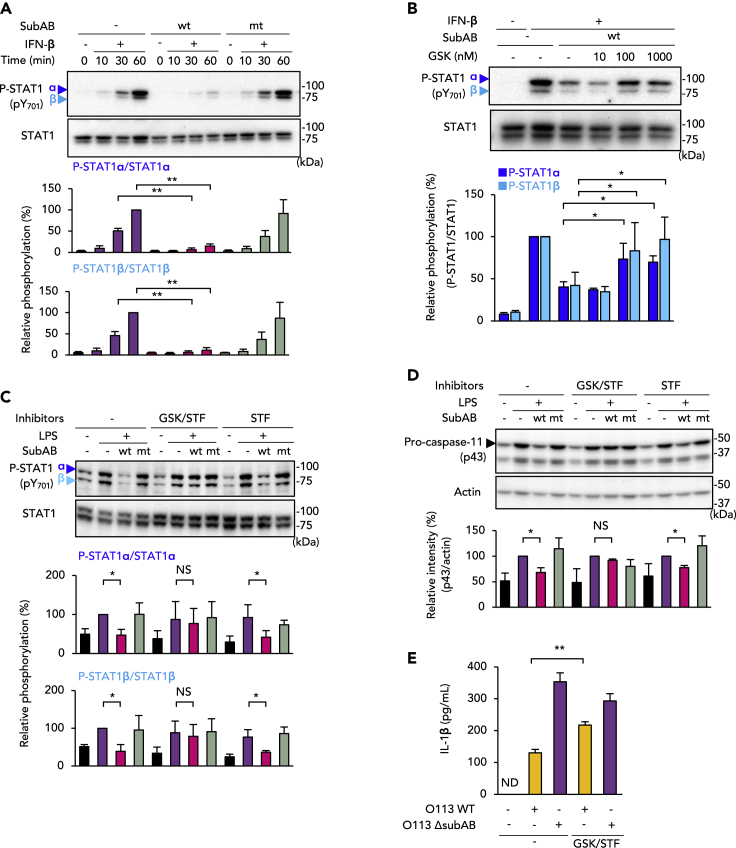
Subtilase cytotoxin (SubAB) is an AB toxin mainly produced by the locus of enterocyte effacement-negative Shiga-toxigenic (STEC) strain such as O113:H21, yet the contribution of SubAB to STEC infectious disease is unclear. We found that SubAB reduced activation of the STEC O113:H21 infection-induced non-canonical NLRP3 inflammasome and interleukin (IL)-1β and IL-18 production in murine macrophages. Downstream of lipopolysaccharide signaling, SubAB suppressed caspase-11 expression by inhibiting interferon-β/STAT1 signaling, followed by disrupting formation of the NLRP3/caspase-1 assembly. These inhibitions were regulated by PERK/IRE1α-dependent endoplasmic reticulum (ER) stress signaling initiated by cleavage of the host ER chaperone BiP by SubAB. Our murine model of SubAB-producing demonstrated that SubAB promoted proliferation and worsened symptoms such as intestinal hyperplasia and diarrhea. These findings highlight the inhibitory effect of SubAB on the NLRP3 inflammasome via ER stress, which may be associated with STEC survival and infectious disease pathogenicity in hosts.
枯草杆菌蛋白酶细胞毒素(SubAB)是一种主要由肠细胞脱落阴性产志贺毒素大肠杆菌(STEC)菌株(如O113:H21)产生的AB毒素,但SubAB对STEC感染性疾病的作用尚不清楚。我们发现,SubAB可降低STEC O113:H21感染诱导的小鼠巨噬细胞中非经典NLRP3炎性小体的激活以及白细胞介素(IL)-1β和IL-18的产生。在脂多糖信号传导的下游,SubAB通过抑制干扰素-β/信号转导和转录激活因子1(STAT1)信号传导来抑制半胱天冬酶-11的表达,随后破坏NLRP3/半胱天冬酶-1组装体的形成。这些抑制作用由SubAB切割宿主内质网伴侣结合免疫球蛋白蛋白(BiP)引发的蛋白激酶R(PERK)/肌醇需求酶1α(IRE1α)依赖性内质网(ER)应激信号传导所调节。我们的产SubAB小鼠模型表明,SubAB促进了细菌增殖,并加重了肠道增生和腹泻等症状。这些发现突出了SubAB通过内质网应激对NLRP3炎性小体的抑制作用,这可能与宿主中STEC的存活及感染性疾病致病性相关。