Ann & Robert H. Lurie Children's Hospital of Chicago, 225 E. Chicago Box 33, IL, 60611-2991, Chicago, USA.
Department of Pediatrics, Rush University, IL, Chicago, USA.
BMC Public Health. 2022 Mar 26;22(1):593. doi: 10.1186/s12889-022-13016-z.
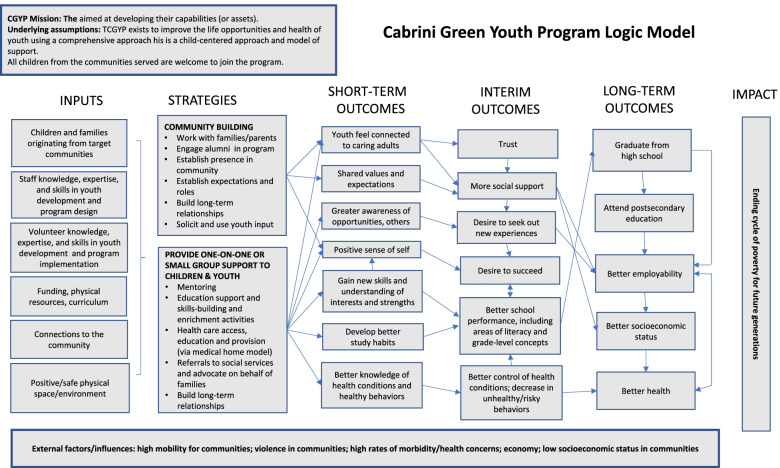
Childhood poverty is known to be associated with poor health. For youth living in extreme poverty, community-based programs focused on youth development are one strategy to improve health and well-being outcomes. However, very few evaluations of the long-term effectiveness of youth development programs have been conducted. The aim of this study was to assess the long-term effectiveness of a positive youth development program (PYD), serving a segregated housing project with a history of community violence, to improve the health, education, and financial well-being of its alumni.
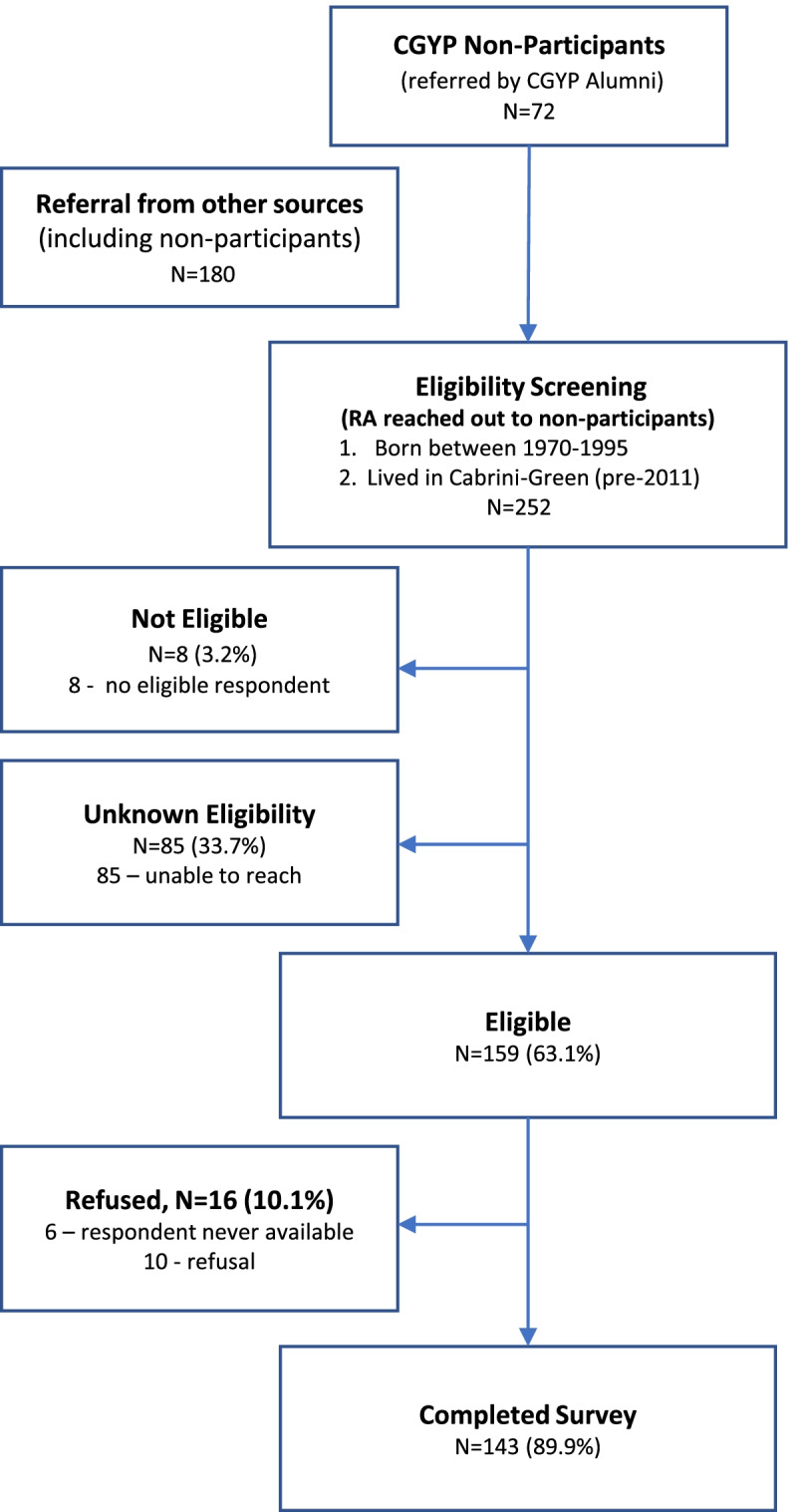
A quasi-experimental causal comparative study design was used to study the effectiveness of the Cabrini-Green Youth Program (CGYP). CGYP alumni (mean: 16.8 +/- 7.4 years after program participation) were surveyed. For comparison, participants from the same housing project who were eligible to participate in the CGYP but did not, were identified.
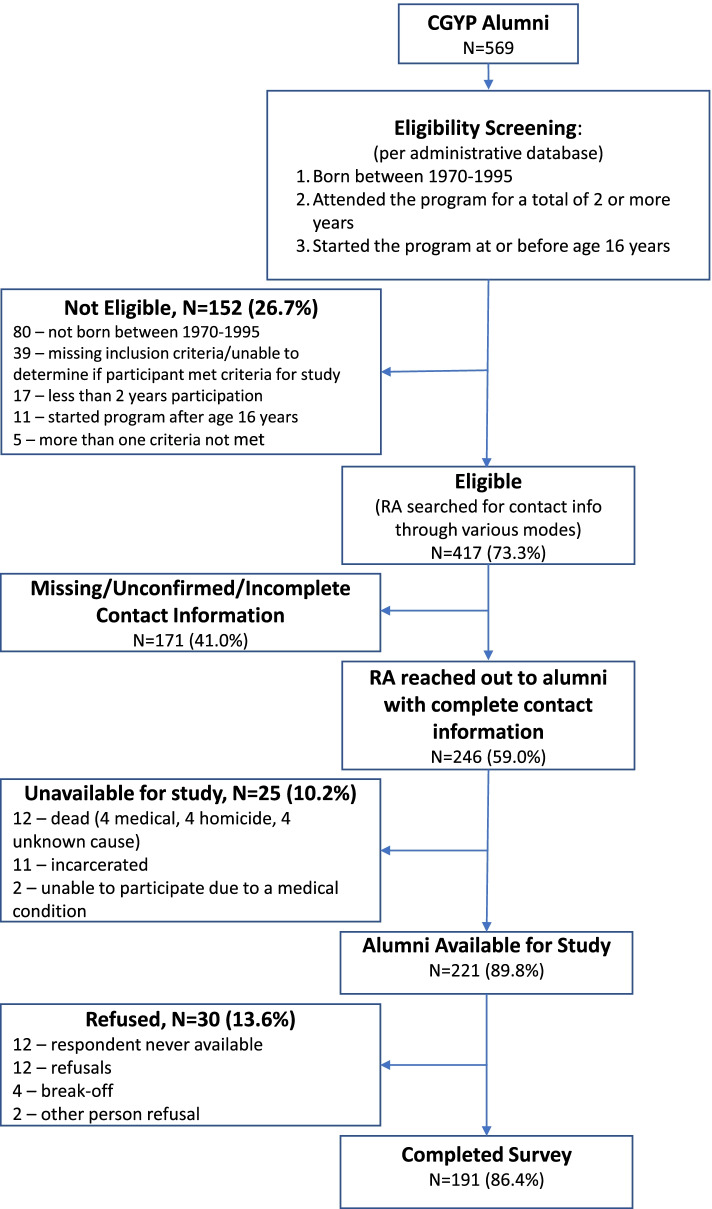
In total, 246/417 (59%) eligible alumni were located. 221 alumni were available to be interviewed; 191/221 (86%) completed the interview survey along with 143 in the comparison group. Both groups self-identified as being Black, African American, and of Other race. Alumni were younger (34.6 vs. 38.1 years, p < .001), less likely to be female (62% vs. 74%, p =.03), and more likely to have been abused as a child (26% vs. 11%, p = .001). The majority in both groups reported to be in good to excellent health (83% of alumni vs. 74% of comparison group). After adjusting for comparison group differences, alumni were more likely to have completed college, 24% vs. 12% (adjusted odds ratio (aOR) 2.47, 95% CI, 1.25-4.86), and to end up with some money at the end of the month, 35% vs. 19% (aOR 2.16, 95% CI, 1.17, 3.97).
Participation in a PYD program starting at a young age may be associated with reduced poverty in adulthood, possibly aided by higher educational attainment and resultant increased income. PYD may be an effective strategy to supplement evidenced-based poverty reducing policies. This study of a voluntary, community-based PYD program is unique in its up to 33-year follow-up and an outcome assessment that measures more than knowledge change.
众所周知,儿童贫困与健康状况不佳有关。对于生活在极端贫困中的年轻人来说,以青年发展为重点的基于社区的项目是改善健康和福祉结果的一种策略。然而,很少有关于青年发展计划长期有效性的评估。本研究旨在评估一个积极的青年发展计划(PYD)的长期效果,该计划为一个历史上存在社区暴力的隔离住房项目服务,以改善其校友的健康、教育和经济福祉。
使用准实验因果比较研究设计来研究卡布里尼-格林青年计划(CGYP)的效果。对 CGYP 的校友(平均:参加项目后 16.8 +/- 7.4 年)进行了调查。为了进行比较,确定了来自同一住房项目但有资格参加 CGYP 但没有参加的参与者。
共有 417 名符合条件的校友中,246 人(59%)被找到。221 名校友可接受访谈;221 名校友中有 191 名(86%)完成了访谈调查,而对照组中有 143 名。两组均自我认定为黑人、非裔美国人,以及其他种族。校友更年轻(34.6 岁对 38.1 岁,p<0.001),女性比例更低(62%对 74%,p=0.03),更有可能在儿童时期遭受虐待(26%对 11%,p=0.001)。两组中的大多数人报告身体状况良好或优秀(校友为 83%,对照组为 74%)。在校正对照组差异后,校友更有可能完成大学学业,24%对 12%(调整后的优势比(aOR)2.47,95%置信区间,1.25-4.86),并且更有可能在月底有一些钱,35%对 19%(aOR 2.16,95%CI,1.17-3.97)。
年轻时参加青年发展计划可能与成年后减少贫困有关,这可能得益于更高的教育程度和由此带来的收入增加。青年发展可能是补充循证扶贫政策的有效策略。本研究对一个自愿的、基于社区的青年发展计划进行了长达 33 年的随访,其结果评估不仅衡量了知识变化,还衡量了其他方面。