Molecular Signaling Section, Laboratory of Bioorganic Chemistry, National Institute of Diabetes and Digestive and Kidney Diseases, Bethesda, MD, 20892, USA.
Department of Medicine, Division of Gastroenterology and hepatology, Shinshu University School of Medicine, Matsumoto, 390-8621, Japan.
Nat Commun. 2022 Mar 29;13(1):1652. doi: 10.1038/s41467-022-29231-6.
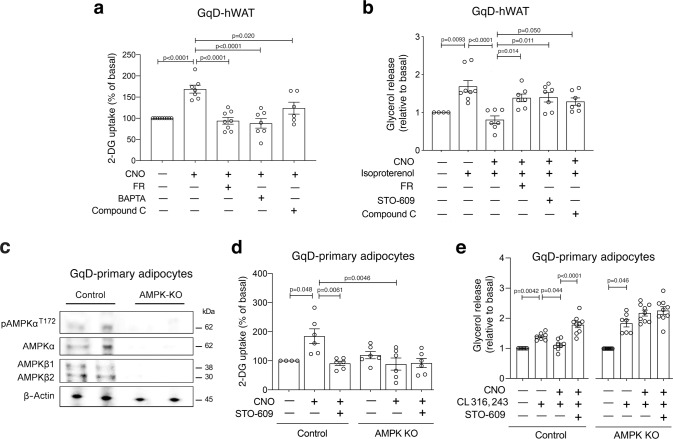
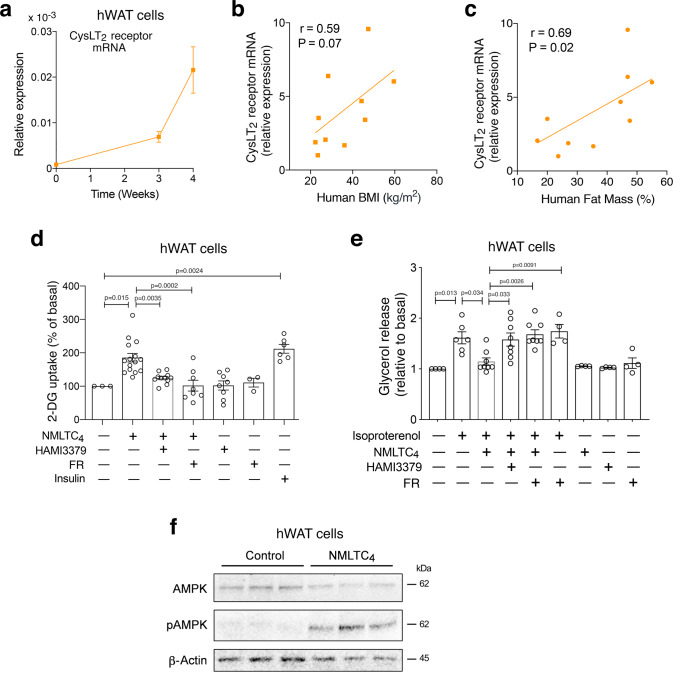
Obesity is the major driver of the global epidemic in type 2 diabetes (T2D). In individuals with obesity, impaired insulin action leads to increased lipolysis in adipocytes, resulting in elevated plasma free fatty acid (FFA) levels that promote peripheral insulin resistance, a hallmark of T2D. Here we show, by using a combined genetic/biochemical/pharmacologic approach, that increased adipocyte lipolysis can be prevented by selective activation of adipocyte G signaling in vitro and in vivo (in mice). Activation of this pathway by a G-coupled designer receptor or by an agonist acting on an endogenous adipocyte G-coupled receptor (CysLT receptor) greatly improved glucose and lipid homeostasis in obese mice or in mice with adipocyte insulin receptor deficiency. Our findings identify adipocyte G signaling as an essential regulator of whole-body glucose and lipid homeostasis and should inform the development of novel classes of GPCR-based antidiabetic drugs.
肥胖是 2 型糖尿病(T2D)全球流行的主要驱动因素。在肥胖个体中,胰岛素作用受损导致脂肪细胞中脂解作用增加,导致血浆游离脂肪酸(FFA)水平升高,从而促进外周胰岛素抵抗,这是 T2D 的标志。在这里,我们通过使用联合遗传/生化/药理学方法表明,通过选择性激活体外和体内(在小鼠中)脂肪细胞 G 信号,可以预防脂肪细胞脂解作用增加。通过 G 偶联设计受体或作用于内源性脂肪细胞 G 偶联受体(CysLT 受体)的激动剂激活该途径,可大大改善肥胖小鼠或脂肪细胞胰岛素受体缺陷小鼠的葡萄糖和脂质稳态。我们的发现将脂肪细胞 G 信号确定为全身葡萄糖和脂质稳态的重要调节剂,应该为新型基于 GPCR 的抗糖尿病药物的开发提供信息。