The Center of Gerontology and Geriatrics and National Clinical Research Center for Geriatrics, West China Hospital, Sichuan University, Chengdu, Sichuan Province, China.
College of Pharmacy, Macau University of Science and Technology, Macau, China.
BMC Geriatr. 2022 Mar 30;22(1):263. doi: 10.1186/s12877-022-02965-0.
To investigate the temporal trend of the prevalence of underprescription of anticoagulation treatment and explore the factors associated with underprescription of oral anticoagulants (OACs) among inpatients aged ≥ 80 years with nonvalvular atrial fibrillation (NVAF).
We retrospectively reviewed the medical records of inpatients with a discharge diagnosis of NVAF from a medical database. We used the Pearson chi-square or Fisher's exact test to compare categorical variables between patients with and without OAC prescriptions during hospitalization. Logistic regression analysis was used to assess the association between risk factors and underprescription of OACs.
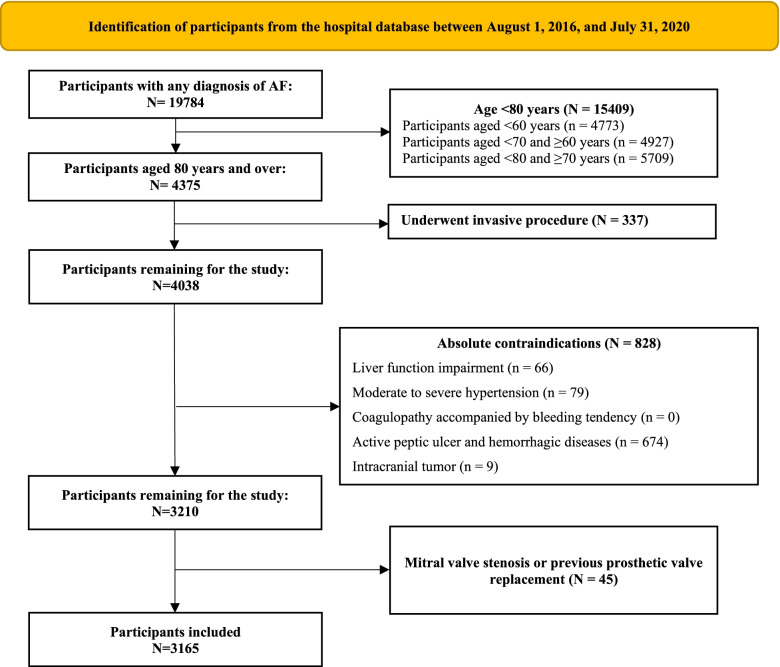
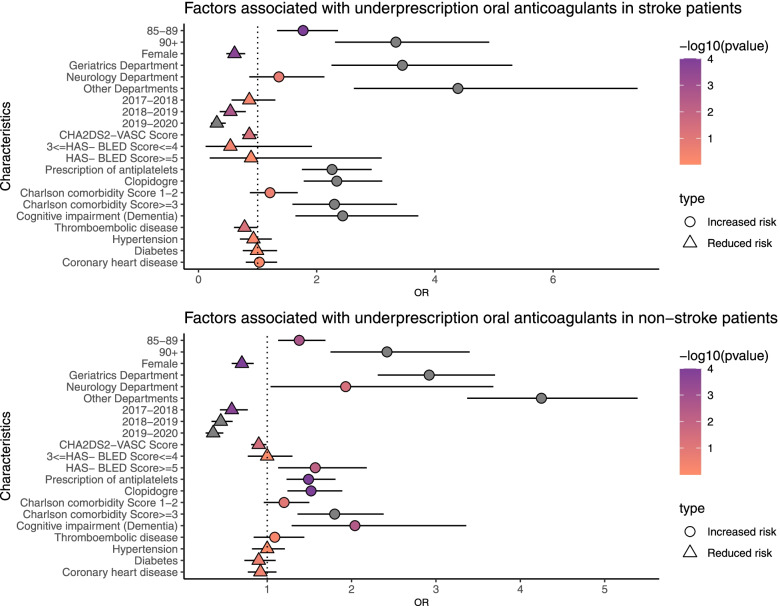
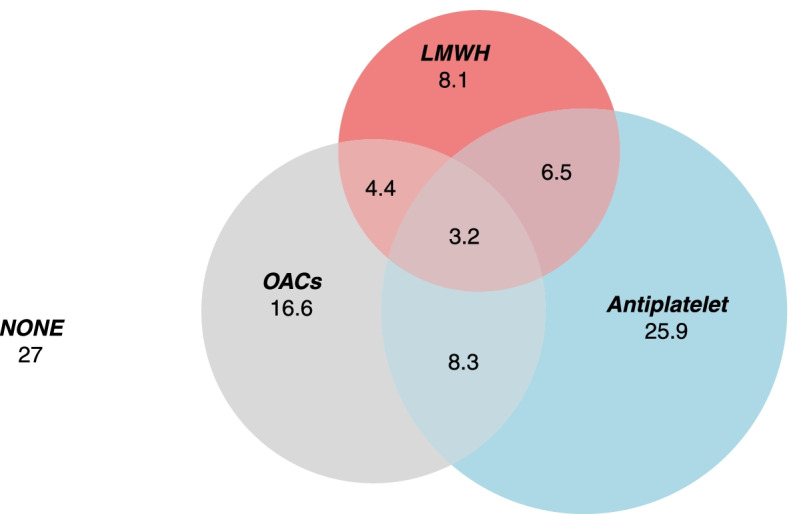
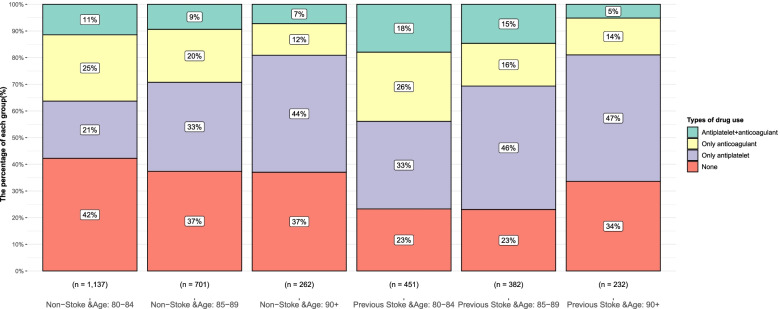
A total of 4375 patients aged ≥ 80 years with AF were assessed in the largest academic hospital in China from August 1, 2016, to July 31, 2020, and 3165 NVAF patients were included. The prevalence of underprescription of OACs was 79.1% in 2017, 71.3% in 2018, 64.4% in 2019, and 56.1% in 2020. Of all participants, 2138 (67.6%) were not prescribed OACs; 66.3% and 68.2% of patients with and without prior stroke did not receive OACs, respectively. Age (85-89 vs 80-84, OR = 1.48, 95% CI (1.25-1.74); 90 + vs 80-84, OR = 2.66, 95% CI: 2.09-3.42), clinical department where patients were discharged (Reference = Cardiology, Geriatrics: OR = 2.97, 95% CI: 2.45- 3.61; neurology: OR = 1.25, 95% CI: 0.96, 1.63; others: OR = 4.23, 95% CI: 3.43- 5.24), use of antiplatelets (OR = 1.69, 95% CI: 1.45- 1.97), and history of stroke (OR = 0.83, 95% CI: 0.71- 0.98 adjusted age), and dementia (OR = 2.16, 95% CI: 1.60- 2.96) were significantly associated with not prescribing OACs.
The prevalence of underprescription of OACs has decreased over the past several years. The rate of underprescription of OACs was higher among NVAF patients who were older, prescribed antiplatelets, discharged from nondepartmental cardiology, and suffered from comorbidities. This study found iatrogenic factors affecting the underprescription of OACs in inpatients aged ≥ 80 years, providing clues and a basis for the standardized use of OACs in inpatients.
本研究旨在探讨≥80 岁非瓣膜性心房颤动(NVAF)住院患者口服抗凝药物(OAC)低使用率的时间趋势,并分析导致 OAC 低使用率的相关因素。
本研究回顾性分析了 2016 年 8 月 1 日至 2020 年 7 月 31 日期间某医学数据库中 NVAF 出院诊断的住院患者的病历资料。采用卡方检验或 Fisher 确切概率法比较 OAC 处方组与非 OAC 处方组之间的分类变量。采用 logistic 回归分析评估各危险因素与 OAC 低使用率之间的相关性。
本研究共纳入了来自中国最大的学术医院的 4375 例≥80 岁的 AF 患者,其中 3165 例为 NVAF 患者。2017 年、2018 年、2019 年和 2020 年 OAC 低使用率分别为 79.1%、71.3%、64.4%和 56.1%。所有患者中,2138 例(67.6%)未开具 OAC 处方;既往有脑卒中史的患者中,分别有 66.3%和 68.2%未接受 OAC 治疗。年龄(85-89 岁 vs 80-84 岁,OR=1.48,95%CI:1.25-1.74;90 岁及以上 vs 80-84 岁,OR=2.66,95%CI:2.09-3.42)、出院科室(心内科为参考,老年科:OR=2.97,95%CI:2.45-3.61;神经内科:OR=1.25,95%CI:0.96-1.63;其他科室:OR=4.23,95%CI:3.43-5.24)、抗血小板治疗(OR=1.69,95%CI:1.45-1.97)和脑卒中史(OR=0.83,95%CI:0.71-0.98 校正年龄)、痴呆(OR=2.16,95%CI:1.60-2.96)与 OAC 低使用率显著相关。
过去几年,OAC 低使用率呈下降趋势。≥80 岁 NVAF 患者中,年龄较大、服用抗血小板药物、非心内科出院和合并症较多的患者 OAC 低使用率较高。本研究发现了影响≥80 岁住院患者 OAC 低使用率的医源性因素,为住院患者 OAC 的规范使用提供了线索和依据。