Vale João, Diniz Sara, Leite Pedro Santos, Soares Daniel
Department of Orthopaedics, Centro Hospitalar e Universitário do Porto, EPE, Porto, Portugal.
Hip Pelvis. 2022 Mar;34(1):62-67. doi: 10.5371/hp.2022.34.1.62. Epub 2022 Mar 7.
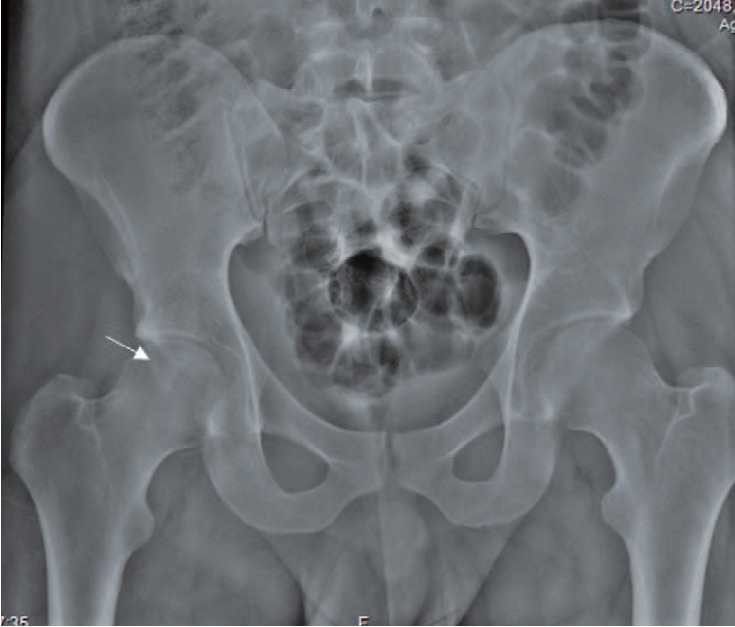
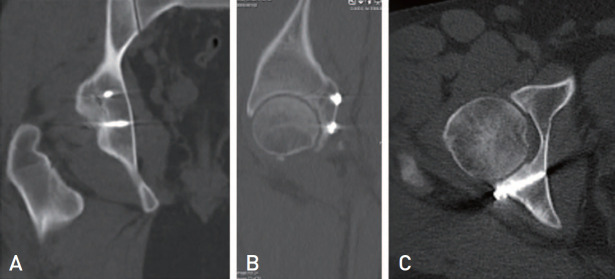
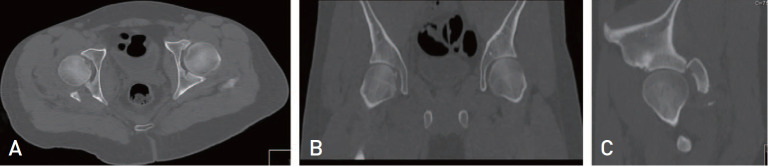
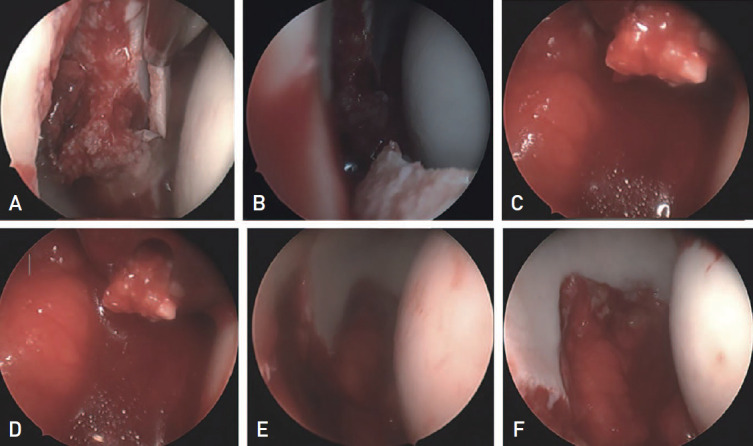
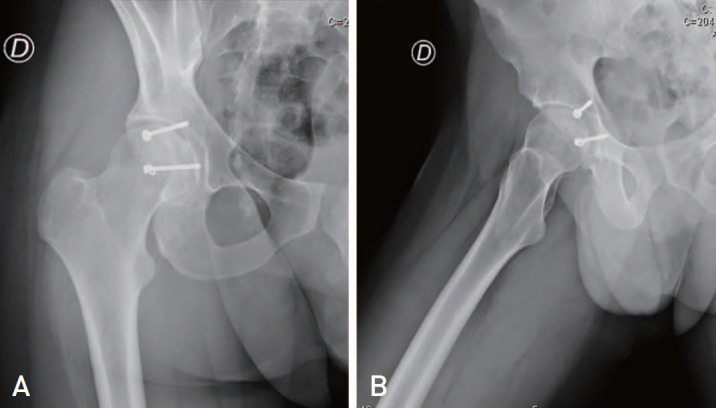
Posterior wall fractures are the most common type of acetabular fractures. Treatment can be conservative or surgical. Operative treatment is indicated for acetabular fractures that result in hip joint instability and/or incongruity, as well injuries with incarceration of fragments of bone or soft tissue within the hip joint. Surgical treatment can range from open reduction and osteosynthesis to hip arthroplasty. Arthroscopy has recently been used as the main surgical technique or as a reduction aid. In this case a 26-year-old male with a fracture of the posterior wall who underwent a posterior miniinvasive approach, followed by hip arthroscopy. This allowed joint wash, removal of the loose body, confirmation of reduction and absence of intra-articular hardware. Excellent clinical and radiological results were obtained. This case demonstrates the advantage of using hip arthroscopy in assessment of fracture reduction, the absence of intra-articular hardware or fragments, as well as a less invasive approach.
后壁骨折是髋臼骨折最常见的类型。治疗方法可以是保守治疗或手术治疗。对于导致髋关节不稳定和/或不匹配的髋臼骨折,以及伴有骨碎片或软组织嵌入髋关节内的损伤,需进行手术治疗。手术治疗范围从切开复位内固定到髋关节置换术。关节镜检查最近已被用作主要手术技术或复位辅助手段。在本病例中,一名26岁男性后壁骨折患者接受了后入路微创治疗,随后进行了髋关节镜检查。这使得能够进行关节冲洗、清除游离体、确认复位情况以及检查关节内无内固定物。获得了优异的临床和影像学结果。本病例展示了使用髋关节镜评估骨折复位、关节内无内固定物或碎片以及采用侵入性较小的方法的优势。