Romano Patrizia, Siesto Gabriella, Capece Angela, Pietrafesa Rocchina, Lanciotti Rosalba, Patrignani Francesca, Granchi Lisa, Galli Viola, Bevilacqua Antonio, Campaniello Daniela, Spano Giuseppe, Caridi Andrea, Poiana Marco, Foschino Roberto, Vigentini Ileana, Blaiotta Giuseppe, Corich Viviana, Giacomini Alessio, Cardinali Gianluigi, Corte Laura, Toffanin Annita, Agnolucci Monica, Comitini Francesca, Ciani Maurizio, Mannazzu Ilaria, Budroni Marilena, Englezos Vasileios, Rantsiou Kalliopi, Iacumin Lucilla, Comi Giuseppe, Capozzi Vittorio, Grieco Francesco, Tufariello Maria
Faculty of Economy, Universitas Mercatorum, Rome, Italy.
School of Agricultural, Forestry, Food and Environmental Sciences, University of Basilicata, Potenza, Italy.
Front Microbiol. 2022 Feb 23;13:830277. doi: 10.3389/fmicb.2022.830277. eCollection 2022.
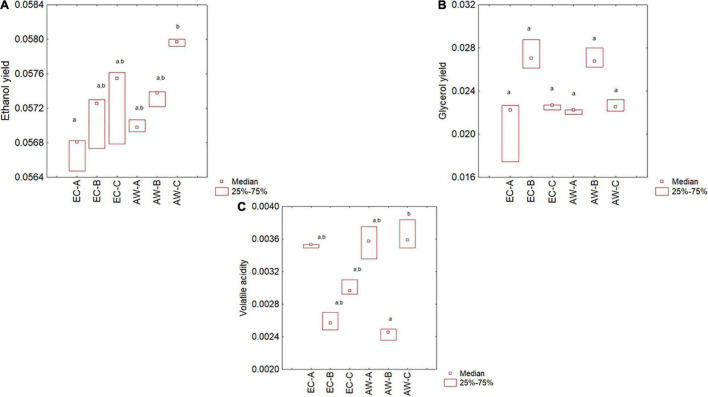
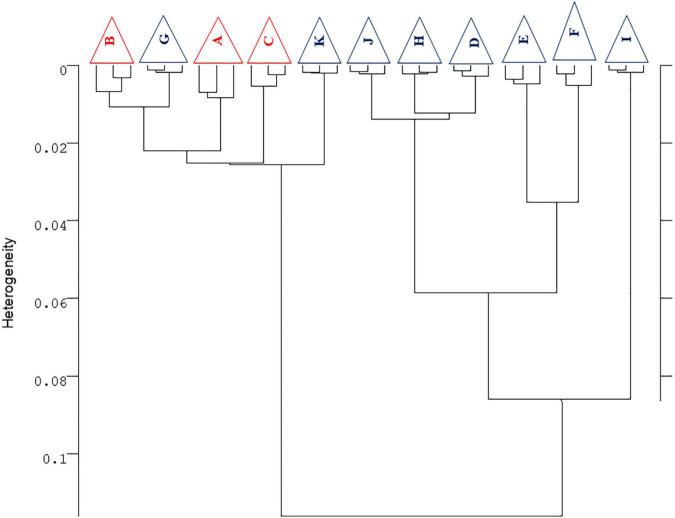
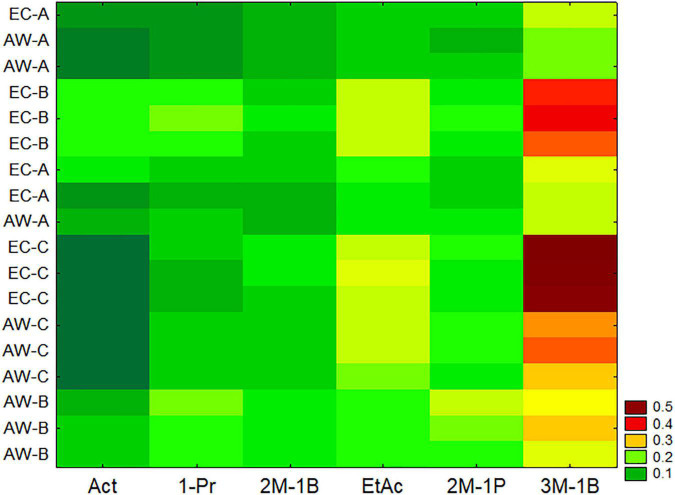
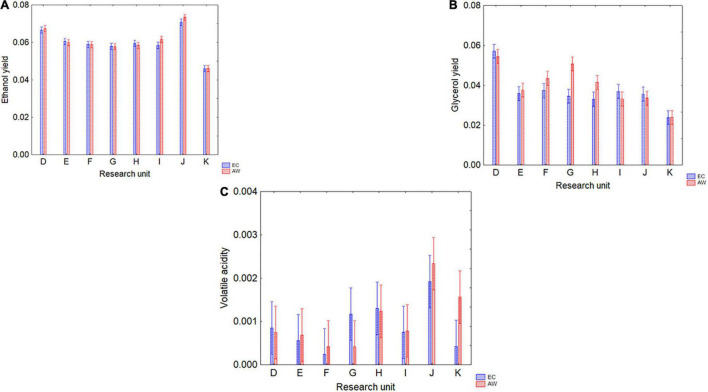
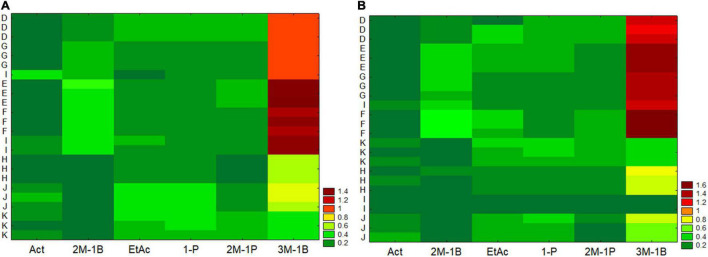
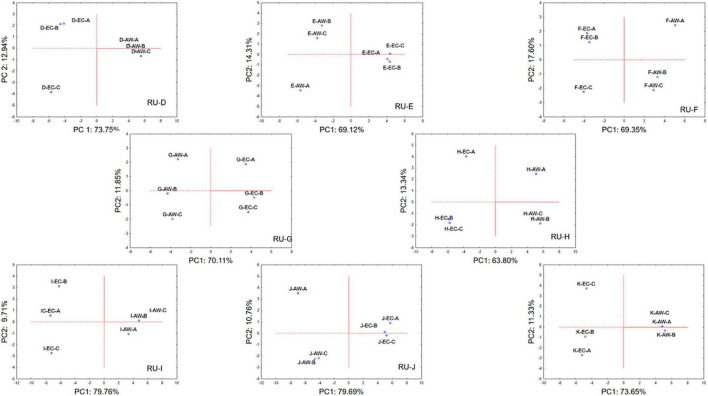
This paper reports on a common experiment performed by 17 Research Units of the Italian Group of Microbiology of Vine and Wine (GMVV), which belongs to the Scientific Society SIMTREA, with the aim to validate a protocol for the characterization of wine strains of . For this purpose, two commercial strains (EC 1118 and AWRI796) were used to carry out inter-laboratory-scale comparative fermentations using both synthetic medium and grape musts and applying the same protocol to obtain reproducible, replicable, and statistically valid results. Ethanol yield, production of acetic acid, glycerol, higher alcohols, and other volatile compounds were assessed. Moreover, the Fourier transform infrared spectroscopy was also applied to define the metabolomic fingerprint of yeast cells from each experimental trial. Data were standardized as unit of compounds or yield per gram of sugar (glucose and fructose) consumed throughout fermentation, and analyzed through parametric and non-parametric tests, and multivariate approaches (cluster analysis, two-way joining, and principal component analysis). The results of experiments carried out by using synthetic must showed that it was possible to gain comparable results from three different laboratories by using the same strains. Then, the use of the standardized protocol on different grape musts allowed pointing out the goodness and the reproducibility of the method; it showed the main traits of the two yeast strains and allowed reducing variability amongst independent batches (biological replicates) to acceptable levels. In conclusion, the findings of this collaborative study contributed to the validation of a protocol in a specific synthetic medium and in grape must and showed how data should be treated to gain reproducible and robust results, which could allow direct comparison of the experimental data obtained during the characterization of wine yeasts carried out by different research laboratories.
本文报道了意大利葡萄与葡萄酒微生物学小组(GMVV)的17个研究单位所进行的一项常见实验,该小组隶属于科学协会SIMTREA,目的是验证一种用于葡萄酒菌株特性鉴定的方案。为此,使用了两种商业菌株(EC 1118和AWRI796)进行实验室间规模的比较发酵,使用合成培养基和葡萄汁,并应用相同的方案以获得可重复、可复制且具有统计学有效性的结果。评估了乙醇产量、乙酸、甘油、高级醇和其他挥发性化合物的产生情况。此外,还应用傅里叶变换红外光谱来确定每个实验批次中酵母细胞的代谢组指纹。数据被标准化为整个发酵过程中消耗的每克糖(葡萄糖和果糖)的化合物单位或产量,并通过参数和非参数检验以及多变量方法(聚类分析、双向连接和主成分分析)进行分析。使用合成葡萄汁进行的实验结果表明,使用相同的菌株可以从三个不同的实验室获得可比的结果。然后,在不同的葡萄汁上使用标准化方案能够指出该方法的优点和可重复性;它显示了两种酵母菌株的主要特征,并使独立批次(生物学重复)之间的变异性降低到可接受的水平。总之,这项合作研究的结果有助于验证特定合成培养基和葡萄汁中的方案,并展示了如何处理数据以获得可重复且可靠的结果,这可以直接比较不同研究实验室在葡萄酒酵母特性鉴定过程中获得的实验数据。