Li Kaixuan, Yu Meihong, Li Haozhen, Zhu Quan, Wu Ziqiang, Wang Zhao, Tang Zhengyan
Department of Urology, Xiangya Hospital of Central South University, Changsha, 410008, People's Republic of China.
Department of Gastroenterology, The Second Xiangya Hospital of Central South University, Changsha, Hunan, 410011, People's Republic of China.
Int J Gen Med. 2022 Mar 24;15:3315-3324. doi: 10.2147/IJGM.S354288. eCollection 2022.
Venous thromboembolism (VTE) comprises deep venous thrombosis (DVT) and pulmonary embolism (PE), which can lead to death. VTE is an insidious disease with no specific symptoms and overlooked readily. We aimed to establish prediction models for VTE in non-oncological urological inpatients to aid urologists to better identify VTE patients.
A retrospective analysis of 1453 inpatients was carried out. The risk factors for VTE had been clarified in our previous study. A stepwise regression method was used to screen the relevant influencing factors for VTE and construct a logistic regression prediction model to predict VTE. To validate the accuracy of the model, data from 291 patients from another cohort were used for external validation.
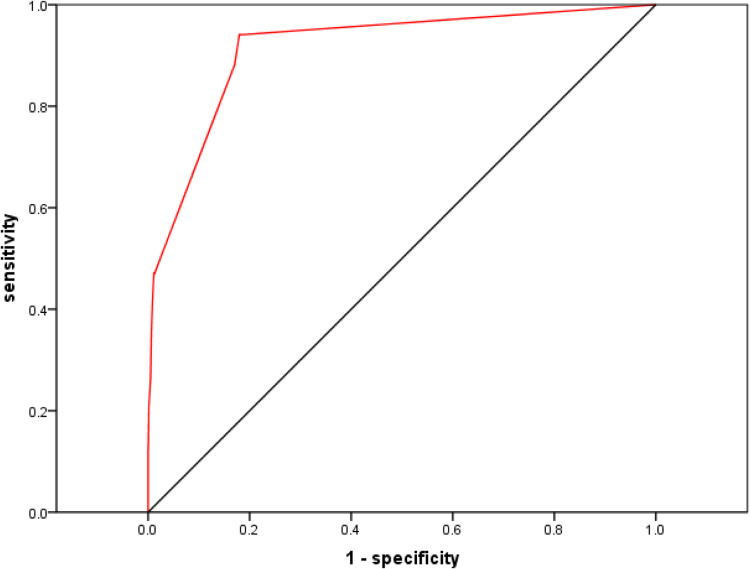
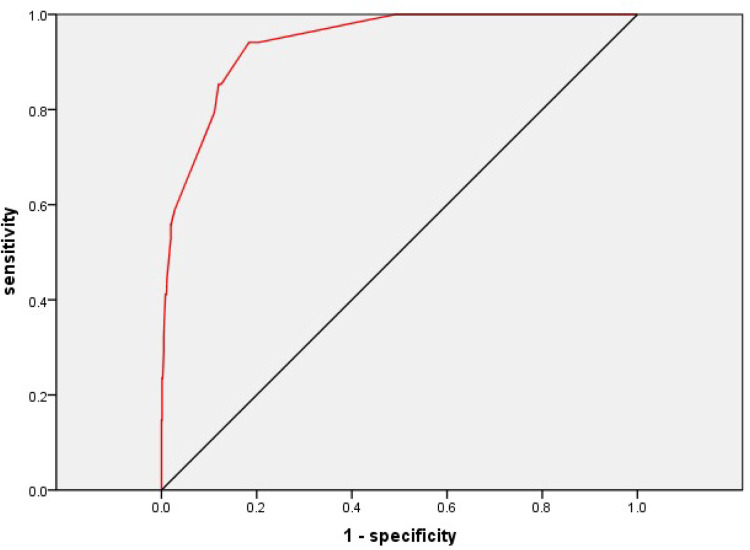
A total of 1453 inpatients were enrolled. Five potential risk factors (previous VTE; treatment with anticoagulants or anti-platelet agents before hospital admission; D-dimer ≥0.89 μg/mL; lower-extremity swelling; chest symptoms) were selected by multivariable analysis with < 0.05. These five risk factors were used to build a logistic regression prediction model. When < 0.1 in the multivariable logistic regression model, two additional risk factors were added: Caprini score ≥5 and complications, and all seven risk factors were used to build another prediction model. Internal verification showed the cutoff values, sensitivity, and specificity of the two models to be 0.02474, 0.941, 0.816 (model 1) and 0.03824, 0.941, and 0.820 (model 2), respectively. Both models had good predictive ability, but prediction accuracy was 43.0% for both when using the data of the additional 291 inpatients in the two models.
Two novel prediction models were built to predict VTE in non-oncological urological inpatients. This is a new method for VTE screening, and internal validation showed a good performance. External validation results were suboptimal but may provide clues for subsequent VTE screening.
静脉血栓栓塞症(VTE)包括深静脉血栓形成(DVT)和肺栓塞(PE),可导致死亡。VTE是一种隐匿性疾病,无特异性症状,极易被忽视。我们旨在建立非肿瘤性泌尿外科住院患者VTE的预测模型,以帮助泌尿外科医生更好地识别VTE患者。
对1453例住院患者进行回顾性分析。VTE的危险因素在我们之前的研究中已得到明确。采用逐步回归法筛选VTE的相关影响因素,并构建逻辑回归预测模型以预测VTE。为验证模型的准确性,使用来自另一个队列的291例患者的数据进行外部验证。
共纳入1453例住院患者。通过多变量分析(P<0.05)选择了五个潜在危险因素(既往VTE;入院前使用抗凝剂或抗血小板药物治疗;D-二聚体≥0.89μg/mL;下肢肿胀;胸部症状)。这五个危险因素用于建立逻辑回归预测模型。当多变量逻辑回归模型中P<0.1时,增加了两个额外的危险因素:Caprini评分≥5分和并发症,所有七个危险因素用于建立另一个预测模型。内部验证显示两个模型的截断值、敏感性和特异性分别为0.02474、0.941、0.816(模型1)和0.03824、0.941、0.820(模型2)。两个模型均具有良好的预测能力,但在两个模型中使用另外291例住院患者的数据时,预测准确率均为43.0%。
建立了两个新的预测模型来预测非肿瘤性泌尿外科住院患者的VTE。这是一种新的数据验证方法,内部验证显示性能良好。外部验证结果不理想,但可能为后续VTE筛查提供线索。