Martinez-de-la-Casa Jose Maria, Oribio-Quinto Carlos, Milans-Del-Bosch Almudena, Perez-Garcia Pilar, Morales-Fernandez Laura, Garcia-Bella Javier, Benitez-Del-Castillo Jose Manuel, Garcia-Feijoo Julian, Piñero David P
Ophthalmology Unit, Department of Ophthalmology and ORL, Faculty of Medicine, Hospital Clinico San-Carlos, Universidad Complutense de Madrid, Instituto de Investigación Sanitaria del Hospital Clinico San-Carlos (IdISSC), 28040, Madrid, Spain.
Department of Immunology, Ophthalmology and ORL, School of Medicine, Instituto de Investigaciones Oftalmologicas Ramon Castroviejo, Universidad Complutense de Madrid, Madrid, Spain.
Eye Vis (Lond). 2022 Apr 1;9(1):12. doi: 10.1186/s40662-022-00284-4.
Ocular surface disease in glaucoma patients is a significant ocular co-morbidity that can affect 40% to 59% of these patients worldwide. The current study was aimed at evaluating the potential clinical benefit of an intense pulsed light (IPL)-based treatment in glaucomatous patients with ocular surface disease due to prolonged hypotensive eyedrop treatments. To our knowledge, this is the first series analyzing the therapeutic effect of this treatment option in this type of patients.
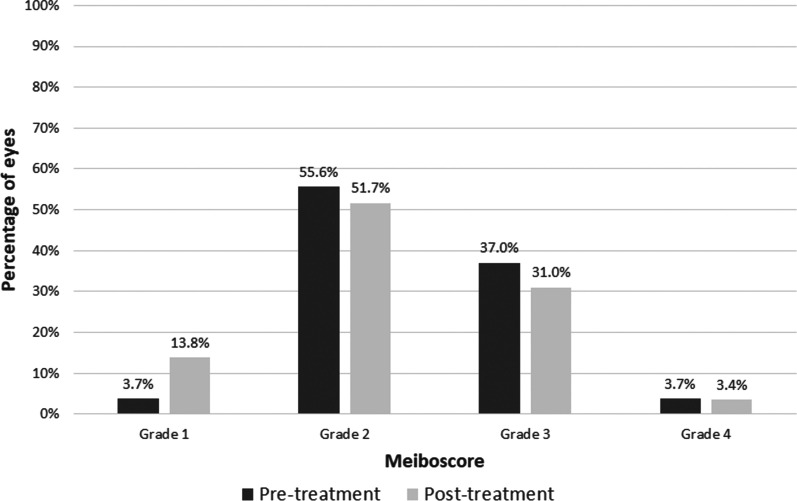
This non-comparative prospective case series study enrolled a total of 30 glaucoma patients ranging in age from 57 to 94 years old and treated with hypotensive eyedrops for years with dry eye symptomatology. All patients received four sessions of IPL treatment using the Optima IPL system (Lumenis, Yokneam, Israel) adjusted to the official optimized Lumenis setting. Changes in symptomatology, corneal staining, conjunctival hyperemia, non-invasive break-up time (NIBUT), tear osmolarity, tear meniscus height (TMH), meiboscore and meibomian gland expressibility was analyzed after treatment.
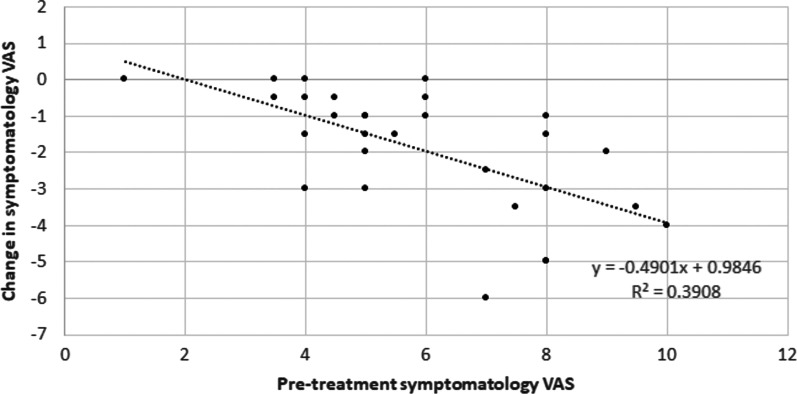
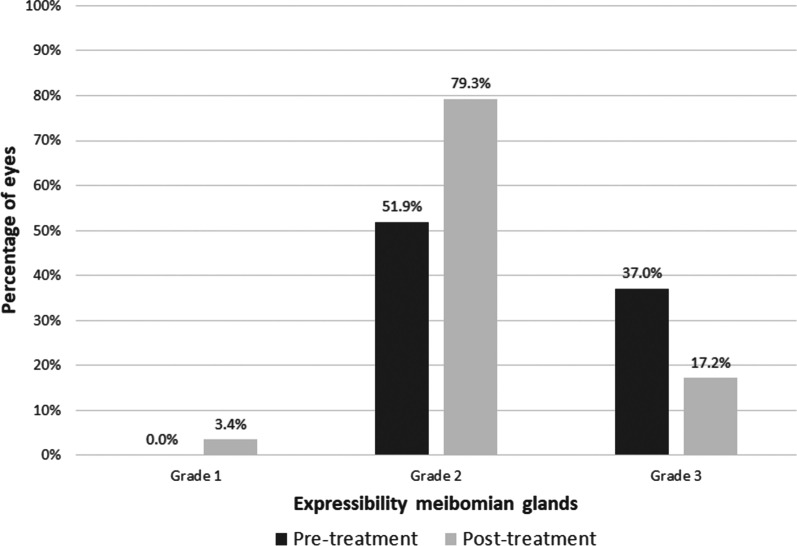
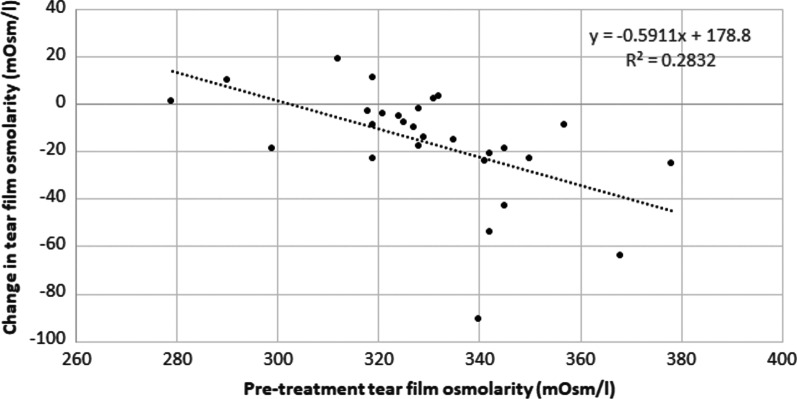
Statistically significant reductions were observed after IPL treatment in the symptomatology scores measured with different questionnaires [ocular surface disease index (OSDI), standard patient evaluation of eye dryness (SPEED) and symptom assessment questionnaire in dry eye (SANDE)] as well as with the visual analogue scale (P < 0.001). Mean change in OSDI was - 15.0 ± 11.3. A significant reduction was found after treatment in the corneal staining score (P < 0.001). A significant reduction was found in tear film meniscus height (P = 0.012), as well as in tear film osmolarity (P = 0.001). A significant reduction was also found in meibomian gland expressibility (P = 0.003), changing the percentage of grade 3 eyes from 44.4% before IPL to 17.2% after treatment.
IPL therapy combined with meibomian gland expression (MGX) seems to be an effective option to improve symptomatology in glaucomatous patients with ocular surface disease due to prolonged hypotensive eyedrop treatments, with an additional improvement in clinical signs, such as tear osmolarity and corneal staining.
青光眼患者的眼表疾病是一种重要的眼部合并症,在全球范围内,40%至59%的青光眼患者会受其影响。当前研究旨在评估基于强脉冲光(IPL)的治疗方法对因长期使用降眼压滴眼液而患有眼表疾病的青光眼患者的潜在临床益处。据我们所知,这是首个分析该治疗方案对这类患者治疗效果的系列研究。
本非对照前瞻性病例系列研究共纳入30例年龄在57至94岁之间、因降眼压滴眼液治疗多年而出现干眼症状的青光眼患者。所有患者均使用Optima IPL系统(以色列Yokneam的Lumenis公司生产)接受了4次IPL治疗,治疗参数按照Lumenis官方优化设置进行调整。治疗后分析症状、角膜染色、结膜充血、非侵入性泪膜破裂时间(NIBUT)、泪液渗透压、泪液半月高度(TMH)、睑板腺评分及睑板腺可挤压性的变化。
IPL治疗后,采用不同问卷(眼表疾病指数(OSDI)、干眼标准患者评估(SPEED)及干眼症状评估问卷(SANDE))以及视觉模拟量表测得的症状评分均有统计学意义的降低(P < 0.001)。OSDI的平均变化为-15.0±11.3。治疗后角膜染色评分显著降低(P < 0.001)。泪膜半月高度(P = 0.012)及泪液渗透压(P = 0.001)均显著降低。睑板腺可挤压性也显著降低(P = 0.003),3级眼的比例从IPL治疗前的44.4%降至治疗后的17.2%。
IPL治疗联合睑板腺按摩(MGX)似乎是改善因长期使用降眼压滴眼液而患有眼表疾病的青光眼患者症状的有效选择,对泪液渗透压和角膜染色等临床体征也有额外改善作用。