The Walter and Eliza Hall Institute of Medical Research, Parkville, Victoria 3052, Australia.
Infection and Immunity Program, Monash Biomedicine Discovery Institute and Department of Microbiology, Monash University, Victoria 3800, Australia.
Acta Crystallogr D Struct Biol. 2022 Apr 1;78(Pt 4):494-508. doi: 10.1107/S2059798322001772. Epub 2022 Mar 11.
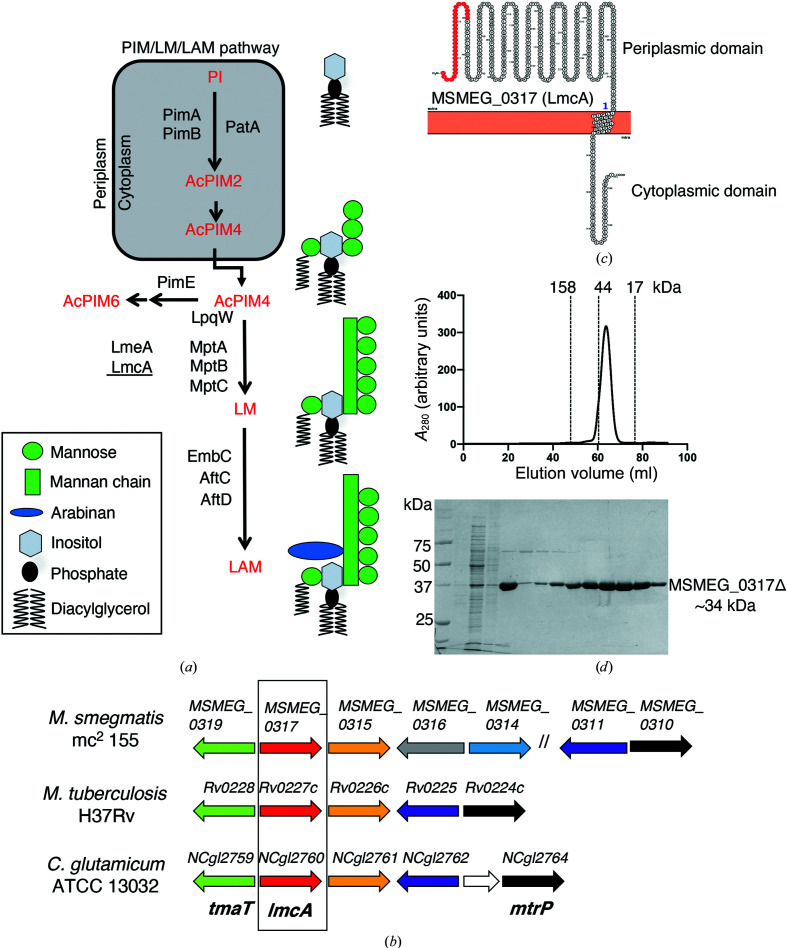
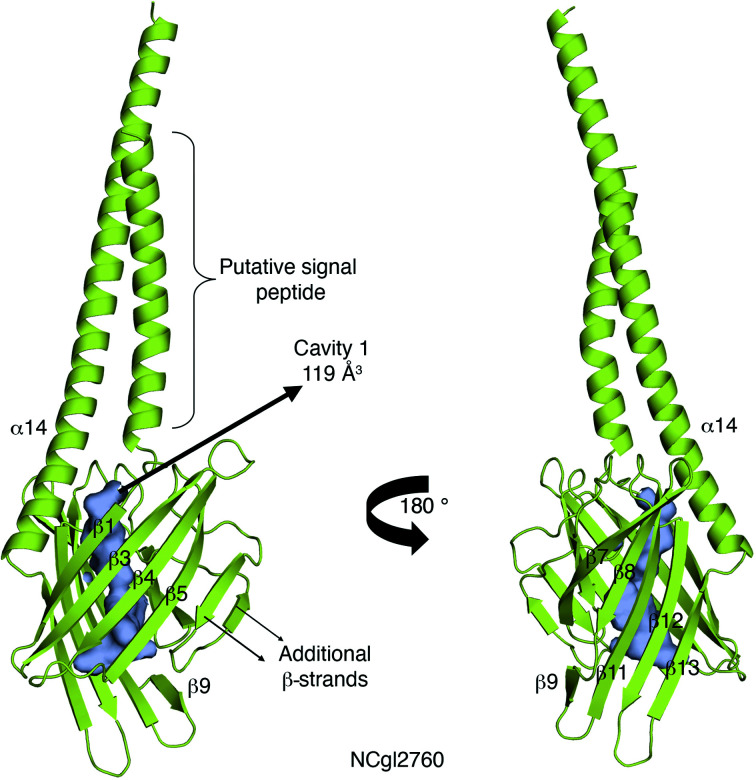
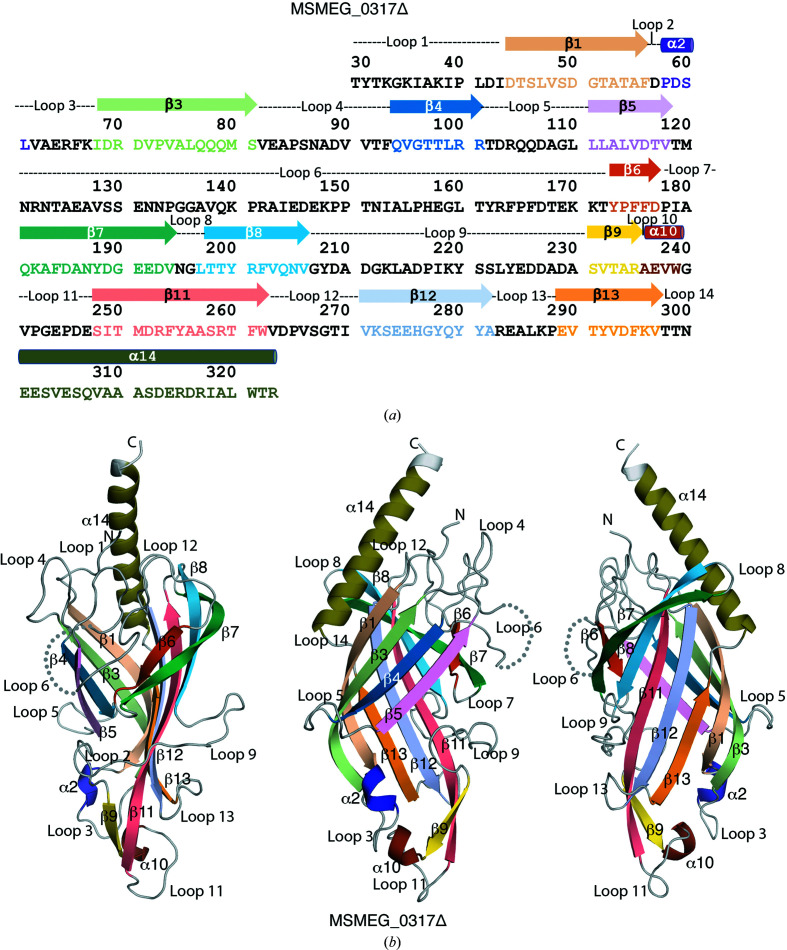
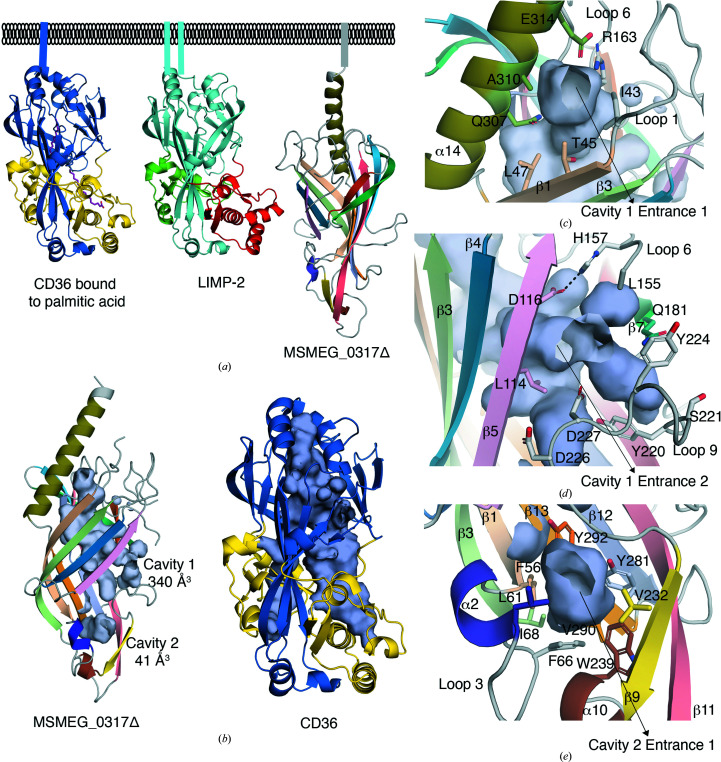
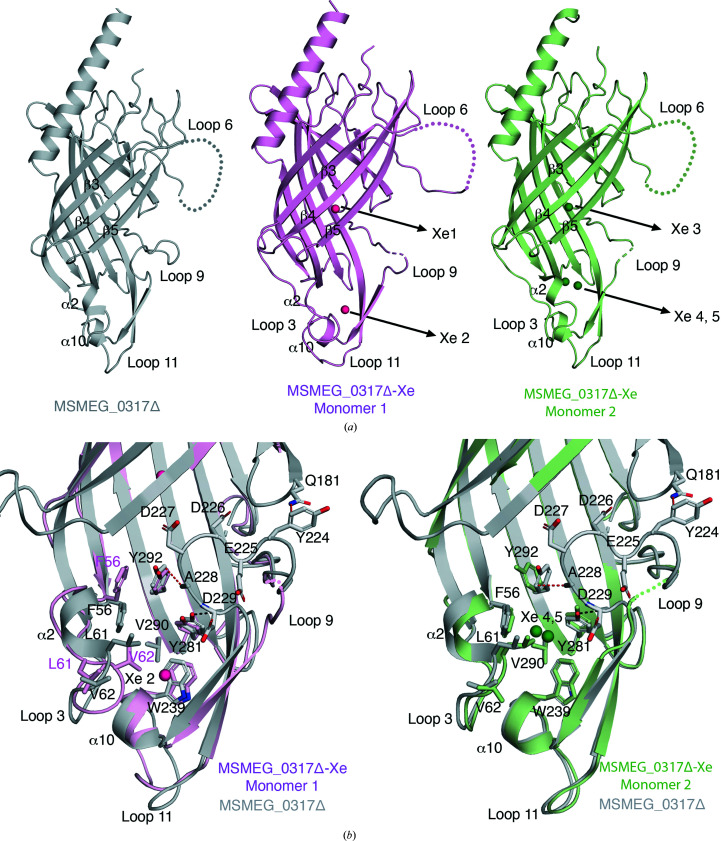
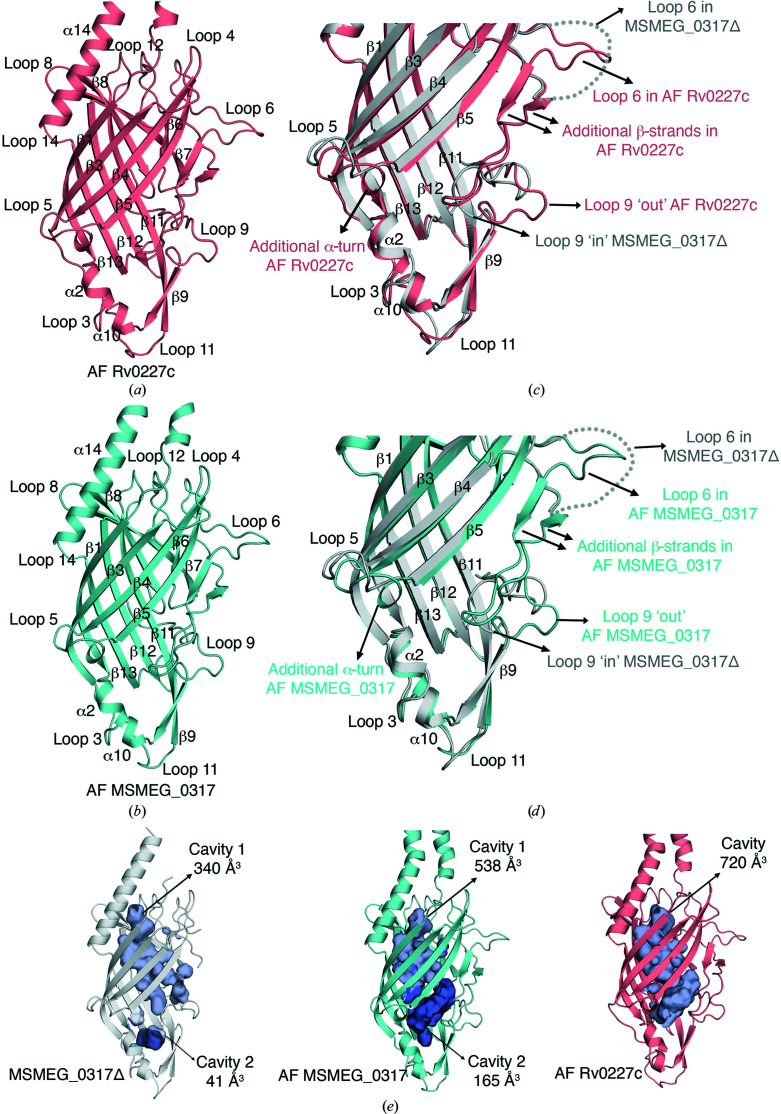
The bacterial genus Mycobacterium includes important pathogens, most notably M. tuberculosis, which infects one-quarter of the entire human population, resulting in around 1.4 million deaths from tuberculosis each year. Mycobacteria, and the closely related corynebacteria, synthesize a class of abundant glycolipids, the phosphatidyl-myo-inositol mannosides (PIMs). PIMs serve as membrane anchors for hyperglycosylated species, lipomannan (LM) and lipoarabinomannan (LAM), which are surface-exposed and modulate the host immune response. Previously, in studies using the model species Corynebacterium glutamicum, NCgl2760 was identified as a novel membrane protein that is required for the synthesis of full-length LM and LAM. Here, the first crystal structure of its ortholog in Mycobacterium smegmatis, MSMEG_0317, is reported at 1.8 Å resolution. The structure revealed an elongated β-barrel fold enclosing two distinct cavities and one α-helix extending away from the β-barrel core, resembling a cone with a flake' arrangement. Through xenon derivatization and structural comparison with AlphaFold2-derived predictions of the M. tuberculosis homolog Rv0227c, structural elements were identified that may undergo conformational changes to switch from closed' to `open' conformations, allowing cavity access. An AlphaFold2-derived NCgl2760 model predicted a smaller β-barrel core with an enclosed central cavity, suggesting that all three proteins, which were collectively termed LmcA, may have a common mechanism of ligand binding through these cavities. These findings provide new structural insights into the biosynthetic pathway for a family of surface lipoglycans with important roles in mycobacterial pathogenesis.
分枝杆菌属包括重要的病原体,其中最著名的是结核分枝杆菌,它感染了全球四分之一的人口,导致每年约有 140 万人死于结核病。分枝杆菌和密切相关的棒状杆菌合成一类丰富的糖脂,即磷脂酰肌醇甘露糖苷(PIMs)。PIMs 作为高度糖基化的物种,脂甘露聚糖(LM)和脂阿拉伯甘露聚糖(LAM)的膜锚定物,这些物质暴露在表面并调节宿主免疫反应。此前,在使用模式物种谷氨酸棒状杆菌的研究中,NCgl2760 被鉴定为一种新型膜蛋白,它是全长 LM 和 LAM 合成所必需的。在这里,报道了其在耻垢分枝杆菌中的同源物 MSMEG_0317 的首个晶体结构,分辨率为 1.8 Å。该结构揭示了一个细长的β-桶折叠结构,包含两个不同的腔和一个从β-桶核心延伸出来的α-螺旋,类似于“带薄片的锥形”排列。通过氙气衍生物化和与 AlphaFold2 预测的结核分枝杆菌同源物 Rv0227c 的结构比较,确定了可能发生构象变化以从“关闭”到“打开”构象切换的结构元素,从而允许腔进入。AlphaFold2 预测的 NCgl2760 模型预测了一个较小的β-桶核心和一个封闭的中心腔,这表明这三种蛋白(统称为 LmcA)可能具有通过这些腔结合配体的共同机制。这些发现为一类表面糖脂聚糖的生物合成途径提供了新的结构见解,这些糖脂聚糖在分枝杆菌发病机制中具有重要作用。