Department of Urology, Kyoto University Graduate School of Medicine, Kyoto, Japan.
Laboratory of Molecular Biosciences, Kyoto University Graduate School of Medicine, Kyoto, Japan.
Commun Biol. 2022 Apr 1;5(1):299. doi: 10.1038/s42003-022-03227-w.
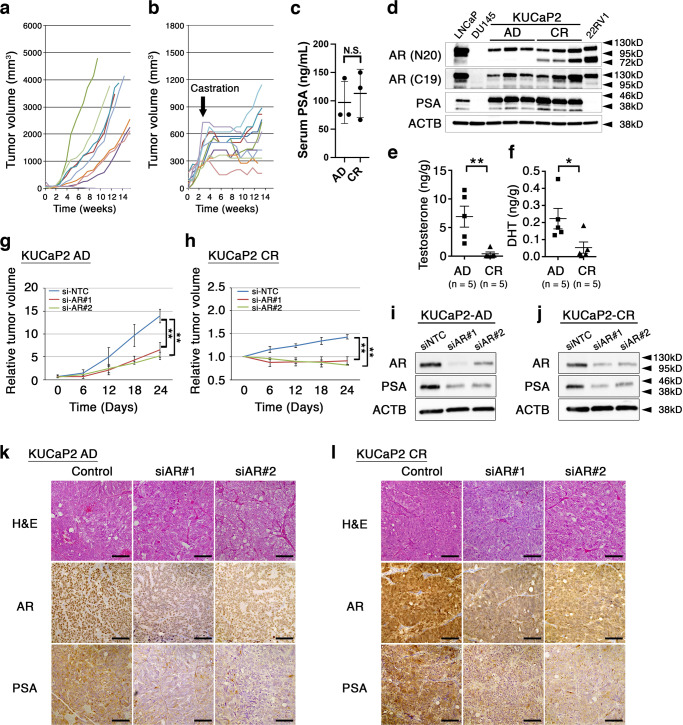
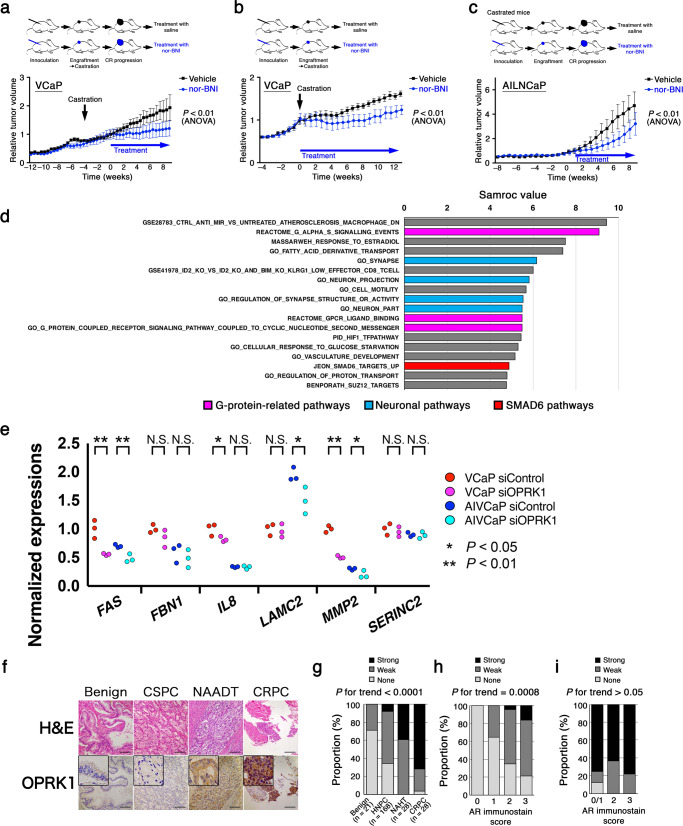
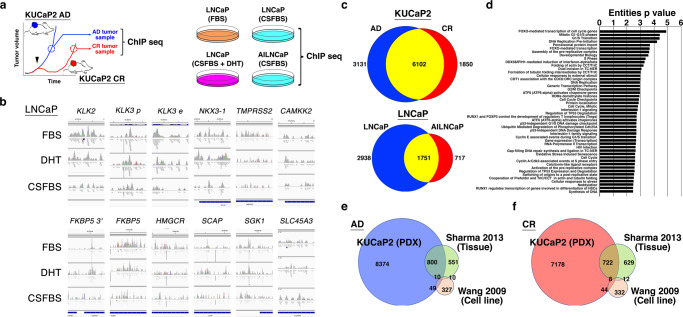
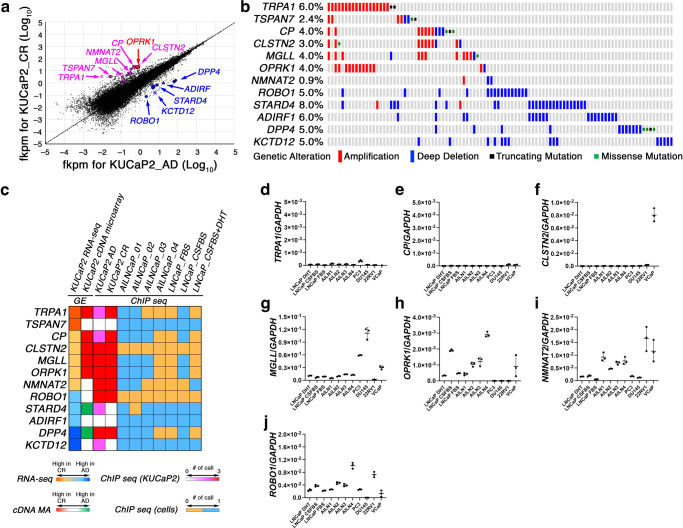
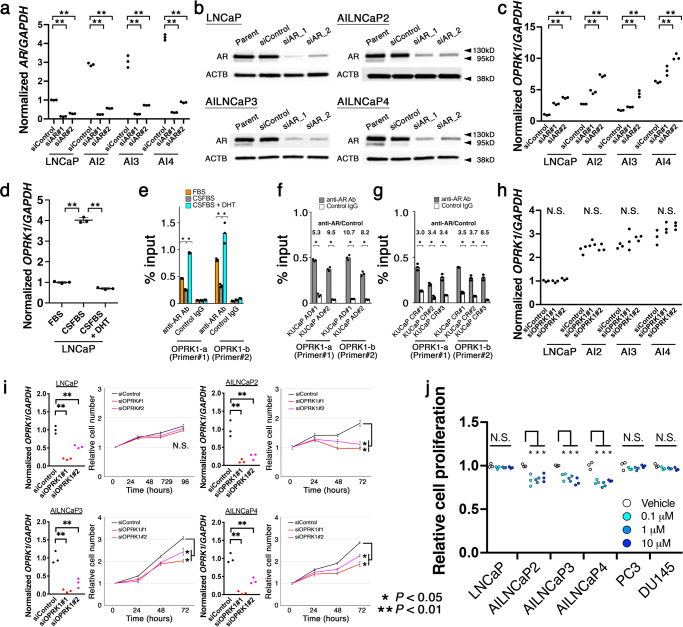
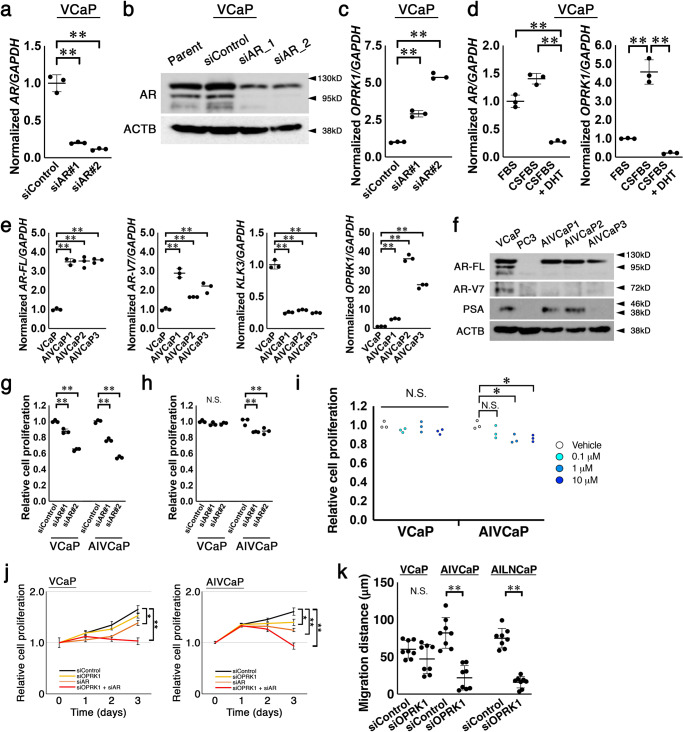
Castration resistance is a lethal form of treatment failure of prostate cancer (PCa) and is associated with ligand-independent activation of the androgen receptor (AR). It is only partially understood how the AR mediates survival and castration-resistant growth of PCa upon androgen deprivation. We investigated integrative genomics using a patient-derived xenograft model recapitulating acquired, AR-dependent castration-resistant PCa (CRPC). Sequencing of chromatin immunoprecipitation using an anti-AR antibody (AR-ChIP seq) revealed distinct profiles of AR binding site (ARBS) in androgen-dependent and castration-resistant xenograft tumors compared with those previously reported based on human PCa cells or tumor tissues. An integrative genetic analysis identified several AR-target genes associated with CRPC progression including OPRK1, which harbors ARBS and was upregulated upon androgen deprivation. Loss of function of OPRK1 retarded the acquisition of castration resistance and inhibited castration-resistant growth of PCa both in vitro and in vivo. Immunohistochemical analysis showed that expression of OPRK1, a G protein-coupled receptor, was upregulated in human prostate cancer tissues after preoperative androgen derivation or CRPC progression. These data suggest that OPRK1 is involved in post-castration survival and cellular adaptation process toward castration-resistant progression of PCa, accelerating the clinical implementation of ORPK1-targeting therapy in the management of this lethal disease.
去势抵抗是前列腺癌 (PCa) 治疗失败的致命形式,与雄激素受体 (AR) 的配体非依赖性激活有关。目前仅部分了解 AR 如何介导去势治疗后 PCa 的存活和去势抵抗性生长。我们使用患者来源的异种移植模型进行了综合基因组学研究,该模型再现了获得性、AR 依赖性去势抵抗性 PCa (CRPC)。使用抗 AR 抗体进行染色质免疫沉淀的测序 (AR-ChIP seq) 显示,与先前基于人 PCa 细胞或肿瘤组织的报道相比,雄激素依赖性和去势抵抗性异种移植肿瘤中的 AR 结合位点 (ARBS) 具有不同的特征。综合遗传分析确定了几个与 CRPC 进展相关的 AR 靶基因,包括 OPRK1,它含有 ARBS,并且在去势后上调。OPRK1 的功能丧失会延迟获得去势抵抗性,并抑制 PCa 的去势抵抗性生长,无论是在体外还是体内。免疫组织化学分析显示,G 蛋白偶联受体 OPRK1 的表达在人前列腺癌组织中在上术前雄激素治疗或 CRPC 进展后上调。这些数据表明,OPRK1 参与了去势后存活和细胞适应过程,加速了 ORPK1 靶向治疗在管理这种致命疾病中的临床实施。