
滑膜成纤维细胞唾液酸化调节关节炎发生中的细胞迁移和炎症通路激活。
Synovial Fibroblast Sialylation Regulates Cell Migration and Activation of Inflammatory Pathways in Arthritogenesis.
机构信息
Institute of Infection, Immunity and Inflammation, University of Glasgow, Glasgow, United Kingdom.
Research Into Inflammatory Arthritis Centre Versus Arthritis (RACE), Glasgow, United Kingdom.
出版信息
Front Immunol. 2022 Mar 18;13:847581. doi: 10.3389/fimmu.2022.847581. eCollection 2022.
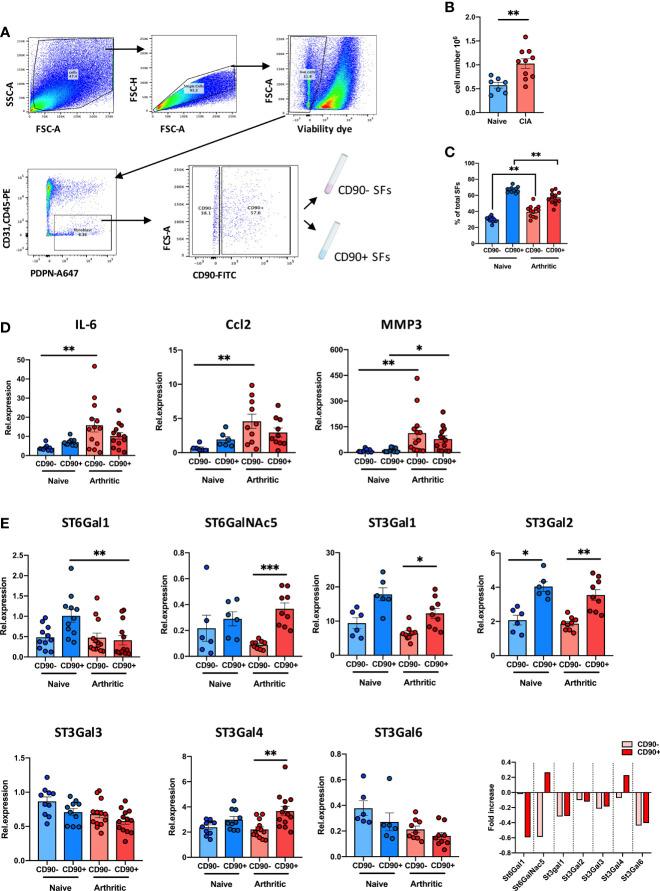
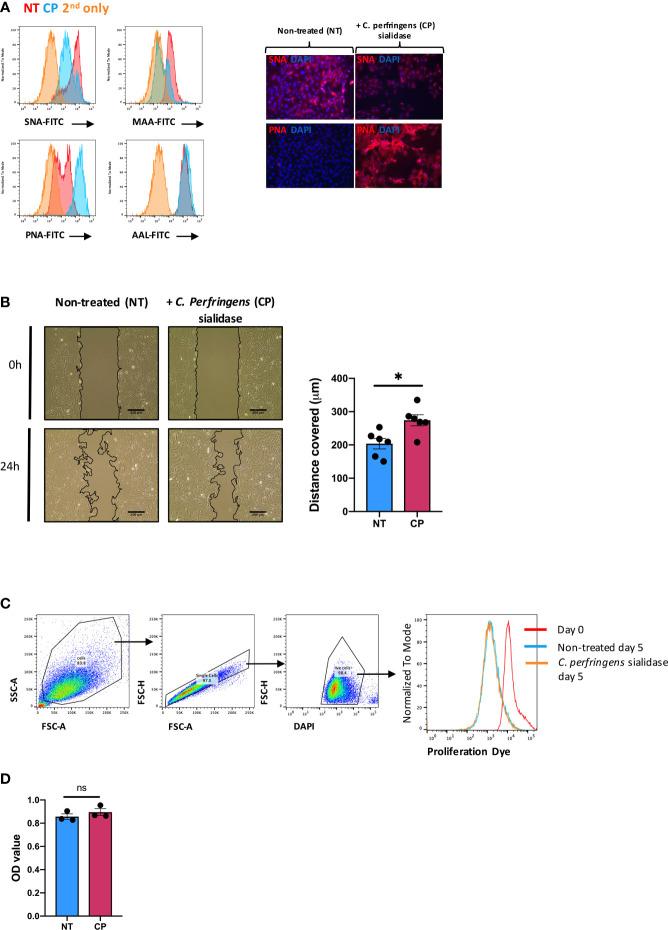
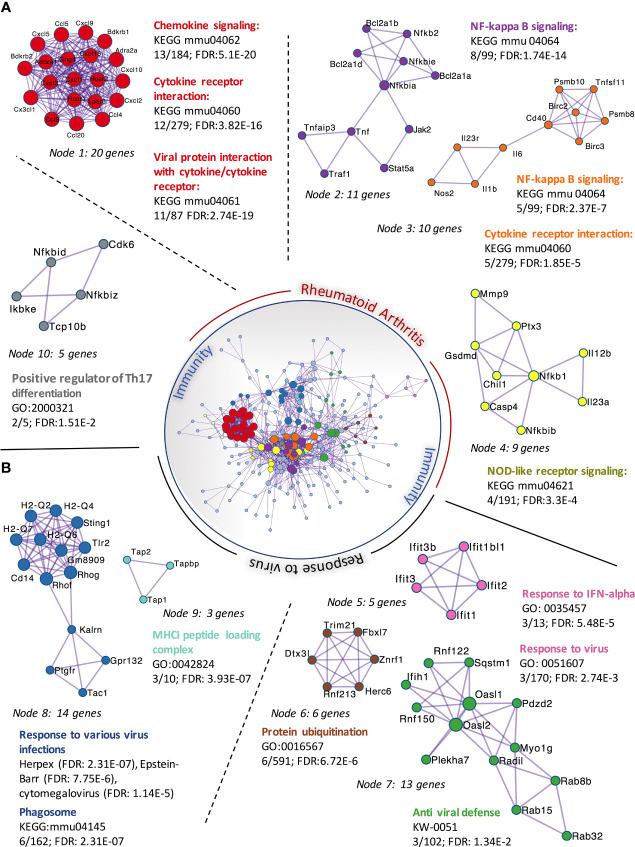
Synovial fibroblasts have emerged as critical underlying factors to perpetuate chronic joint inflammation in Rheumatoid Arthritis. Like any other cell, synovial fibroblasts are covered with a complex layer of glycans that can change in response to extracellular signals, such as inflammation. We have previously shown that inflammatory synovial fibroblasts show decreased levels of sialic acid, but our understanding of sialic acid-dependent pathophysiological pathways in these stromal cells is still very limited. In this report, we used and studies with exogenous sialidases and RNA sequencing to investigate the responses of murine synovial fibroblasts upon desialylation. Our results show that hyposialylated fibroblasts present a dysregulated migratory ability and an activated phenotype characterized by the expression of inflammatory mediators, such as cytokines and chemokines, and anti-viral related mechanisms. Removal of surface sialic acid also affected the expression of sialyltransferases, revealing the existence of a positive feedback to sustain reduced sialylation. Moreover, we demonstrate that synovial fibroblasts subsets have distinct sialyltransferase expression profiles, both in healthy and arthritic mice. These findings underline the ability of sialic acid to modulate homeostatic and inflammatory responses in non-immune synovial fibroblasts, suggesting that sialylation plays a key role in perpetuating local inflammation in the arthritic joint.
滑膜成纤维细胞已成为类风湿关节炎中持续慢性关节炎症的关键潜在因素。与其他细胞一样,滑膜成纤维细胞表面覆盖着一层复杂的聚糖层,这层聚糖可以响应细胞外信号(如炎症)而发生变化。我们之前已经表明,炎症性滑膜成纤维细胞的唾液酸水平降低,但是我们对这些基质细胞中依赖唾液酸的病理生理途径的理解仍然非常有限。在本报告中,我们使用 和 研究以及外源性唾液酸酶和 RNA 测序来研究去唾液酸化对鼠滑膜成纤维细胞的反应。我们的结果表明,低唾液酸化的成纤维细胞表现出迁移能力失调和激活表型,其特征是表达炎症介质,如细胞因子和趋化因子,以及抗病毒相关机制。表面唾液酸的去除也影响了唾液酸转移酶的表达,揭示了存在一种正反馈来维持低唾液酸化。此外,我们证明滑膜成纤维细胞亚群在健康和关节炎小鼠中具有不同的唾液酸转移酶表达谱。这些发现强调了唾液酸在调节非免疫性滑膜成纤维细胞的稳态和炎症反应中的能力,表明唾液酸化在持续关节炎关节中的局部炎症中起着关键作用。




 Zotero 插件