Institute for Diabetes and Cancer (IDC), Helmholtz Diabetes Center, Helmholtz Centre Munich, Neuherberg, Germany; Joint Heidelberg-IDC Translational Diabetes Program, Inner Medicine 1, Heidelberg University Hospital, Heidelberg, Germany; German Center for Diabetes Research (DZD), Neuherberg, Germany; Chair Molecular Metabolic Control, Technical University Munich, Munich, Germany.
Helmholtz Pioneer Campus (HPC), Helmholtz Zentrum München, Neuherberg, Germany.
Mol Metab. 2022 Jun;60:101487. doi: 10.1016/j.molmet.2022.101487. Epub 2022 Apr 1.
Fibrotic organ responses have recently been identified as long-term complications in diabetes. Indeed, insulin resistance and aberrant hepatic lipid accumulation represent driving features of progressive non-alcoholic fatty liver disease (NAFLD), ranging from simple steatosis and non-alcoholic steatohepatitis (NASH) to fibrosis. Effective pharmacological regimens to stop progressive liver disease are still lacking to-date.
Based on our previous discovery of transforming growth factor beta-like stimulated clone (TSC)22D4 as a key driver of insulin resistance and glucose intolerance in obesity and type 2 diabetes, we generated a TSC22D4-hepatocyte specific knockout line (TSC22D4-HepaKO) and exposed mice to control or NASH diet models. Mechanistic insights were generated by metabolic phenotyping and single-nuclei RNA sequencing.
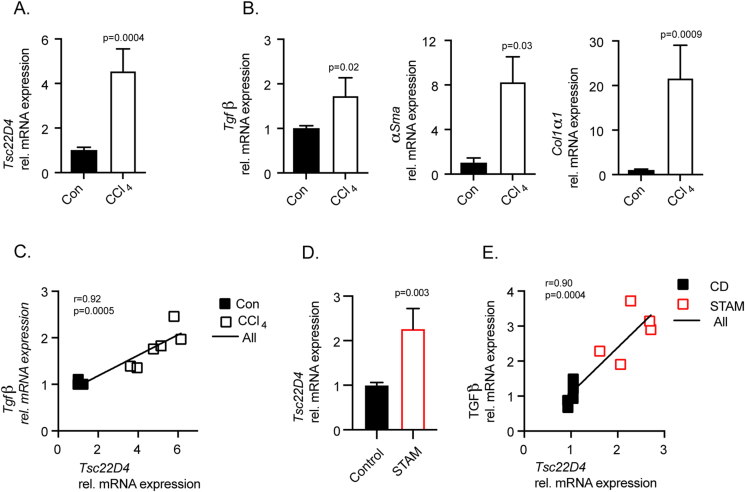
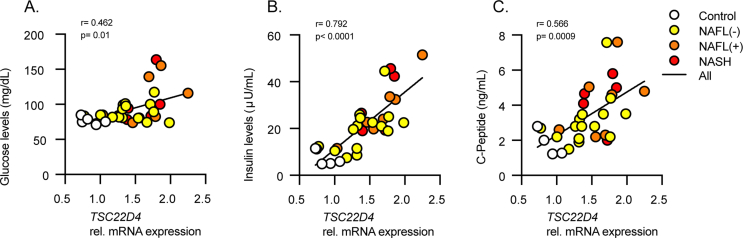
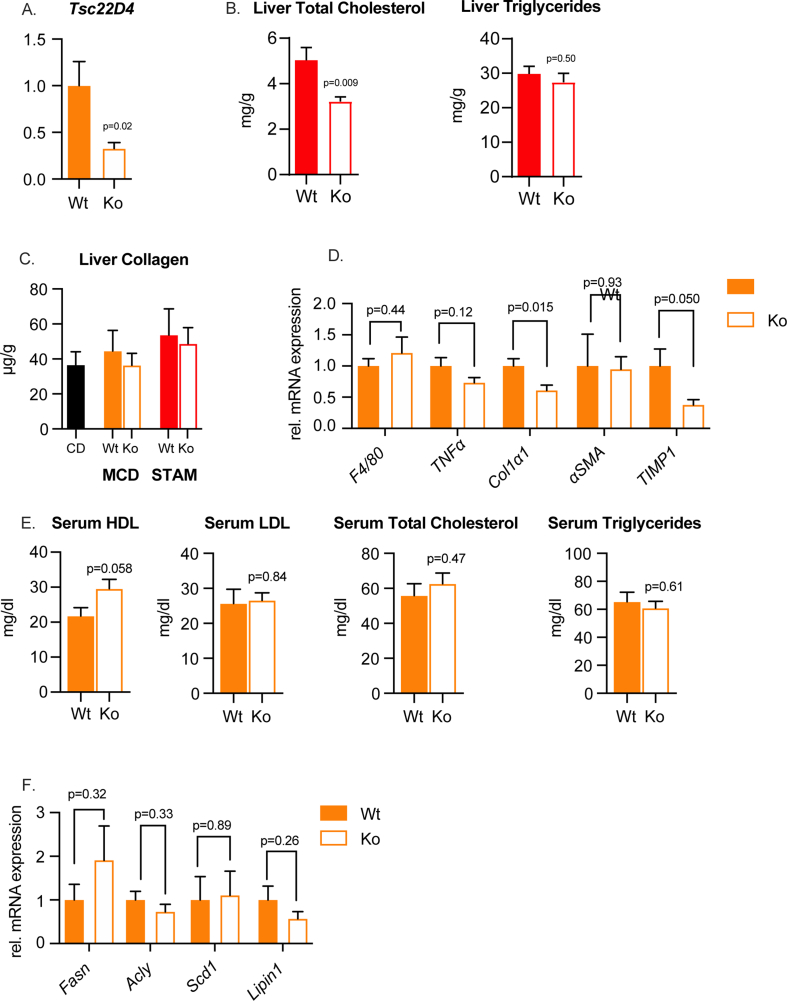
Hepatic TSC22D4 expression was significantly correlated with markers of liver disease progression and fibrosis in both murine and human livers. Indeed, hepatic TSC22D4 levels were elevated in human NASH patients as well as in several murine NASH models. Specific genetic deletion of TSC22D4 in hepatocytes led to reduced liver lipid accumulation, improvements in steatosis and inflammation scores and decreased apoptosis in mice fed a lipogenic MCD diet. Single-nuclei RNA sequencing revealed a distinct TSC22D4-dependent gene signature identifying an upregulation of mitochondrial-related processes in hepatocytes upon loss of TSC22D4. An enrichment of genes involved in the TCA cycle, mitochondrial organization, and triglyceride metabolism underscored the hepatocyte-protective phenotype and overall decreased liver damage as seen in mouse models of hepatocyte-selective TSC22D4 loss-of-function.
Together, our data uncover a new connection between targeted depletion of TSC22D4 and intrinsic metabolic processes in progressive liver disease. Hepatocyte-specific reduction of TSC22D4 improves hepatic steatosis and promotes hepatocyte survival via mitochondrial-related mechanisms thus paving the way for targeted therapies.
纤维化器官反应最近被确定为糖尿病的长期并发症。事实上,胰岛素抵抗和肝脏脂质异常堆积代表了进行性非酒精性脂肪性肝病(NAFLD)的驱动特征,从单纯性脂肪变性和非酒精性脂肪性肝炎(NASH)到纤维化不等。迄今为止,仍然缺乏有效的药物治疗方案来阻止进行性肝病。
基于我们之前发现转化生长因子β样刺激克隆(TSC)22D4 是肥胖和 2 型糖尿病中胰岛素抵抗和葡萄糖不耐受的关键驱动因素,我们生成了 TSC22D4-肝细胞特异性敲除系(TSC22D4-HepaKO),并使小鼠暴露于对照或 NASH 饮食模型中。通过代谢表型和单核 RNA 测序产生了机制见解。
肝 TSC22D4 表达与小鼠和人类肝脏中肝病进展和纤维化的标志物显著相关。事实上,人类 NASH 患者以及几种 NASH 小鼠模型中肝 TSC22D4 水平升高。在肝细胞中特异性遗传缺失 TSC22D4 导致肝脂质堆积减少、脂肪变性和炎症评分改善以及喂养富含 MCD 饮食的小鼠凋亡减少。单核 RNA 测序揭示了一个独特的 TSC22D4 依赖基因特征,表明在 TSC22D4 缺失时肝细胞中线粒体相关过程上调。TCA 循环、线粒体组织和甘油三酯代谢相关基因的富集强调了肝细胞选择性 TSC22D4 功能丧失小鼠模型中所见的肝细胞保护表型和整体肝损伤减少。
总之,我们的数据揭示了靶向耗尽 TSC22D4 与进行性肝病中固有代谢过程之间的新联系。肝细胞特异性减少 TSC22D4 通过与线粒体相关的机制改善肝脂肪变性并促进肝细胞存活,从而为靶向治疗铺平道路。