School of Traditional Chinese Medicine, Southern Medical University, Guangzhou, China; Guangdong Provincial People's Hospital, Guangdong Academy of Medical Sciences, Guangdong Geriatric Institute, Guangzhou, China.
Guangdong Provincial People's Hospital, Guangdong Academy of Medical Sciences, Guangdong Geriatric Institute, Guangzhou, China; School of Medicine, South China University of Technology, Guangzhou, China.
Neoplasia. 2022 Jun;28:100788. doi: 10.1016/j.neo.2022.100788. Epub 2022 Apr 1.
Considerable evidence implicates myeloid-derived suppressor cells (MDSCs) promote tumor progression and drug resistance. Sorafenib is the standard first-line therapy for advanced hepatocellular carcinoma (HCC). Clinical evidence indicates that sorafenib resistance is associated with increased MDSCs, by which MDSCs exerts these effects is obscure. This study aimed to investigate the mechanism of sorafenib resistance mediated by MDSCs.
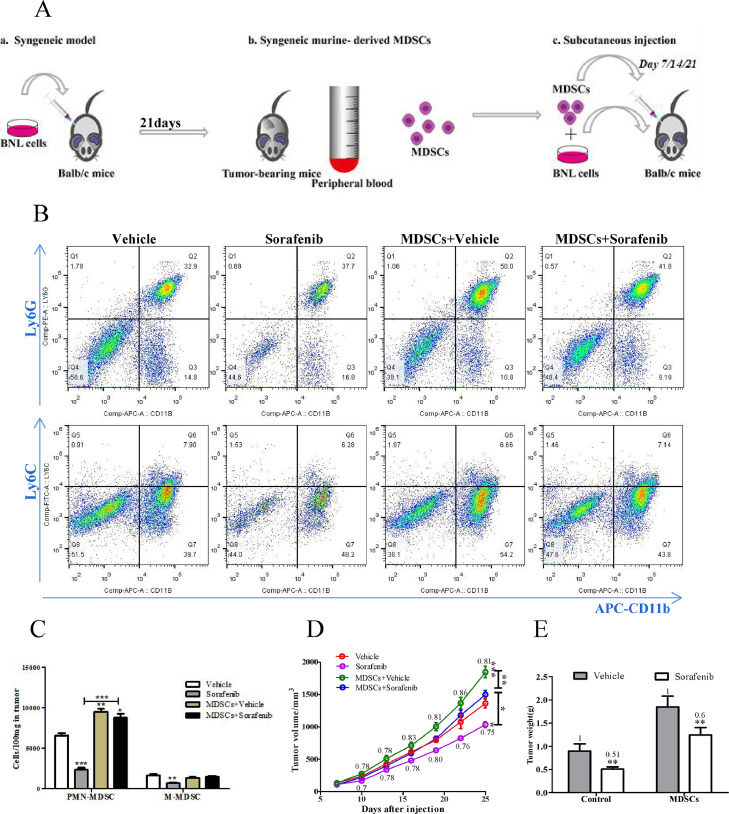
A syngeneic mouse-liver cancer cell line BNL was subcutaneously injected to build a tumor-bearing mouse model, and syngeneic MDSCs were adoptive transferred into the tumor-bearing mouse. Tumor tissue was obtained, and transcriptomic analysis of the tumor was carried out on RNAseq data. A coculture system was used to verify the crosstalk between MDSCs and BNL cells.
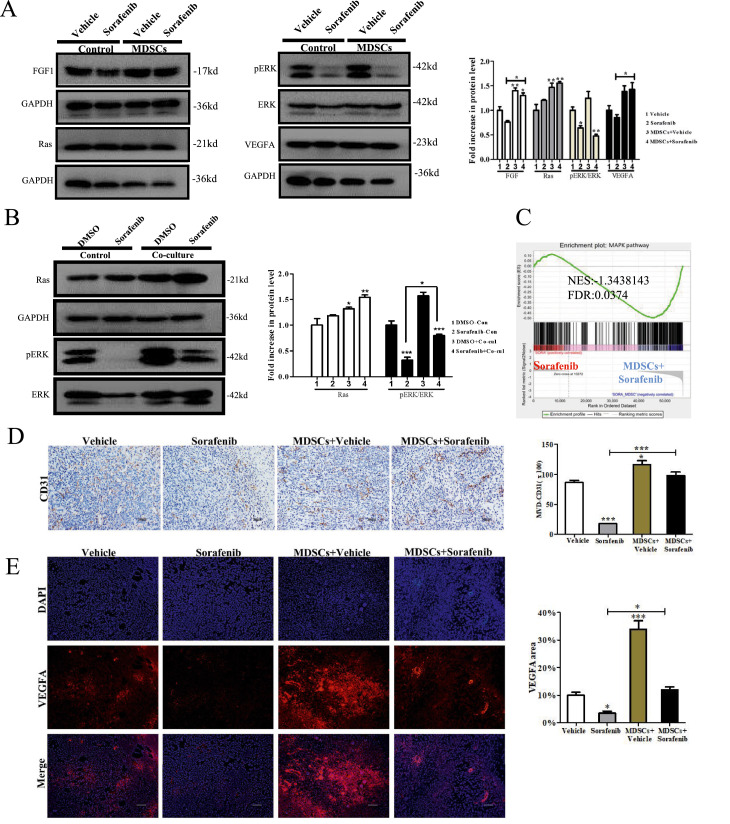
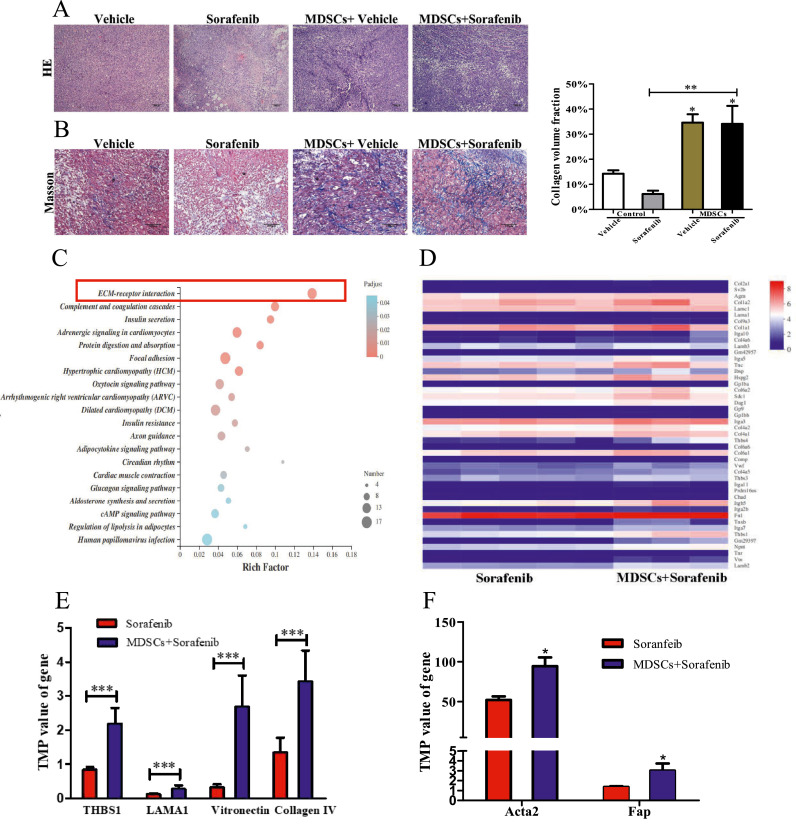
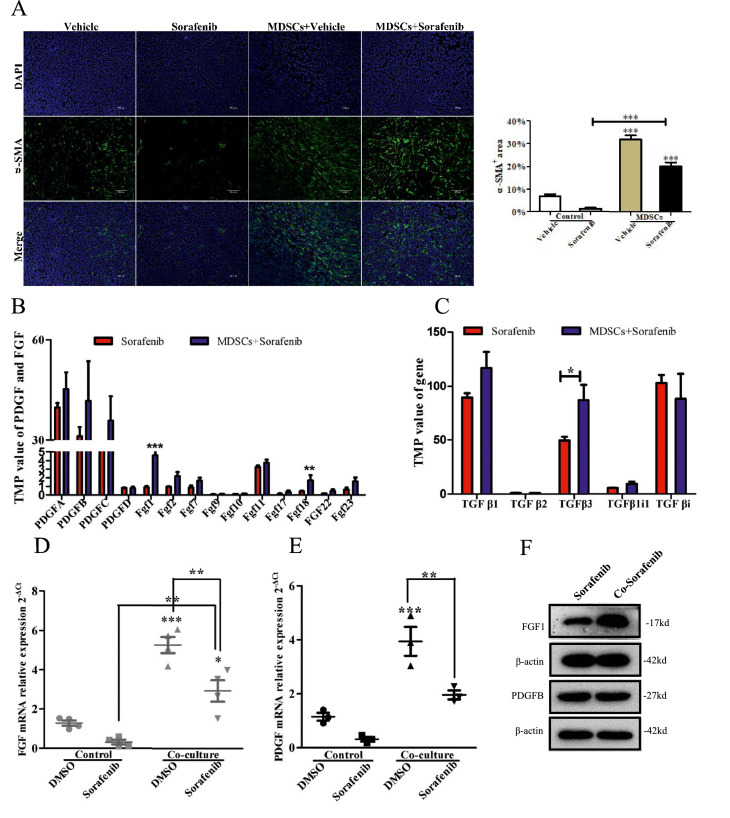
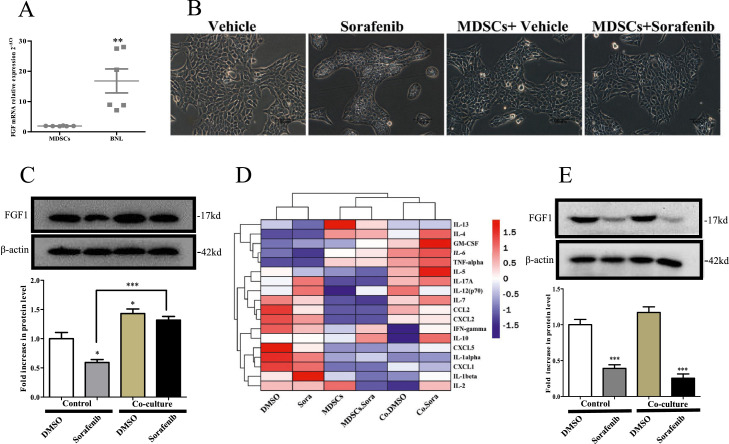
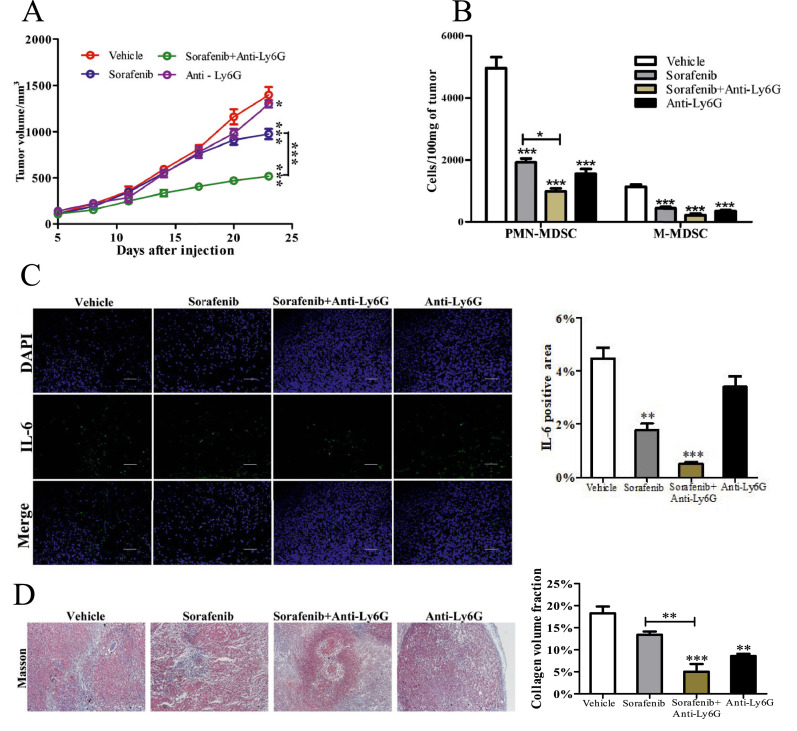
Adoptive MDSCs transfer into tumor-bearing mice induced an increase of tumor-infiltrating MDSCs, which led to tumor growth and impaired antitumor activity of sorafenib in BNL HCC models. MDSCs transfer contributed to tumor fibrosis and tumor-associated fibroblast (CAF) activation, associated with fibroblast growth factor (FGF1) upregulation. In contrast, MDSC depletion by anti-Ly6G reduced fibrosis and increased sorafenib antitumor efficacy. Intriguingly, tumor-infiltrating MDSCs barely expressed FGF1. IL-6 derived from MDSCs increased FGF1 expression in BNL liver cancer cells, and anti-IL-6 attenuated this effect in vitro. MAPK pathway, one of the sorafenib targets, is the downstream signaling of FGF1 and is reactivated by MDSCs-mediated FGF1 upregulation.
Our finding demonstrated that MDSCs led to tumor growth and sorafenib resistance via FGF1 upregulation and subsequent indirect CAF activation. We offered a novel mechanism of MDSCs-driven HCC progression and sorafenib resistance.
大量证据表明髓系来源抑制细胞(MDSCs)促进肿瘤进展和耐药。索拉非尼是晚期肝细胞癌(HCC)的标准一线治疗药物。临床证据表明,索拉非尼耐药与 MDSCs 增加有关,但 MDSCs 发挥这些作用的机制尚不清楚。本研究旨在探讨 MDSCs 介导的索拉非尼耐药的机制。
皮下注射同源小鼠肝癌细胞系 BNL 构建荷瘤小鼠模型,将同源 MDSCs 过继转移至荷瘤小鼠。获取肿瘤组织,对 RNAseq 数据进行转录组分析。采用共培养系统验证 MDSCs 与 BNL 细胞之间的相互作用。
过继转移 MDSCs 至荷瘤小鼠诱导肿瘤浸润 MDSCs 增加,导致肿瘤生长,并损害 BNL HCC 模型中索拉非尼的抗肿瘤活性。MDSCs 转移促进肿瘤纤维化和肿瘤相关成纤维细胞(CAF)激活,与成纤维细胞生长因子(FGF1)上调有关。相反,用抗 Ly6G 耗竭 MDSC 减少纤维化并增加索拉非尼的抗肿瘤疗效。有趣的是,肿瘤浸润的 MDSCs 几乎不表达 FGF1。MDSCs 来源的 IL-6 增加 BNL 肝癌细胞中 FGF1 的表达,而抗 IL-6 在体外减弱了这种作用。MAPK 途径是索拉非尼的靶点之一,是 FGF1 的下游信号通路,被 MDSCs 介导的 FGF1 上调重新激活。
我们的发现表明,MDSCs 通过 FGF1 上调和随后间接的 CAF 激活导致肿瘤生长和索拉非尼耐药。我们提供了 MDSCs 驱动 HCC 进展和索拉非尼耐药的新机制。