Liu Bo, Liu Chao, Ma Binfang, Zhang Ruidan, Zhao Zhiwei, Xiao Sai, Cao Wanjun, Ma Yanjie, Zhu Guozhang, Li Wei, Li Zhen
Department of Human Anatomy, Histology and Embryology, The Fourth Military Medical University, Xi'an, 710032, China.
Institute of Reproductive Health and Perinatology, Guangzhou Women and Children's Medical Center, Guangzhou, 510000, China.
Cell Biosci. 2022 Apr 4;12(1):41. doi: 10.1186/s13578-022-00773-y.
The blood-testis barrier (BTB) is essential to the microenvironment of spermatogenesis, and Sertoli cells provide the cellular basis for BTB construction. Numerous nuclear transcription factors have been identified to be vital for the proper functioning of Sertoli cells. PA1 has been reported to play important roles during diverse biological processes, yet its potential function in male reproduction is still unknown.
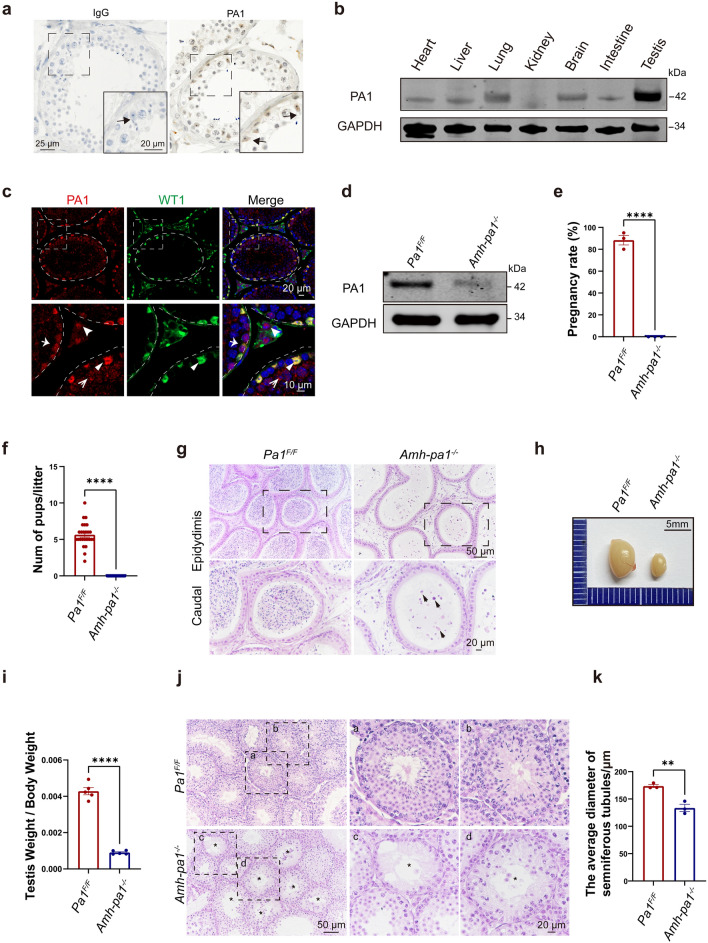
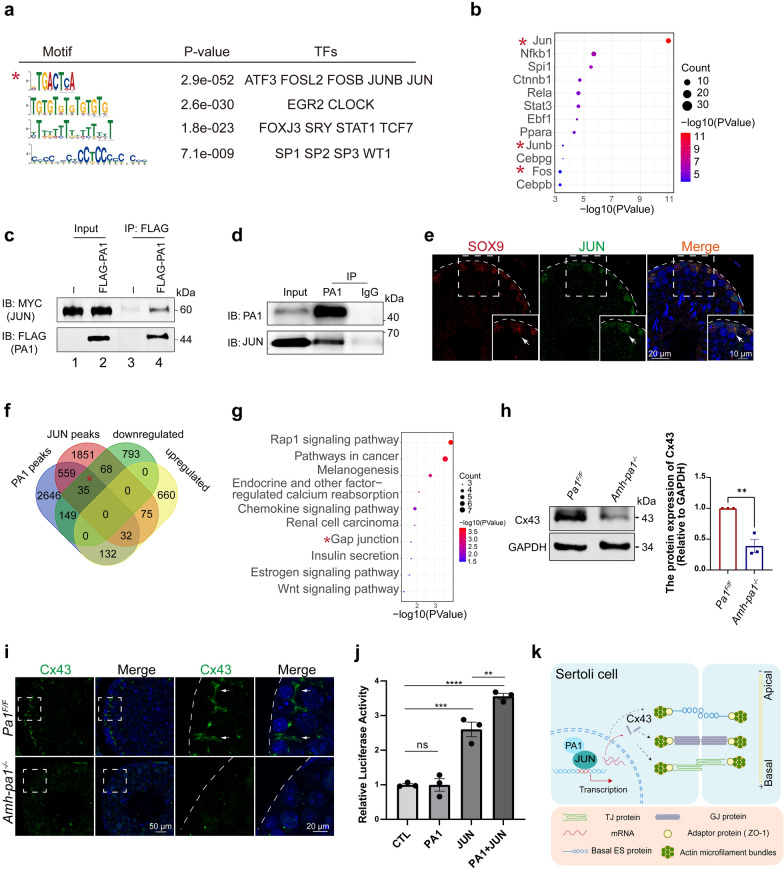
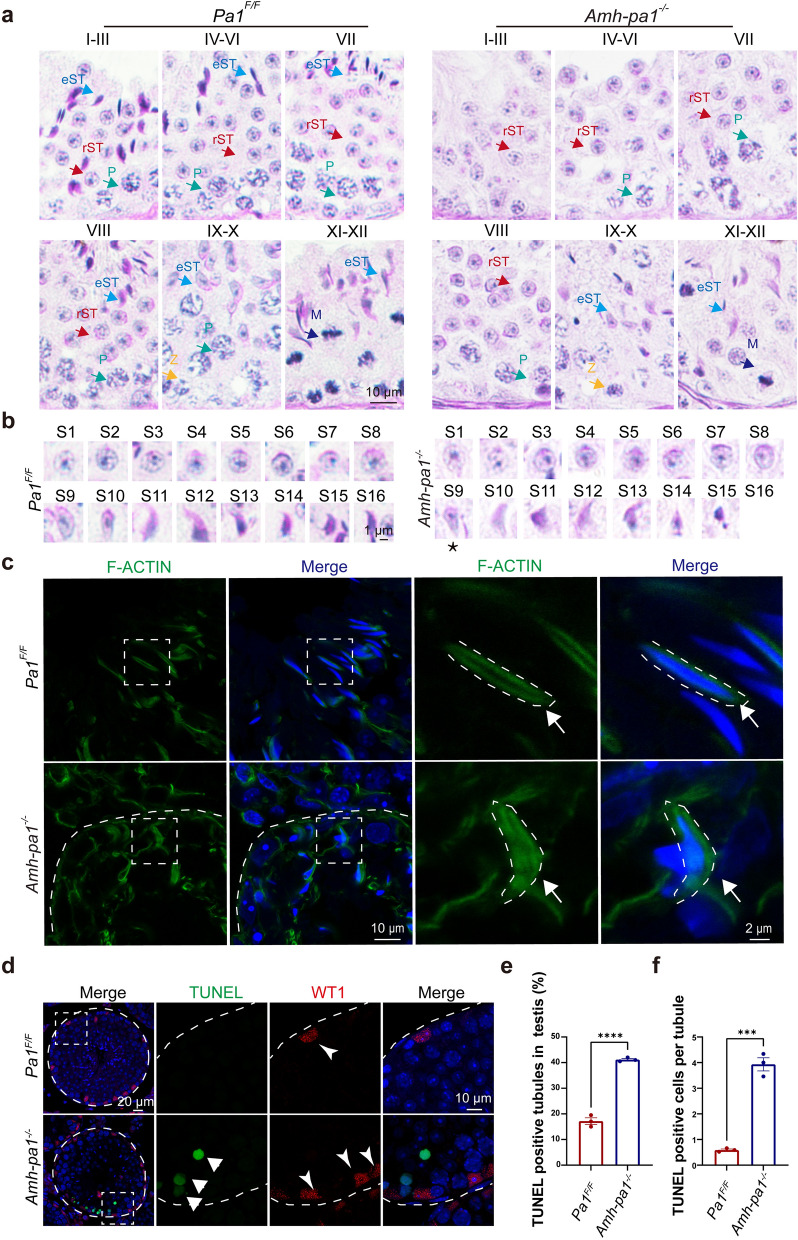
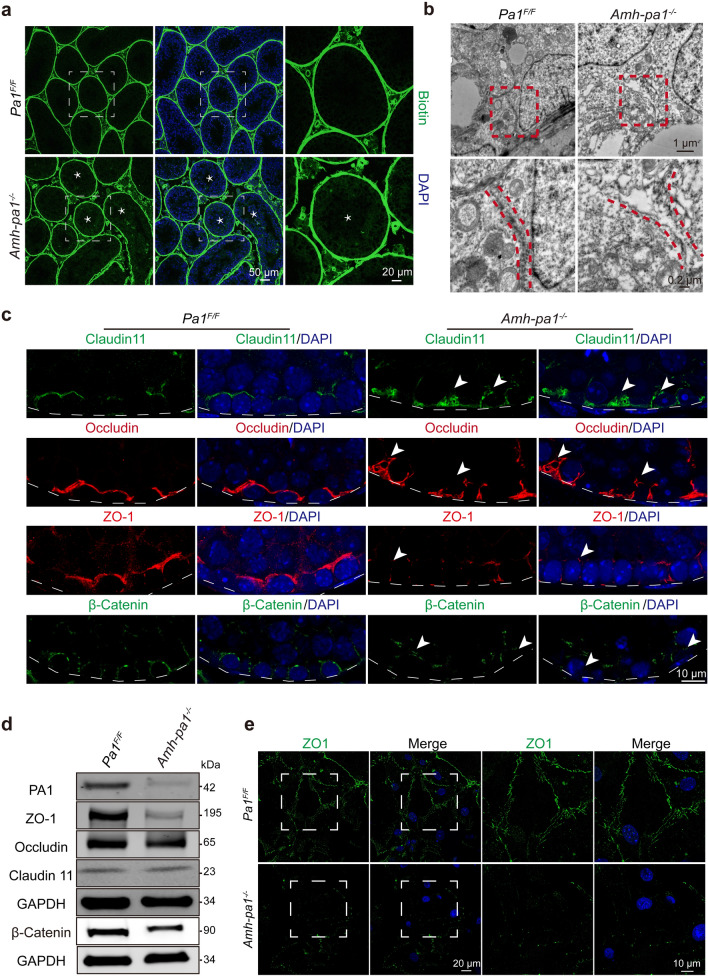
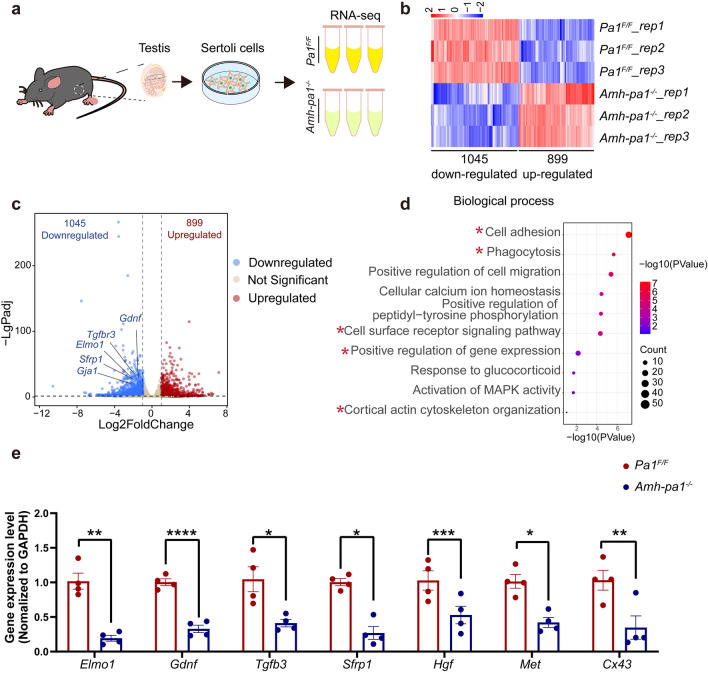
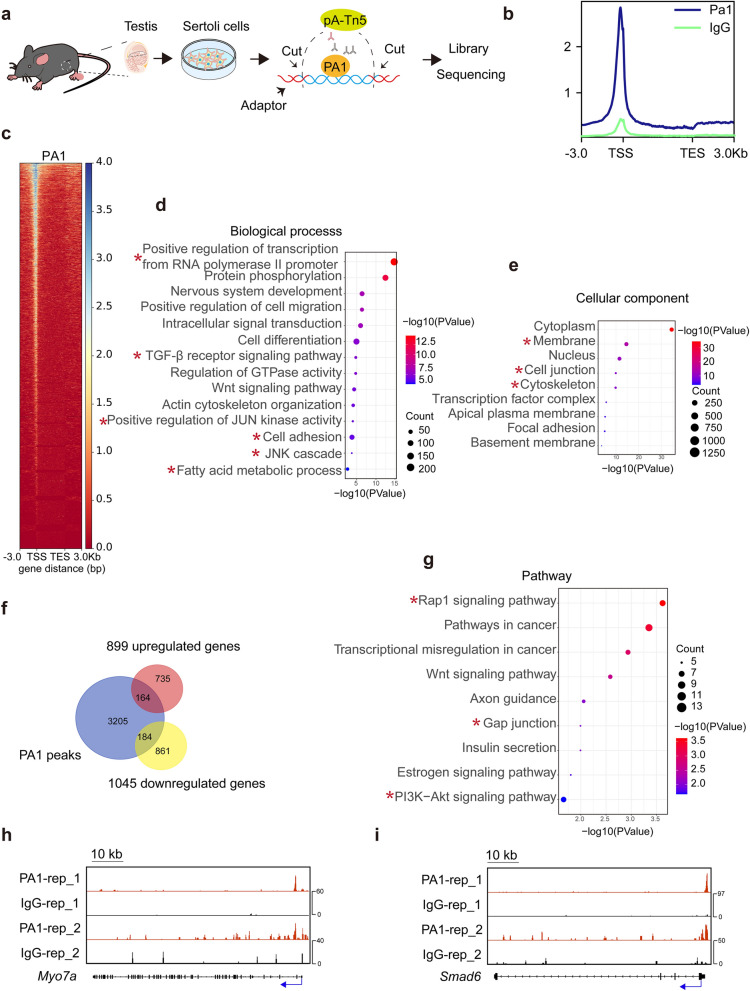
Here, we show that PA1 was highly expressed in human and mouse testis and predominantly localized in the nuclei of Sertoli cells. Sertoli cell-specific Pa1 knockout resulted in an azoospermia-like phenotype in mice. The knockout of this gene led to multiple defects in spermatogenesis, such as the disorganization of the cytoskeleton during basal and apical ectoplasmic specialization and the disruption of the BTB. Further transcriptomic analysis, together with Cut-Tag results of PA1 in Sertoli cells, revealed that PA1 could affect the expression of a subset of genes that are essential for the normal function of Sertoli cells, including those genes associated with actin organization and cellular junctions such as Connexin43 (Cx43). We further demonstrated that the expression of Cx43 depended on the interaction between JUN, one of the AP-1 complex transcription factors, and PA1.
Overall, our findings reveal that PA1 is essential for the maintenance of BTB integrity in Sertoli cells and regulates BTB construction-related gene expression via transcription factors. Thus, this newly discovered mechanism in Sertoli cells provides a potential diagnostic or even therapeutic target for some individuals with azoospermia.
血睾屏障(BTB)对于精子发生的微环境至关重要,而支持细胞为BTB的构建提供了细胞基础。众多核转录因子已被证实对支持细胞的正常功能至关重要。据报道,PA1在多种生物学过程中发挥重要作用,但其在雄性生殖中的潜在功能仍不清楚。
在此,我们发现PA1在人和小鼠睾丸中高表达,且主要定位于支持细胞的细胞核中。支持细胞特异性敲除Pa1导致小鼠出现无精子症样表型。该基因的敲除导致精子发生过程中出现多种缺陷,如基底和顶端外质特化过程中细胞骨架的紊乱以及BTB的破坏。进一步的转录组分析以及PA1在支持细胞中的Cut-Tag结果显示,PA1可影响一部分对支持细胞正常功能至关重要的基因的表达,包括那些与肌动蛋白组织和细胞连接相关的基因,如连接蛋白43(Cx43)。我们进一步证明,Cx43的表达依赖于AP-1复合转录因子之一JUN与PA1之间的相互作用。
总体而言,我们的研究结果表明,PA1对于维持支持细胞中BTB的完整性至关重要,并通过转录因子调节与BTB构建相关的基因表达。因此,在支持细胞中这一新发现的机制为一些无精子症患者提供了潜在的诊断甚至治疗靶点。