Department of Emergency Medicine, Beth Israel Deaconess Medical Center and Harvard Medical School, Boston, Massachusetts, USA.
Assistant Professor, University of Connecticut School of Medicine, Farmington, Connecticut, USA; Director of Research, Disaster Medicine Fellowship, Beth Israel Deaconess Medical Center, Boston, Massachusetts, USA.
Prehosp Disaster Med. 2022 Jun;37(3):409-416. doi: 10.1017/S1049023X22000541. Epub 2022 Apr 5.
Tropical cyclones are a recurrent, lethal hazard. Climate change, demographic, and development trends contribute to increasing hazards and vulnerability. This mapping review of articles on tropical cyclone mortality assesses geographic publication patterns, research gaps, and priorities for investigation to inform evidence-based risk reduction.
A mapping review of published scientific articles on tropical cyclone-related mortality indexed in PubMed and EMBASE (English) and SINOMED and CNKI (Chinese), focusing on research approach, location, and storm information, was conducted. Results were compared with data on historical tropical cyclone disasters.
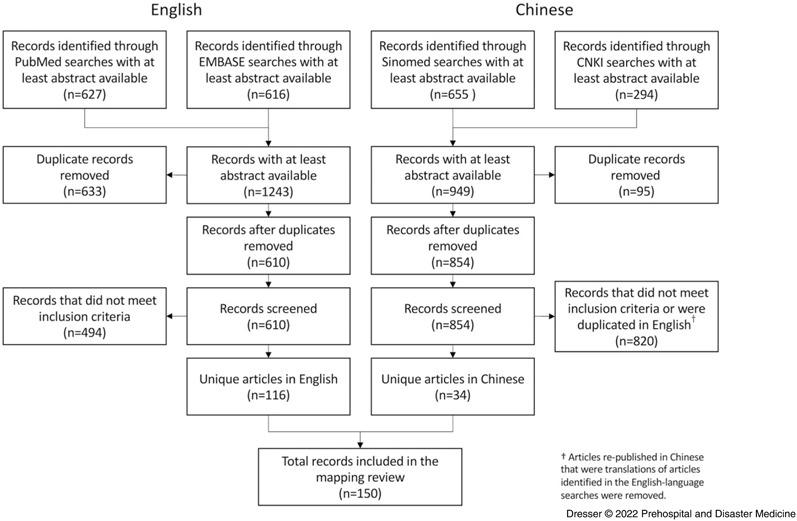
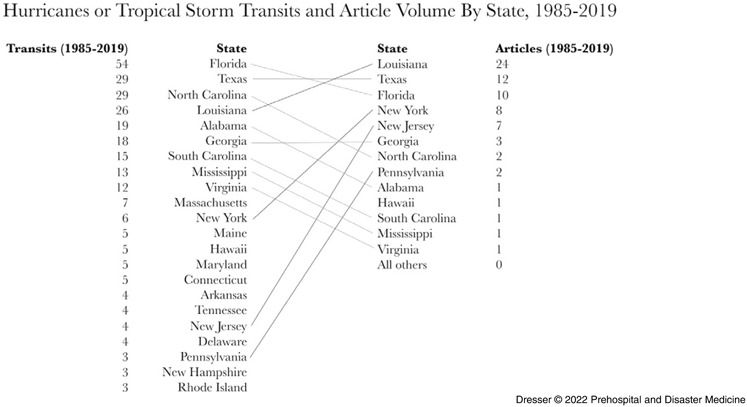
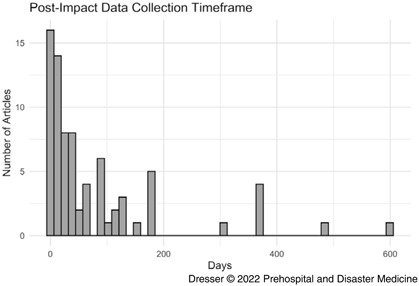
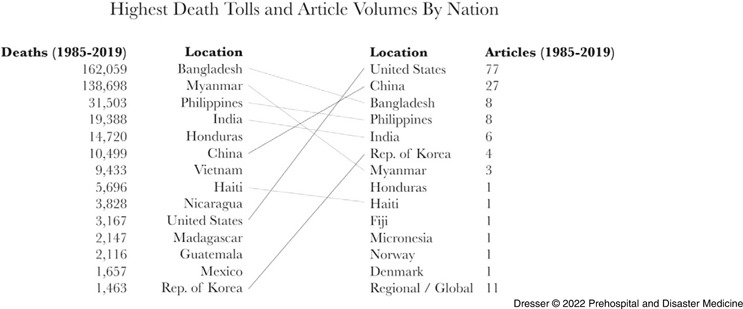
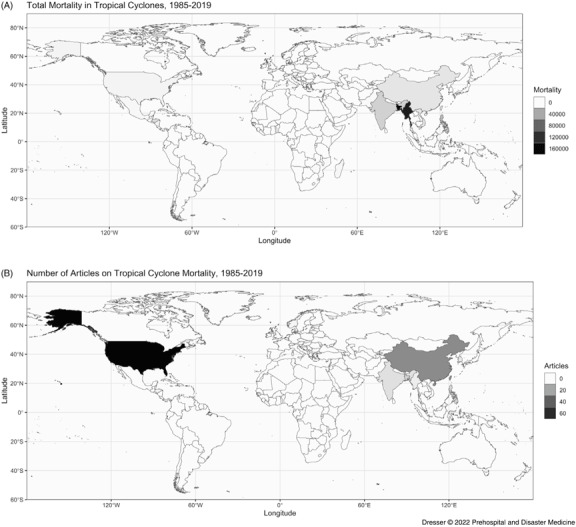
A total of 150 articles were included, 116 in English and 34 in Chinese. Nine cyclones accounted for 61% of specific event analyses. The United States (US) reported 0.76% of fatalities but was studied in 51% of articles, 96% in English and four percent in Chinese. Asian nations reported 90.4% of fatalities but were studied in 39% of articles, 50% in English and 50% in Chinese. Within the US, New York, New Jersey, and Pennsylvania experienced 4.59% of US tropical cyclones but were studied in 24% of US articles. Of the 12 articles where data were collected beyond six months from impact, 11 focused on storms in the US. Climate change was mentioned in eight percent of article abstracts.
Regions that have historically experienced high mortality from tropical cyclones have not been studied as extensively as some regions with lower mortality impacts. Long-term mortality and the implications of climate change have not been extensively studied nor discussed in most settings. Research in highly impacted settings should be prioritized.
热带气旋是一种反复出现的致命危害。气候变化、人口和发展趋势导致危害和脆弱性不断增加。本项针对热带气旋死亡率的文献映射回顾评估了地理出版模式、研究空白以及调查优先事项,以为循证风险降低提供信息。
对发表在 PubMed 和 EMBASE(英文)以及 SINOMED 和 CNKI(中文)上的有关热带气旋相关死亡率的已发表科学文章进行了映射回顾,重点关注研究方法、地点和风暴信息。将结果与历史热带气旋灾害数据进行了比较。
共纳入 150 篇文章,其中英文 116 篇,中文 34 篇。9 个气旋占特定事件分析的 61%。美国报告的死亡率为 0.76%,但在 51%的文章中进行了研究,其中 96%为英文,4%为中文。亚洲国家报告的死亡率为 90.4%,但在 39%的文章中进行了研究,其中 50%为英文,50%为中文。在美国,纽约州、新泽西州和宾夕法尼亚州经历了 4.59%的美国热带气旋,但在 24%的美国文章中进行了研究。在 12 篇数据收集时间超过六个月的文章中,有 11 篇关注的是美国的风暴。有 8%的文章摘要提到了气候变化。
历史上热带气旋死亡率较高的地区的研究不如死亡率影响较低的一些地区广泛。在大多数情况下,长期死亡率和气候变化的影响尚未得到广泛研究和讨论。应优先研究受影响严重的地区。