Vijendravarma Roshan Kumar, Leopold Pierre
Institut Curie - Centre de Recherche, Genetics and Developmental Biology Unit INSERM U934 / CNRS UMR3215 Paris France.
Ecol Evol. 2022 Apr 1;12(4):e8790. doi: 10.1002/ece3.8790. eCollection 2022 Apr.
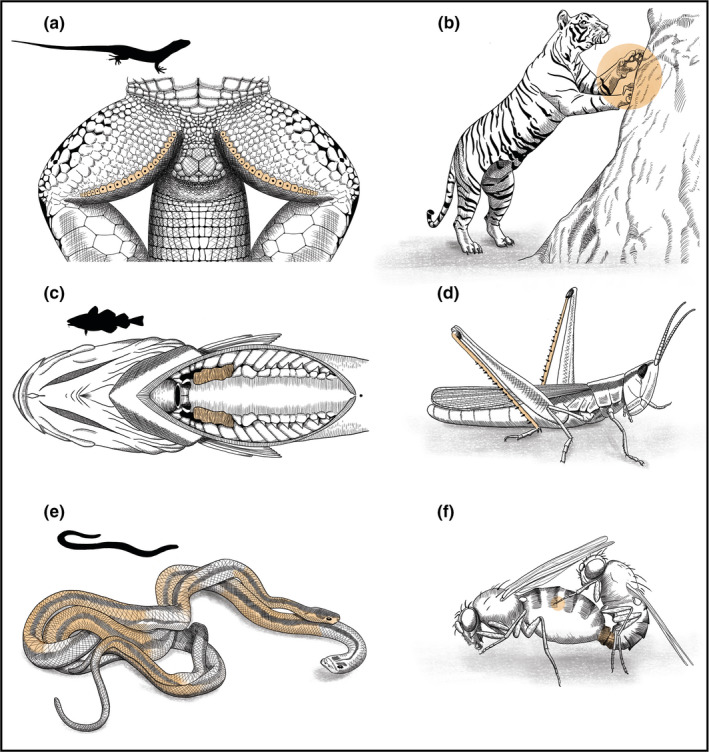
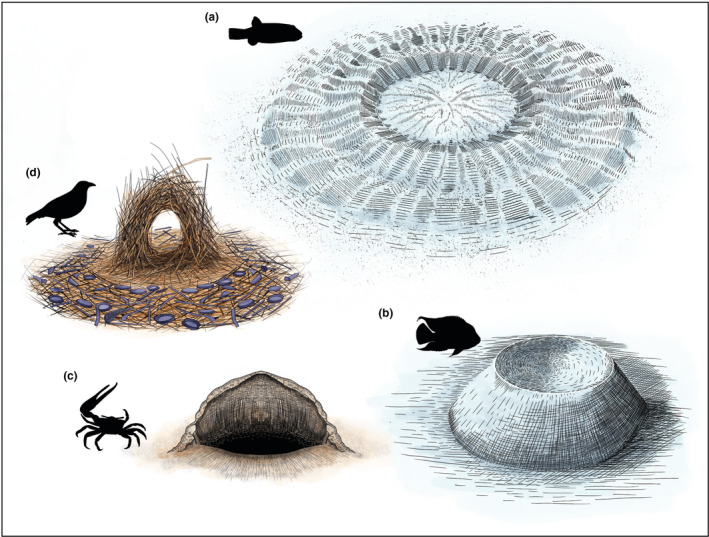
The postulates of developmental instability-sexual selection hypothesis is intensely debated among evolutionary biologists, wherein despite a large amount of empirical data, evidence for or against it has been largely inconclusive. A key assumption of this hypothesis is that animals assess symmetry in potential mates as an indicator of genetic quality (developmental stability), and consequently use this information to discriminate against those with higher asymmetries while choosing mates. However, the perceptional basis that must underlie such discriminatory behavior (is symmetry a signal or is symmetry signaled) is not clearly defined. It is also argued that since asymmetry levels in natural populations are very low, the low signal-to-noise ratio would make accurate assessment of symmetry both difficult and costly. Rather than attempting to validate this hypothesis or even as to whether animals assess mate symmetry, this review simply aims to examine the plausibility that animals perceive symmetry (directly or indirectly) and consequently discriminate against asymmetric mates in response to perceived irregularities during courtship. For this, we review mate choice and courtship literature to identify potential sensory cues that might advertise asymmetry or lead to discrimination of asymmetric individuals. Although signaling associated with mate choice is commonly multimodal, previous studies on asymmetry have mainly focused on visual perception. In the light of a recent study (Vijendravarma et al., 2022, , 119, e2116136119), this review attempts to balance this bias by emphasizing on non-visual perception of asymmetry. In conclusion, we discuss the methodological challenges associated with testing the role of multimodal cues in detecting mate asymmetry, and highlight the importance of considering ecological, behavioral, and evolutionary aspects of animals while interpreting empirical data that test such hypothesis.
发育不稳定性-性选择假说的假设在进化生物学家中引发了激烈的争论,尽管有大量的实证数据,但支持或反对该假说的证据在很大程度上尚无定论。该假说的一个关键假设是,动物将潜在配偶的对称性视为遗传质量(发育稳定性)的指标,因此在选择配偶时利用这些信息来歧视那些不对称性较高的个体。然而,这种歧视行为背后的感知基础(对称性是信号还是被信号化)并未明确界定。也有人认为,由于自然种群中的不对称水平非常低,低信噪比会使对对称性的准确评估既困难又代价高昂。本综述并非试图验证这一假说,甚至也不是验证动物是否评估配偶对称性,而只是旨在探讨动物(直接或间接)感知对称性,并因此在求偶过程中因感知到的不规则性而歧视不对称配偶的合理性。为此,我们回顾了配偶选择和求偶文献,以确定可能表明不对称或导致对不对称个体进行歧视的潜在感官线索。尽管与配偶选择相关的信号通常是多模态的,但先前关于不对称性的研究主要集中在视觉感知上。鉴于最近的一项研究(Vijendravarma等人,2022年,,119,e2116136119),本综述试图通过强调对不对称性的非视觉感知来平衡这种偏差。总之,我们讨论了测试多模态线索在检测配偶不对称性中作用时所面临的方法学挑战,并强调在解释检验该假说的实证数据时考虑动物的生态、行为和进化方面的重要性。