Revenko Alexey, Carnevalli Larissa S, Sinclair Charles, Johnson Ben, Peter Alison, Taylor Molly, Hettrick Lisa, Chapman Melissa, Klein Stephanie, Solanki Anisha, Gattis Danielle, Watt Andrew, Hughes Adina M, Magiera Lukasz, Kar Gozde, Ireland Lucy, Mele Deanna A, Sah Vasu, Singh Maneesh, Walton Josephine, Mairesse Maelle, King Matthew, Edbrooke Mark, Lyne Paul, Barry Simon T, Fawell Stephen, Goldberg Frederick W, MacLeod A Robert
Ionis Pharmaceuticals, Carlsbad, California, USA.
Oncology R&D, AstraZeneca, Cambridge, UK.
J Immunother Cancer. 2022 Apr;10(4). doi: 10.1136/jitc-2021-003892.
The Regulatory T cell (Treg) lineage is defined by the transcription factor FOXP3, which controls immune-suppressive gene expression profiles. Tregs are often recruited in high frequencies to the tumor microenvironment where they can suppress antitumor immunity. We hypothesized that pharmacological inhibition of FOXP3 by systemically delivered, unformulated constrained ethyl-modified antisense oligonucleotides could modulate the activity of Tregs and augment antitumor immunity providing therapeutic benefit in cancer models and potentially in man.
We have identified murine Foxp3 antisense oligonucleotides (ASOs) and clinical candidate human FOXP3 ASO AZD8701. Pharmacology and biological effects of FOXP3 inhibitors on Treg function and antitumor immunity were tested in cultured Tregs and mouse syngeneic tumor models. Experiments were controlled by vehicle and non-targeting control ASO groups as well as by use of multiple independent FOXP3 ASOs. Statistical significance of biological effects was evaluated by one or two-way analysis of variance with multiple comparisons.
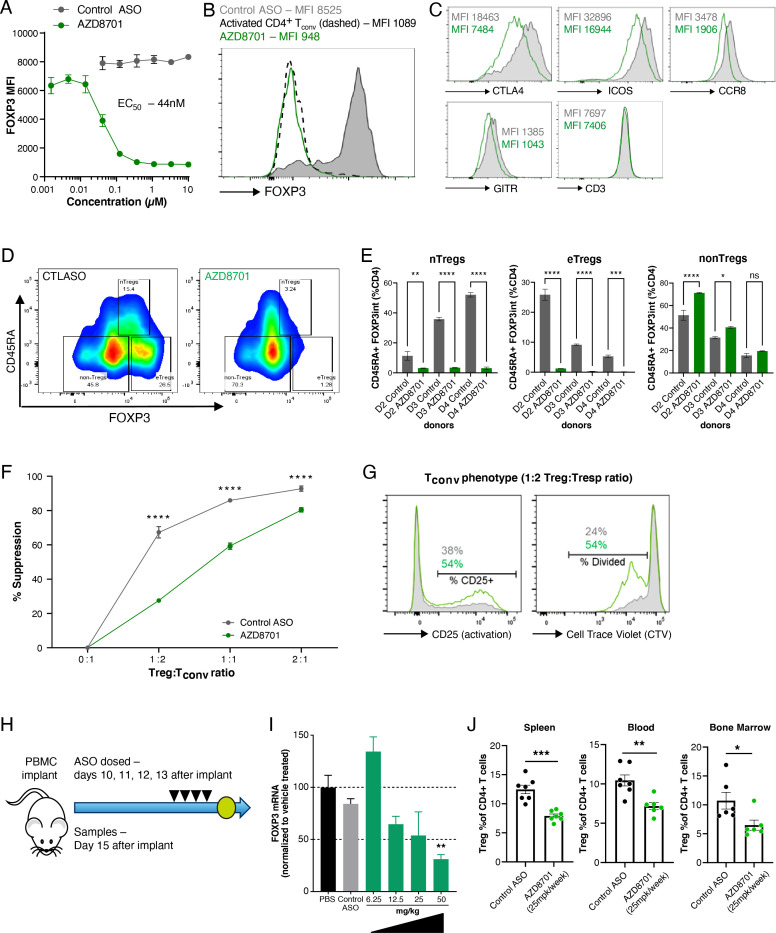
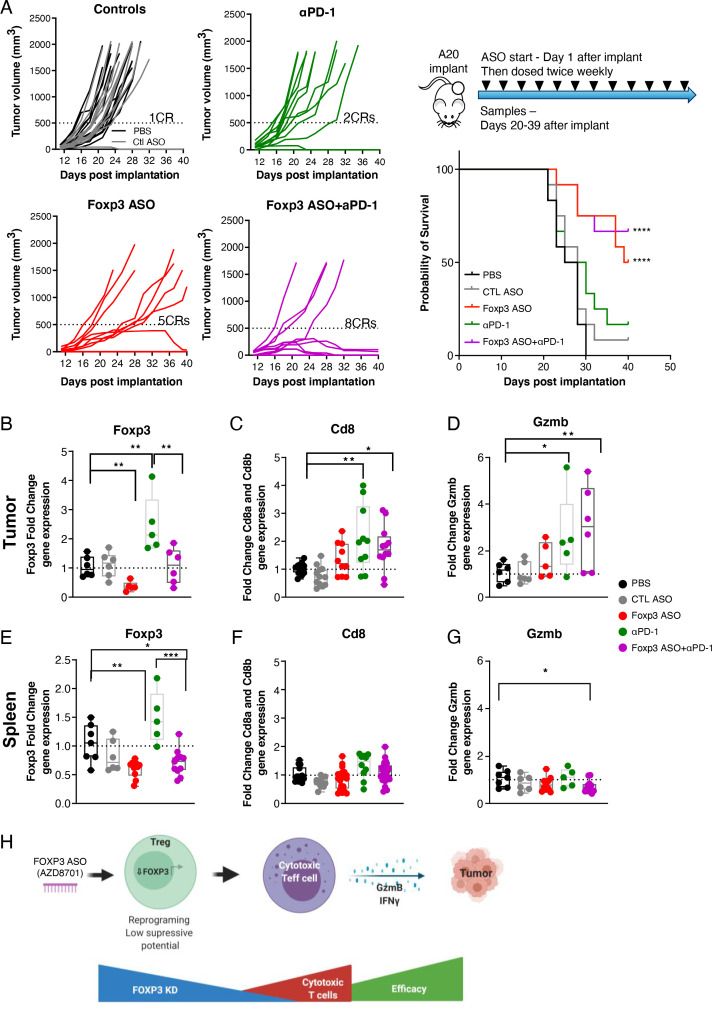
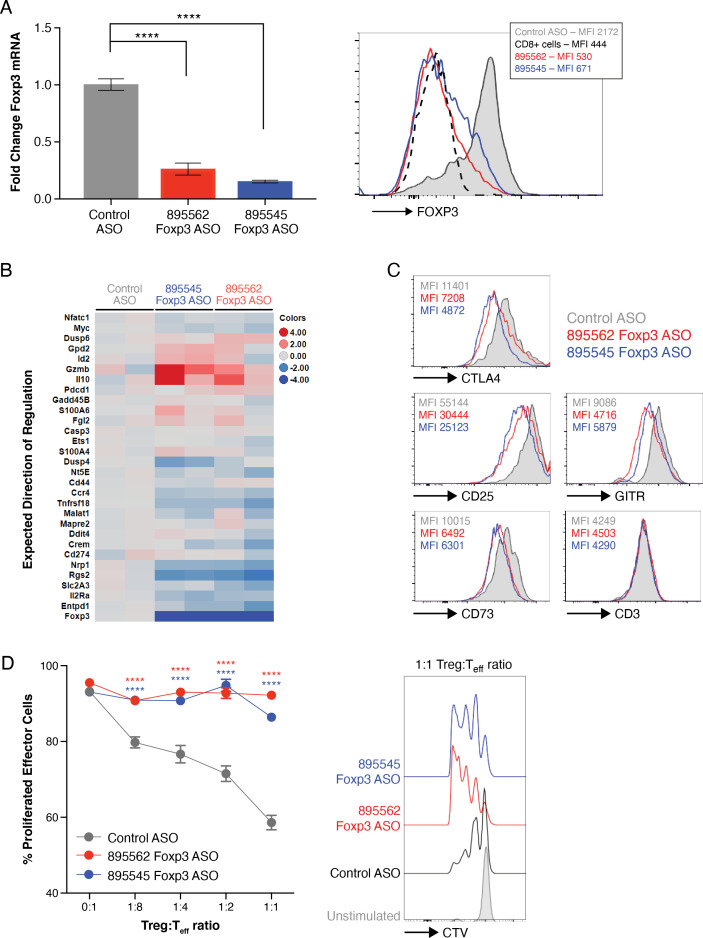
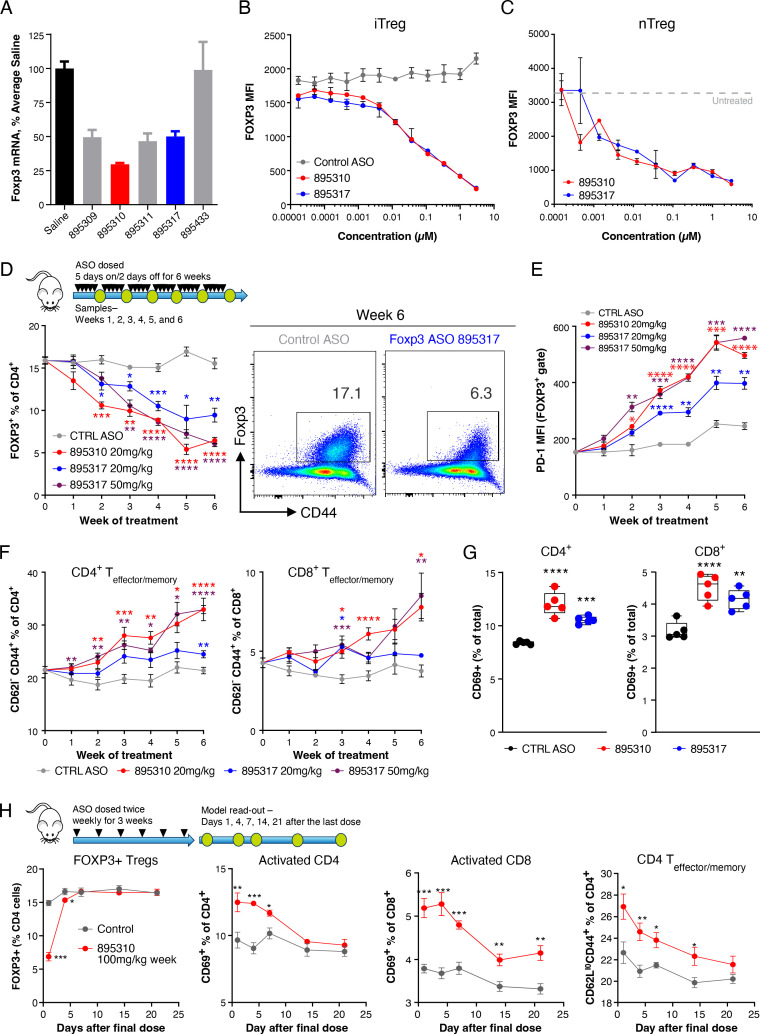
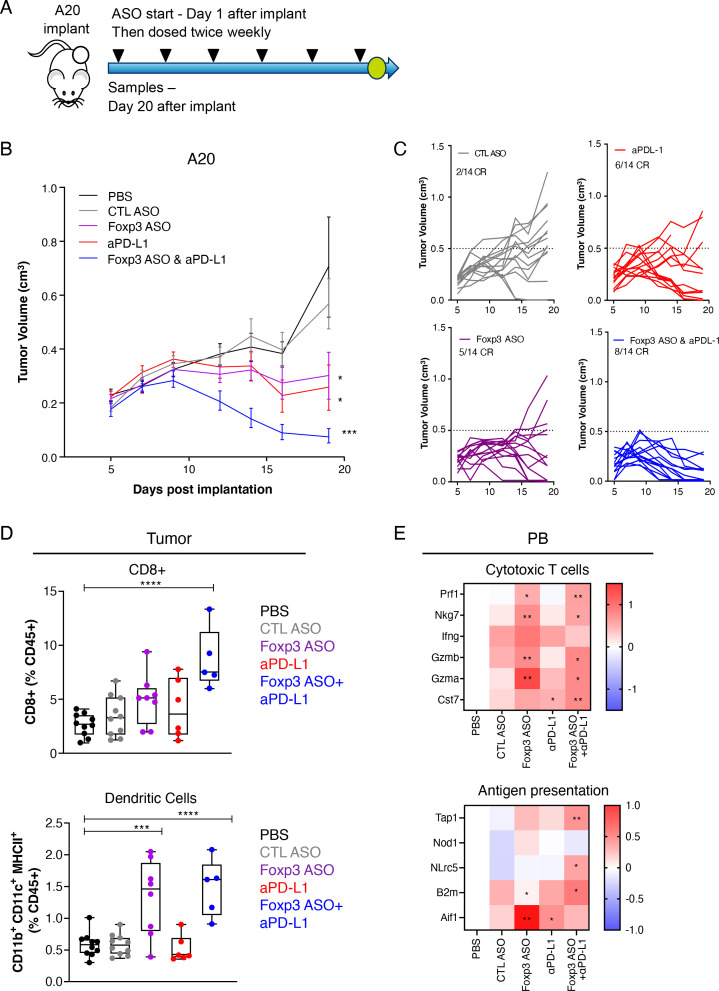
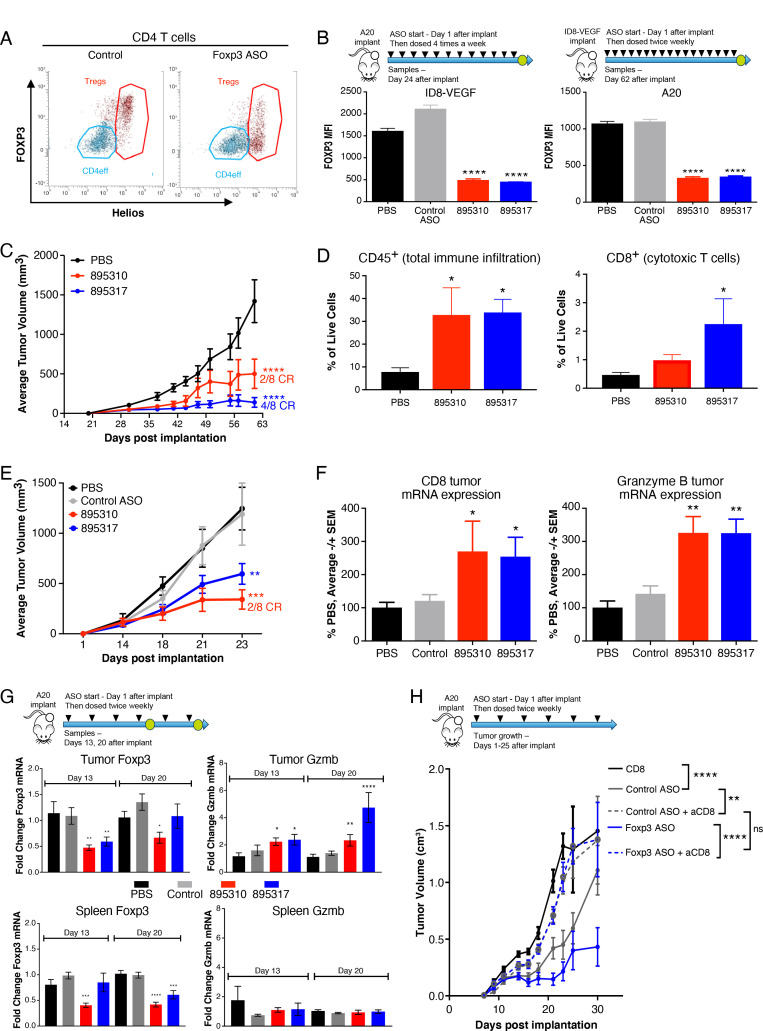
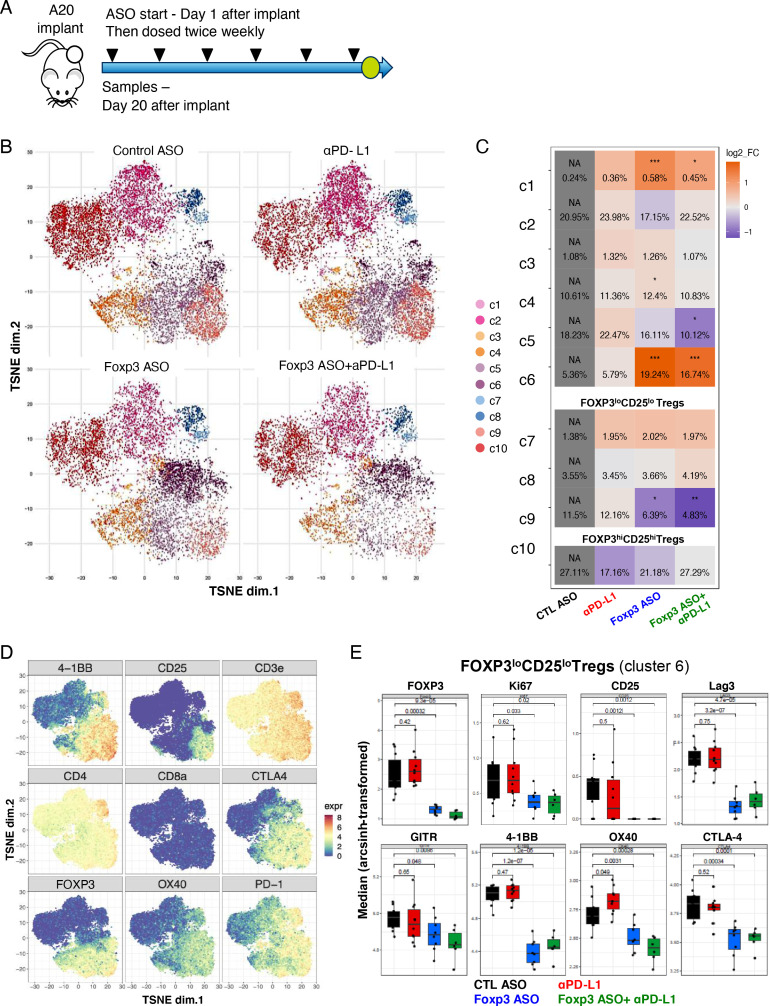
AZD8701 demonstrated a dose-dependent knockdown of FOXP3 in primary Tregs, reduction of suppressive function and efficient target downregulation in humanized mice at clinically relevant doses. Surrogate murine FOXP3 ASO, which efficiently downregulated Foxp3 messenger RNA and protein levels in primary Tregs, reduced Treg suppressive function in immune suppression assays in vitro. FOXP3 ASO promoted more than 70% reduction in FOXP3 levels in Tregs in vitro and in vivo, strongly modulated Treg effector molecules (eg, ICOS, CTLA-4, CD25 and 4-1BB), and augmented CD8 T cell activation and produced antitumor activity in syngeneic tumor models. The combination of FOXP3 ASOs with immune checkpoint blockade further enhanced antitumor efficacy.
Antisense inhibitors of FOXP3 offer a promising novel cancer immunotherapy approach. AZD8701 is being developed clinically as a first-in-class FOXP3 inhibitor for the treatment of cancer currently in Ph1a/b clinical trial (NCT04504669).
调节性T细胞(Treg)谱系由转录因子FOXP3定义,FOXP3控制免疫抑制基因表达谱。Tregs常被高频募集到肿瘤微环境中,在那里它们可以抑制抗肿瘤免疫。我们假设,通过全身递送未配制的经修饰的乙基修饰反义寡核苷酸对FOXP3进行药理学抑制,可以调节Tregs的活性并增强抗肿瘤免疫,从而在癌症模型乃至可能在人体中提供治疗益处。
我们鉴定了小鼠Foxp3反义寡核苷酸(ASOs)和临床候选药物人FOXP3 ASO AZD8701。在培养的Tregs和小鼠同基因肿瘤模型中测试了FOXP3抑制剂对Treg功能和抗肿瘤免疫的药理学和生物学效应。实验由载体和非靶向对照ASO组以及使用多种独立的FOXP3 ASOs进行对照。通过具有多重比较的单向或双向方差分析评估生物学效应的统计学显著性。
AZD8701在原代Tregs中表现出剂量依赖性的FOXP3敲低,在临床相关剂量下,人源化小鼠的抑制功能降低且有效下调了靶点。替代小鼠FOXP3 ASO在原代Tregs中有效下调Foxp3信使核糖核酸和蛋白质水平,在体外免疫抑制试验中降低了Treg抑制功能。FOXP3 ASO在体外和体内使Tregs中的FOXP3水平降低超过70%,强烈调节Treg效应分子(如ICOS、CTLA-4、CD25和4-1BB),并增强CD8 T细胞活化,在同基因肿瘤模型中产生抗肿瘤活性。FOXP3 ASOs与免疫检查点阻断的联合进一步增强了抗肿瘤疗效。
FOXP3反义抑制剂提供了一种有前景的新型癌症免疫治疗方法。AZD8701目前正在进行1a/1b期临床试验(NCT04504669),作为首个用于治疗癌症的FOXP3抑制剂进行临床开发。