
基于网络药理学和分子对接技术探究安宫牛黄丸对缺血性中风的活性成分及作用机制
Exploring Active Compounds and Mechanisms of Angong Niuhuang Wan on Ischemic Stroke Based on Network Pharmacology and Molecular Docking.
作者信息
Zhang Yasu, Liu Xiaomin, Long Junzi, Cheng Xue, Wang Xinyu, Feng Xiaodong
机构信息
School of Rehabilitation Medicine, Henan University of Chinese Medicine, Zhengzhou, Henan 450046, China.
出版信息
Evid Based Complement Alternat Med. 2022 Mar 27;2022:2443615. doi: 10.1155/2022/2443615. eCollection 2022.
METHODS
The chemical ingredients of ANW were retrieved from TCMSP, TCMID, and literature. We predicted the potential targets of active ingredients by PubChem, Swiss Target Prediction, and STITCH databases. The targets related to ischemic stroke were retrieved using GeneCards, DisGeNET, DrugBank, TTD, and GEO databases. Subsequently, Venn diagrams were used to identify common targets of active ingredients and ischemic stroke. Protein-protein interaction (PPI) network was structured with STRING platform and Cytoscape 3.8.2. Gene ontology (GO) enrichment and Kyoto Encyclopedia of Genes and Genomes (KEGG) pathway analyses of key targets were performed in the Metascape database. Finally, molecular docking was conducted by AutoDock Tools and PyMOL software.
RESULTS
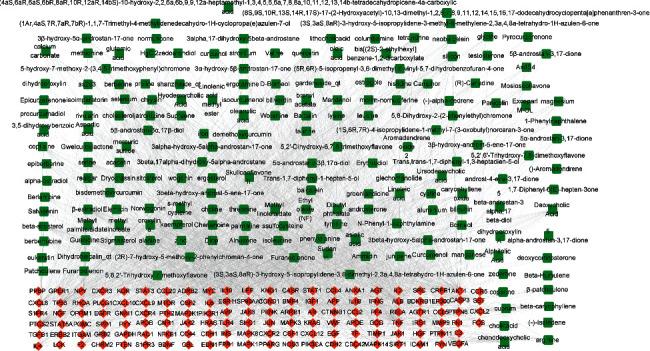
A total of 2391 targets were identified for 230 active ingredients of ANW, and 1386 of them overlapped with ischemic stroke targets. The key active ingredients were mainly quercetin, -estradiol, berberine, wogonin, and -sitosterol, and the key targets were also identified, including IL-6, AKT1, MAPK3, PIK3CA, and TNF. The biological process (BP) results indicated that ANW may have therapeutic effects through response oxidative stress, inflammatory response, cellular response to lipid, and response to nutrient levels. Furthermore, the ingredients of ANW were predicted to have therapeutic effects on ischemic stroke via the HIF-1 signaling pathway, FoxO signaling pathway, chemokine signaling pathway, fluid shear stress and atherosclerosis, and neurotrophin signaling pathway. The molecular docking results all showed that the core ingredients were strong binding activity with the core targets.
CONCLUSION
In conclusion, the bioinformatics and pharmacological results reveal that counteracting oxidative stress, suppressing inflammation, inhibiting the development of AS, and even protecting neurological function are critical pathways for ANW in the treatment of ischemic stroke. These results may help to elucidate the mechanism of ANW on ischemic stroke for experimental studies and clinical applications.
方法
从中药系统药理学数据库与分析平台(TCMSP)、中药综合数据库(TCMID)及文献中检索庵闾子(ANW)的化学成分。通过美国国立医学图书馆的化学物质数据库(PubChem)、瑞士药物靶点预测数据库(Swiss Target Prediction)和STITCH数据库预测活性成分的潜在靶点。使用基因卡片数据库(GeneCards)、疾病基因数据库(DisGeNET)、药物银行数据库(DrugBank)、治疗靶点数据库(TTD)和基因表达综合数据库(GEO)检索与缺血性中风相关的靶点。随后,用维恩图确定活性成分和缺血性中风的共同靶点。利用STRING平台和Cytoscape 3.8.2构建蛋白质-蛋白质相互作用(PPI)网络。在Metascape数据库中对关键靶点进行基因本体(GO)富集分析和京都基因与基因组百科全书(KEGG)通路分析。最后,通过AutoDock Tools和PyMOL软件进行分子对接。
结果
共鉴定出ANW的230种活性成分的2391个靶点,其中1386个与缺血性中风靶点重叠。关键活性成分主要为槲皮素、β-雌二醇、小檗碱、汉黄芩素和β-谷甾醇,并确定了关键靶点,包括白细胞介素-6(IL-6)、蛋白激酶B1(AKT1)、丝裂原活化蛋白激酶3(MAPK3)、磷脂酰肌醇-4,5-二磷酸3-激酶催化亚基α(PIK3CA)和肿瘤坏死因子(TNF)。生物学过程(BP)结果表明,ANW可能通过响应氧化应激、炎症反应、细胞对脂质反应和对营养水平反应发挥治疗作用。此外,预测ANW成分可通过缺氧诱导因子-1(HIF-1)信号通路、叉头框蛋白O(FoxO)信号通路、趋化因子信号通路、流体切应力与动脉粥样硬化、神经营养因子信号通路对缺血性中风发挥治疗作用。分子对接结果均显示核心成分与核心靶点具有较强的结合活性。
结论
总之,生物信息学和药理学结果表明,对抗氧化应激、抑制炎症、抑制动脉粥样硬化发展以及保护神经功能是ANW治疗缺血性中风的关键途径。这些结果可能有助于阐明ANW治疗缺血性中风的机制,为实验研究和临床应用提供帮助。




 Zotero 插件